Acceptance doesn’t mean giving up

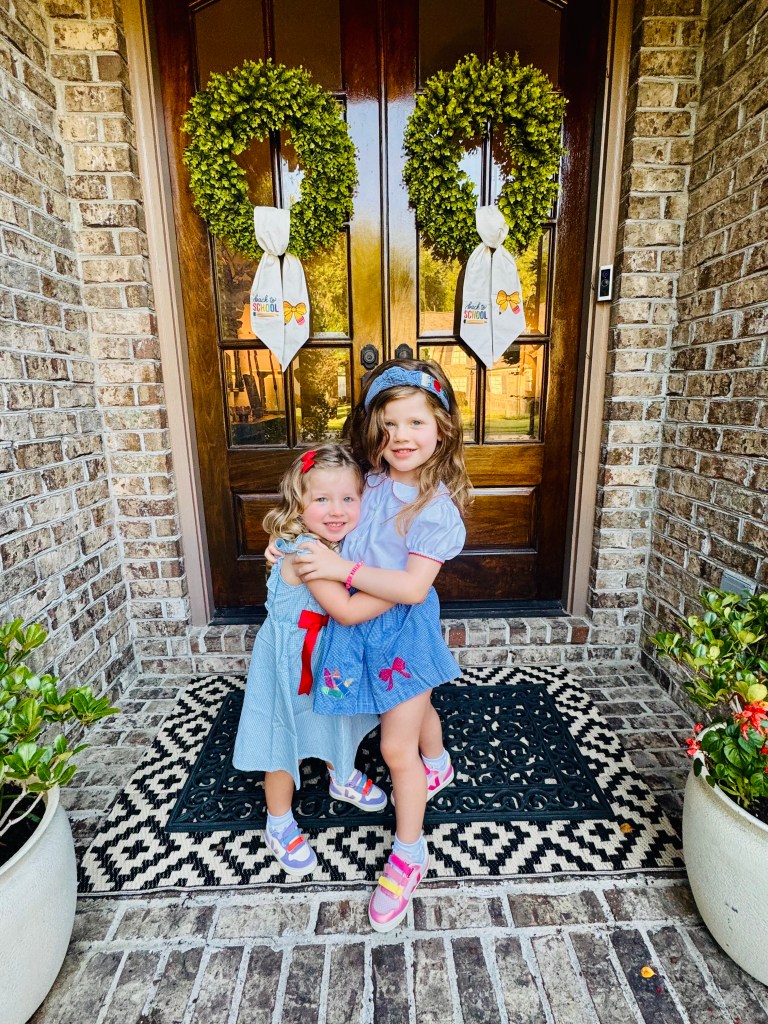
This photo has absolutely nothing to do with my post, but they’re just too cute, aren’t they? Yes, I’m being a proud Gigi. We grandparents are allowed to brag on our grandchildren, so I’m taking liberties!

But maybe this photo is applicable to my topic after all. Bear with me until the end of the blog, and I will explain.

With the wisdom I’ve gained over the years, I have come to understand that our greatest barrier to coping and healing when we go through hard times is our unwillingness or inability to accept the situation. We want to fix it or control it or deny it. Instead of acknowledging it and figuring out a way to move forward, we have a tendency to focus on what we can do to get rid of the adversity.

Here’s the deal. Many times we focus on changing others or changing our state when what we should be focusing on is changing our attitude. We must change ourselves.

I am not going to discuss bad relationships or living situations of which I have no knowledge or experience. But possibly the points I make about other situations can apply to those. As always, I do not claim to be an expert on any of this, and anyone with serious problems should contact a professional.

Years ago, a friend of mine was in an accident, and she ended up paralyzed. When I visited her in the rehab facility, she told me, “I’m going to walk out of this place.” She had a fighting spirit and was convinced she would be healed.

An admirable attitude in our culture, but she was not healed. She has spent the past 30 plus years in a wheelchair.

She eventually accepted her situation and learned to do many thing’s for herself. She was able to drive using hand controls. She cooked and did some normal household things as well as she could. A widow who now lives alone, she is self-sufficient for the most part and handles each day with strength because she accepts her situation. It’s not easy, but it is her reality.

In my own journey of becoming disabled due to vision loss, I accepted my condition from the beginning. My loved ones were not so accepting. They were seeking cures or clinical trials or devices to make my vision come back or at least be better. I even had a stranger pray for me one time. I was at a fast food restaurant with a friend, and when I was paying for my meal, I explained to the woman I was sorry for being slow to do everything because I was visually impaired. Maybe I said legally blind, I don’t know. Either term is correct. While my friend and I were eating, the woman went by our table several times to clean other tables, and I sensed she kept looking our way. When we got up to leave, she stopped me and asked if she could pray for me. Embarrassed but not wanting to steal her joy, I agreed, and she held my hand and prayed for my healing.

I don’t have the heart to go back there and tell her that not only did my condition not get better but it has also gotten progressively worse.

I accept that. I just deal with it. My retina specialist told meI may get to the point I can only see light and dark, but I don’t live in fear of that. It may never happen, and if it does, it may be years from now, and I’ll cross that bridge if and when I come to it. I do, however, continue to do what I can while I can and appreciate each day because today is all any of us have.

I have completed my book Living Fully with Vision Loss and am anticipating a release date within a few weeks. This book deals more with the lifestyle changes and emotional and mental states of those new to vision loss and their support system. It is for everyone, though, as I continue to educate others and advocate for the visually impaired community.

Some of the chapter titles are “First Steps,” “The Age of Technology,” “A Life without Limitations,” and “Our Support System.” There are 12 chapters, approximately 20,000 words (which is very short), and a resource guide. It will be available as an ebook and a large-print paperback. I am working on having it published as an audiobook as well.

In the first chapter, I make the point acceptance is the most important first step. I know of too many who are newly diagnosed who are seeing multiple doctors and looking for clinical trials. That’s okay, but the truth is even if they find a clinical trial for which they qualify, it may take years to see any benefit if at all. I admit I’ve applied for a couple of clinical trials but have been rejected, probably because my condition is too advanced.

By the way, if you’re new to my blog and confused about how I can write a blog and books as a legally blind person, be sure to buy the book when it is released or go to my Journey to Sight YouTube channel where I have videos demonstrating how it’s done.

Back to my topic. Acceptance is the first step in healing. Not the healing we think of. Accepting a physical disability or a broken relationship or the loss of a loved one doesn’t mean you’ve given up. It just means you are facing it and you’re going to handle it. You’re going to persevere despite it. It won’t be easy. It won’t be fun. But if you keep at it, it will happen.

When I pray for others going through health crises, I pray for their comfort and healing but also peace and acceptance. I pray they have a calm spirit while they endure the treatments or the knowledge they have a terminal illness. I pray for their strength to get through each day.

When I was praying for a new treatment for my vision loss or at least for my vision not to get worse, I cried when I prayed. How desperately I wanted to see normally again. How desperately I wanted my independence back (translated: the ability to drive). How badly I wanted to read to my granddaughters, to see my loved ones’ faces, to recognize people in the community when I was out and about.

It wasn’t until I changed my prayer to ask for help in accepting my situation and learning about how to cope with it that my mental state improved. And you know what? That happened. I have learned so much, and I am continuing to learn. I was paralyzed in my own way in a state of limbo until I changed my attitude. These days, I have an attitude of gratitude because I’m grateful for all the good things in my life.

As for the two girls in the photo, they accept me as I am. They know Gigi can’t read to them, so they’re okay with my Meta glasses reading to them, although they have to get very close to the frames to hear it. Sometimes when we’re playing, one of them will say, “Gigi, are your eyes working?” which is their way of asking if I can see what is going on. And I can see well enough to play with them, cook for them, “watch” Disney with them, and play with them.

They accept me for who I am. I have to do the same.
Life lesson learned: you can’t control everything

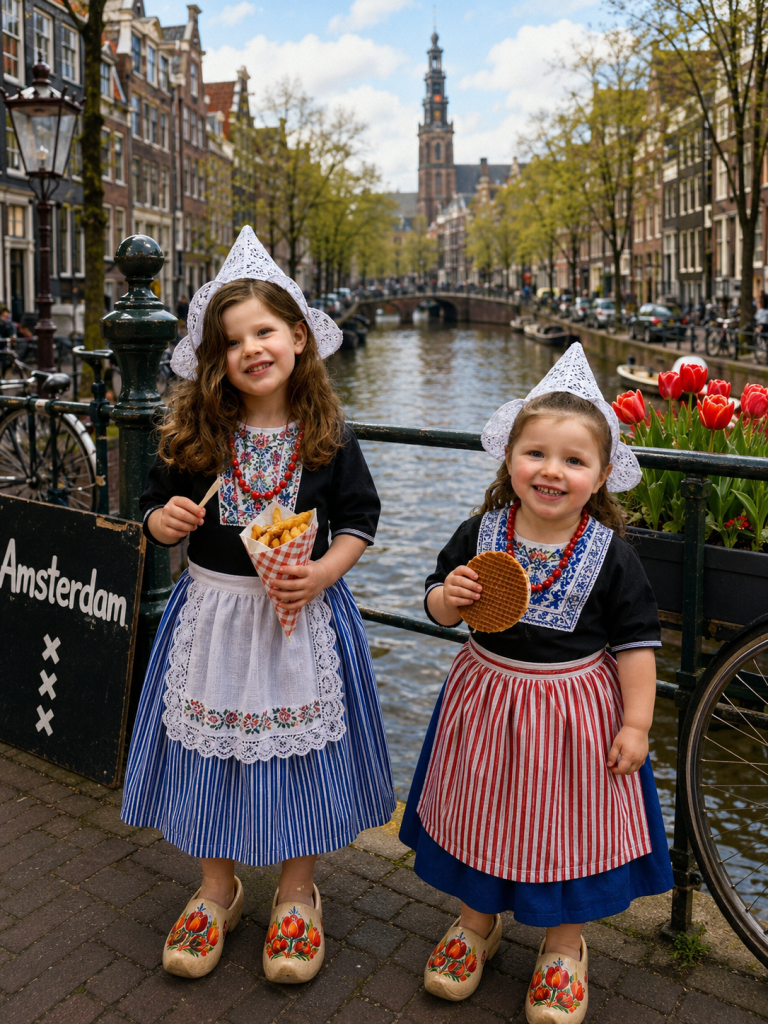
This is an AI image my daughter-in-law created when my son’s boss approached him with the idea of the family moving to Amsterdam for a. couple of years. My initial gut reaction was tears because I wouldn’t be able to see the girls as often as I do now. They live just over two hours away. Amsterdam is a bit farther than that!

But then I told myself if is their life, not mine. I told myself I would always be the kind of parent and grandparent to give my children/grandchildren wings and not be a wing-clipper. My mom, bless her, was very much a wing-clipper. She meant well, but I never had to freedom to do as I wanted because of the guilt placed upon me if I were to do so.

So, I told myself we would just have to go to Amsterdam to visit. We’d have to FaceTime. Maybe it would even be a good thing since I’ve never been to Europe and always wanted to go. With them living there, they could be our hotel and our tour guides.

I was making lemonade out of lemons.

They’re not moving to Amsterdam, but with his job, I know I can’t count on them always living two hours away. There are countless grandparents who livelong distances from their grandchildren, and they cope. I could do it too.

I never told my son my feelings. I just listened and asked questions. My role, I believe, is to support, not chain. To give advice only it is asked for. Sometimes I go the “Mom” route when a problem arises with one of my kids and I’m trying to make suggestions when all they need is someone to listen or bounce ideas off. They’re adults.

My journey to accepting I can’t control many things in life came to full fruition about 15 years ago when I realized my adult life was not the perfect one I had envisioned in my younger days. I realized I couldn’t control other people. I couldn’t control certain aspects of my health (vision). I couldn’t control my life in many ways.

So, the Serenity Prayer became a part of my routine. I said the words. I wrote the words. I thought about it. Finally, I meant it.

I really and truly meant it. I stopped telling God what he needed to do for me. I stopped wondering why certain things I had prayed about and for had not happened. I just accepted.

That doesn’t mean I don’t still pray about some of those things, but no, I don’t pray my vision will get better. It won’t. It’s getting worse all the time, but I still have functional vision to do a lot of things. Sure, maybe some technology will be invented that will help me see better someday, but I’m not banking on that. I still pray about some things I know are out of my control like my loved ones’ safety, their spiritual conditions (as well as my own), and their choices.

But I don’t worry about those things.

Several months ago, my son (the one who had been asked to go to Amsterdam) had to go to Singapore on business. He flew to California where he boarded a plane and flew 16 hours to his destination. I prayed about it and never worried a bit. Worry, I knew, wouldn’t change anything. It was out of my control.

Accepting that and practicing it has given me a peace I never had. That doesn’t mean I don’t have my moments. That doesn’t. mean I don’t shed tears about things that weigh heavily on my spirit.

The thing is, when we want to control everything, that need to control actually controls US. It can be as simple as being a “backseat driver,” or it can be as overt as telling our adult children or out spouse what moves to make and becoming…well, bossy.

If you are a regular reader of my blogs, you know I’m super independent. I have resisted bossiness all my adult life, but at the same time I’ve been compliant. I’ve given in to the person bossing me around.

My choice, so I have to accept it and not resent those people for trying to control me. I just go with the flow to keep the peace. That’s the way I’ve lived most of my life.

Here’s my sidenote about this topic: You may not be that way, and that’s okay. I’m independent but not strong-willed. I can’t be happy if what I want out of life makes someone else unhappy.

Back to my topic. What worked for me might work for you, but please know it may take a long time. Please know it doesn’t always work, but it does most of the time.

To me, accepting what I can’t control is a matter of faith.

Here’s my version of the Serenity Prayer:

God, grant me the serenity to accept what I can’t change, courage to change what I can, and wisdom to know the difference.

Sunday thoughts

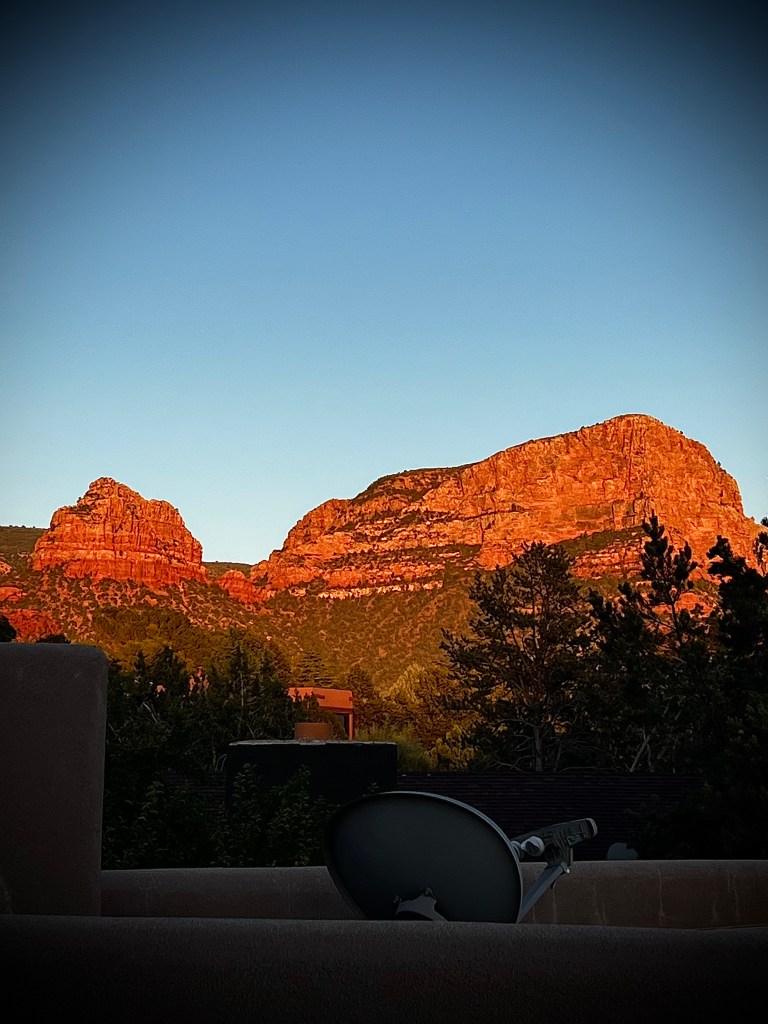
I may lose some followers with this blog, but that’s okay. It’s been on my mind for a long time. And, no, it’s not about Sedona, although the photo would lead you to think so. As usual, I will tie in the photo with this post at the end.

As I write this, my mind is spinning. How can I express what I want to say in a loving respectful way? How can I get my point across? How can I explain why I feel as I do?

Here is what I’m thinking. As a Christian, I believe in honoring the God I serve, Jesus, and the Holy Spirit. I know some of you reading this do not believe that way, and that is your right. This blog post is not intended to convert you to my way of thinking, although I would love to share my faith with you.

The purpose is to make Christians and non-Christians think about what they’re saying.

TV shows and movies are full of people profaning the name of God and Jesus. Every time I hear it, I cringe and am offended. Yet those same actors would never use “Allah” or “Buddha” or any other deity/prophet of another religion.

I get it. We live in a country of free speech, so I’m not suggesting we have laws to prevent people from saying “GD” (the words, not the letters) or “JC” in a profane manner. We once had that kind of censorship, but now anything goes.

“You don’t have to watch those movies or shows” you say. “It’s your choice.”

The problem is, those words have infiltrated network programming. We were watching “Chicago Med” the other night, and one of the doctors used “GD” (the words, not the initials). In a 7:00 P.M. broadcast, which used to be the family friendly time.

I won’t go into the culture we live in today that is violating other Christian beliefs and is displayed without shame and with pride in our programming, but it may be getting to the point Christians who feel as I do may be relegated to children’s shows and Angel Studios because of the themes and language in other programs.

“You’re showing your age,” you say. “Everyone talks like that.”

No, I’m expressing my faith. I know the “F” word is rampant, and although I don’t like it and find it a vulgar/gross word to throw around like it’s nothing. It’s ironic to me that programs will bleep out that word yet allow the “GD” and “JC” multiple times. They even bleep out the “sh” word. But not taking the Lord’s name in vain.

A lesson in theology in case you don’t know it. The name “God” is our English terminology for al the names of God used in the original writings: Yahweh, Adoni, Elohim…there are many names. And maybe you’re thinking that since “God” is not his actual name, you’re not really profaningGod’s name, but since we think of God in that way and not the others, to me you are.

Please understand. I realize each person has the right to his or her beliefs. But in this politically correct climate in which we have to be careful about using words that offend, it’s interesting to me that no one worries about offending people of the Jewish and Christian faiths. Those same script writers would never offend Muslims and other religious groups…or would they?

So, why the photo of Sedona for this post? Sedona is an area known for its almost supernatural feeling, and obviously, a belief in God is the epitome of the super natural.

I know I can’t change our culture, but with the blessing of free speech given me by our laws, I am expressing my viewpoint. You either agree with me or you don’t. That’s okay. But if I’ve given you food for thought today before I get dressed to go worship the God I believe in, I wanted to stand up for him in my own small way. You either believe in him or you do’n’t.

I do.

Can you answer these questions about Christmas? Take the quiz!

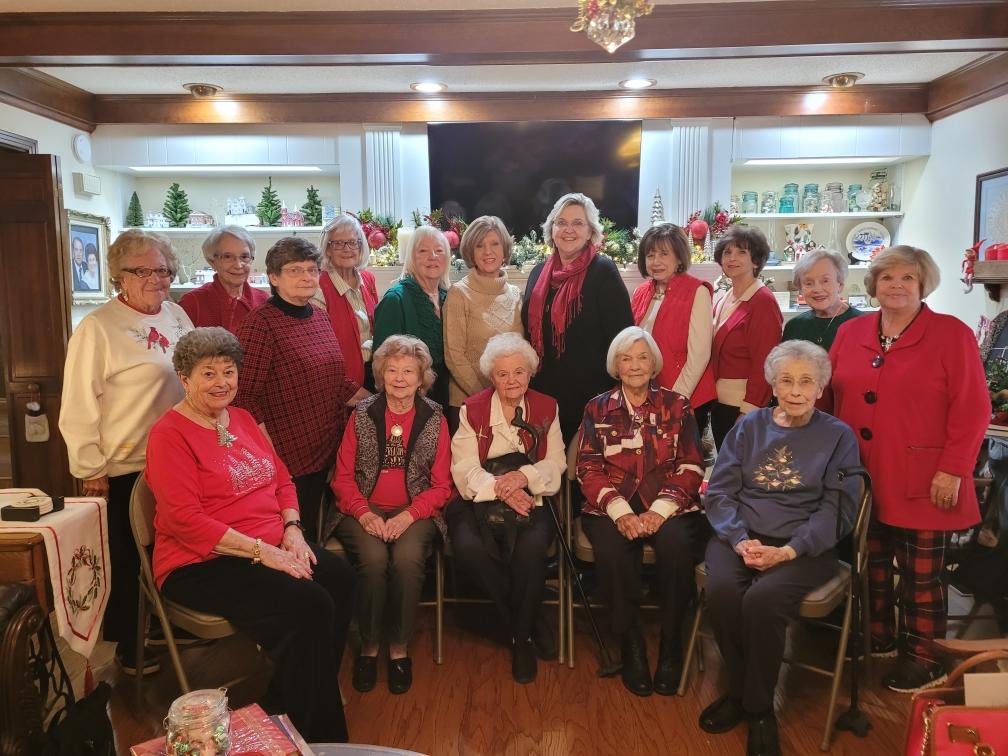
This is the 20th Century Club in our community, the oldest women’s civic group in our town. It was formed in 1900, and no, we have no original members still with us. We have members as young as in their fifties (well, one, and she’s not in the picture because she was sick), and our oldest member is 96. But we have fun together, and what follows are some questions we had in a Christmas trivia game we played.

Confession: I created the game by researching. So if one of the answers given is not correct, please comment and let me know.

We did the game as a multiple choice activity, so I will give you those options as well. Correct answers will be at the end of the blog.

Christmas Trivia

  1. When was Dec. 25 first declared to be the date of Jesus’ birth? a. 75 A.D. (I think the proper term these days is C.E. for Common Era, but I still use the B.C. and A.D.) b. 510 A.D. c. 33l6 A.D. d. 190 A.D.
  2. Three wise men from the east followed the star to Bethlehem. a. True. b. False
  3. Which of these Christmas songs has sold the most? a. “Silent Night” b. “All I Want for Christmas Is You” by Mariah Carey c. “Blue Christmas” by Elvis. d. “White Christmas” by Bing Crosby
  4. When adjusted for inflation, which of these movies grossed the most at the box office? a. “Home Alone” b. “How the Grinch Stole Christmas” c. “Christmas Vacation” d. “A Christmas Story”
  5. We Baby Boomers remember the Bob Hope specials that aired around Christmas. How many USO tours did Bob Hope and his variety of guests do for the troops? (not necessarily the Christmas productions) a. 12 b. 81 c. 57 d. 23
  6. Who played “Mary,” Jimmy Stewart’s character’s wife, in “It’s a Wonderful Life?” a. Greer Garson b. Donna Reed c. June Lockhart d. Mary Pickford
  7. How tall is the 2025 Christmas tree at the Rockefeller Center in NYC? a. 75 feet b. 90 feet c. 120 feet d. 140 feet

I had ten questions, but these are all I can remember. I don’t have my original questions because I gave them to someone else to use at another Christmas party. Here are the answers:

  1. 336 A.D. The Roman emperor Constantine declared Dec. 25 to be the date of Jesus’ birth. In 350 A.D. or sometime after that, Pope Julius I made it official as a holiday to be celebrated by Christians. The date coincides with the winter solstice pagan holiday celebrated by Romans at the time. Scholars and theologians agree there is no evidence to support the date, but it is still a time for Christians world-wide to commemorate the birth of Christ.
  2. False. the Bible does not say how many wise men came to see Jesus, but the number “three” is represented because of the three gifts of gold, frankincense, and myrrh. In addition, the wise men did not go to the stable where he was born. the Bible says they came to the house where he was, and Biblical scholars say Jesus could have been as old as two years old since Herod had the boys two years old and under slaughtered in his attempt to prevent a new king from taking power.
  3. “White Christmas” by Bing Crosby. It has sold more than 50 million copies worldwide.
  4. “Home Alone.” I was surprised to learn that “How the Grinch Stole Christmas” and “Christmas Vacation” were also very close, ahead of “Elf” and “A Christmas Story.”
  5. 57. Bob Hope began the USO tours in 1941, and his last one was in 1991 in Saudi Arabia during the Desert Shield era. One source said 47, but other sources said 57, so I went with that. Regardless, it was a lot! He was born on May 29, 1903, so you can do the math!
  6. Donna Reed. Some of us remember “The Donna Reed Show” that aired from 1958 until 1966.
  7. 75 feet. I was surprised by this. I think it looks much taller on television!

How did you do? If I hadn’t been the creator of the game, I would have missed most of these questions. And, like I said, some of the numbers may be off a bit because if the sources used. I tried to use reliable sources since AI, believe it or not, is not perfect!

I won’t blog next week, so I will wish each one of you a wonderful Christmas and hope you will know peace and contentment during a time of year that can be stressful and sad for some as well as happy for others. Many thanks to all who take the time to read my blogs because looking at those stats warms my heart to know so many take the time to do so. I hope you find something in each one that entertains, inspires, comforts, or makes you chuckle.

Happy Holidays!

What does it really mean to be blind?

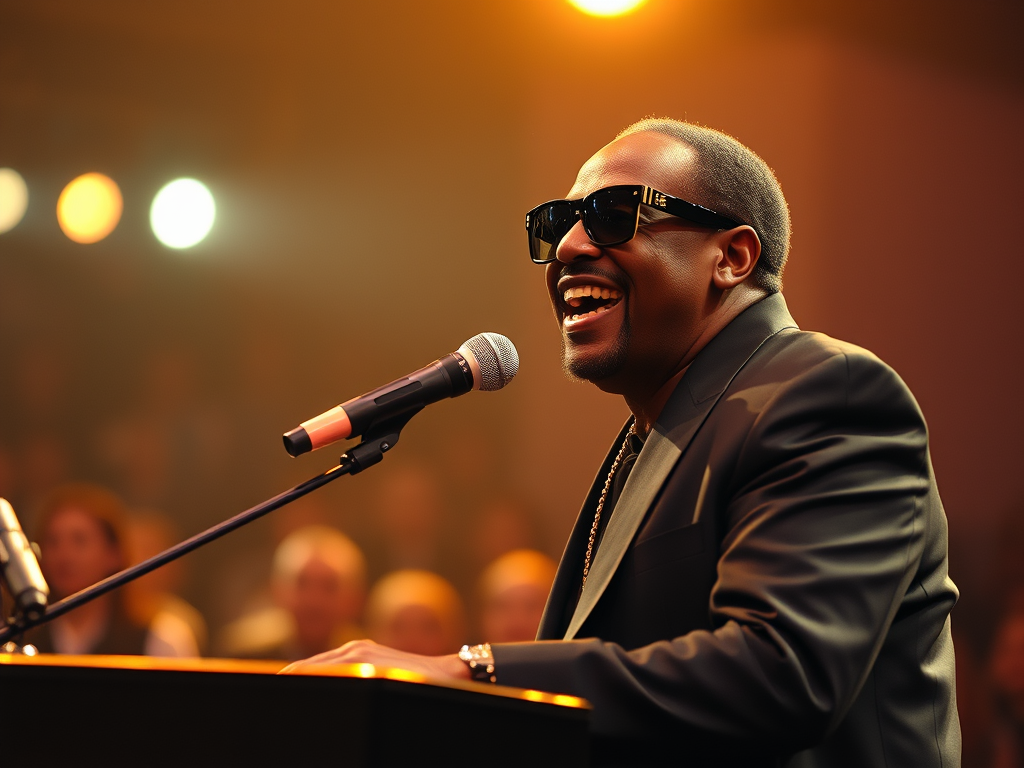
When people think of “blind,” they normally think of someone like Stevie Wonder, who is completely blind due to being born prematurely and lacking oxygen, which destroyed his eyesight.

But completely blind people, meaning people with no light perception at all, only make up 10 to 15 percent of the more than one million people in the United States considered to be blind. The other 85 to 90 percent have some light perception and even some functional vision. Another estimated four to six million people in the U.S. live with vision loss that cannot be corrected with glasses, contact lenses, or medical treatment.

October is Blindness Awareness Month, and since joining that one million in February 2020, I have made it my mission to learn how to live as normally and independently as possible utilizing techniques and assistive devices and apps to enable me to do most everyday activities. I will write about those things next week.

People in the VIP (visually impaired persons) community want those of you who are sighted to understand a few things. First, blindness is a spectrum. It is different for each individual. For me, I have no central vision in either eye and some peripheral loss, and the amount of vision I do have is 20/400 or sometimes 20/300 in the right kind of lighting. My friend Trent, however, has no vision at all in one eye and extremely cloudy vision in the other due to cornea issues. Diane has lost all vision in one eye due to glaucoma, and the other eye is declining rapidly.

I have more functional vision than either. I can see to walk just fine, although I have tripped over objects or dips in the sidewalk/road. I can cook using specialized tools, although I usually have some spills or make a mess. I clean my house, do laundry, do all the normal things a sighted person does.

But I can’t drive, I can’t read. I can’t see people’s faces. I can’t see the house next door if I look directly at it, but I can see it if I look up to the sky or down to the ground (peripheral vision). Like Trent, I have a constant fog, although it’s not as bad as his. I can see a car if it’s as close as 10 yards from me, but my blurry distance vision can only make out shapes if anything at all. Yet I have functional vision. And with the devices I use, I can function very well.

Confused? Of course you are. I would be, too, if I wasn’t on this journey. Sam Seavye of “The Blind Life” on YouTube has a great shirt available that says it all: I can see, but I can’t. It’s complicated.” Yes, it is.

I think I speak on behalf of the VIP community when I say that, as difficult as it is to understand, we have some days of better vision than others. We can do more than you might think possible, but at the same time don’t assume just because my peripheral vision picked up that dirty sock on the floor that I can see what you can. Understand that distance matters. Understand that lighting matters. Understand that contrast matters.

The term for people like me is “legally blind.” You might say you’re legally blind without your glasses, but you’re not. Legal blindness means you can’t see the big E on the chart even with glasses. Legal blindness might mean you only have a 20 degree field of vision when the sighted world has 90. Legal blindness might mean you see nothing more than light and dark.

For most of us, our vision continues to decline. We go along for several days and maybe even weeks and begin to think, “Well, I think it’s stable,” but then there’s a sudden drop. Most of us have had days of depression (or months or years), and we still experience frustration. But we accept. We have no choice.

My purpose in writing this? My mission is to educate the general public, inform the VIP community about ways to live an independent life, and offer support to those new to vision loss so they can have an empathetic ear. It always helps to talk to someone who understands what it is you’re experiencing.

I hope you’ll read my blog next week when I write about the devices I use and some of the apps. And if you’d like more detail, my book Learning to Live with Vision Loss is available for $2.99 as an ebook and $5.99 as a large-print paperback. Sorry, no audiobook, but if you have Alexa, you can purchase the ebook, and Alexa will read it to you.

Thanks for taking the time to read this lengthy blog. Please help spread the word: there IS hope after vision loss.