Acceptance doesn’t mean giving up

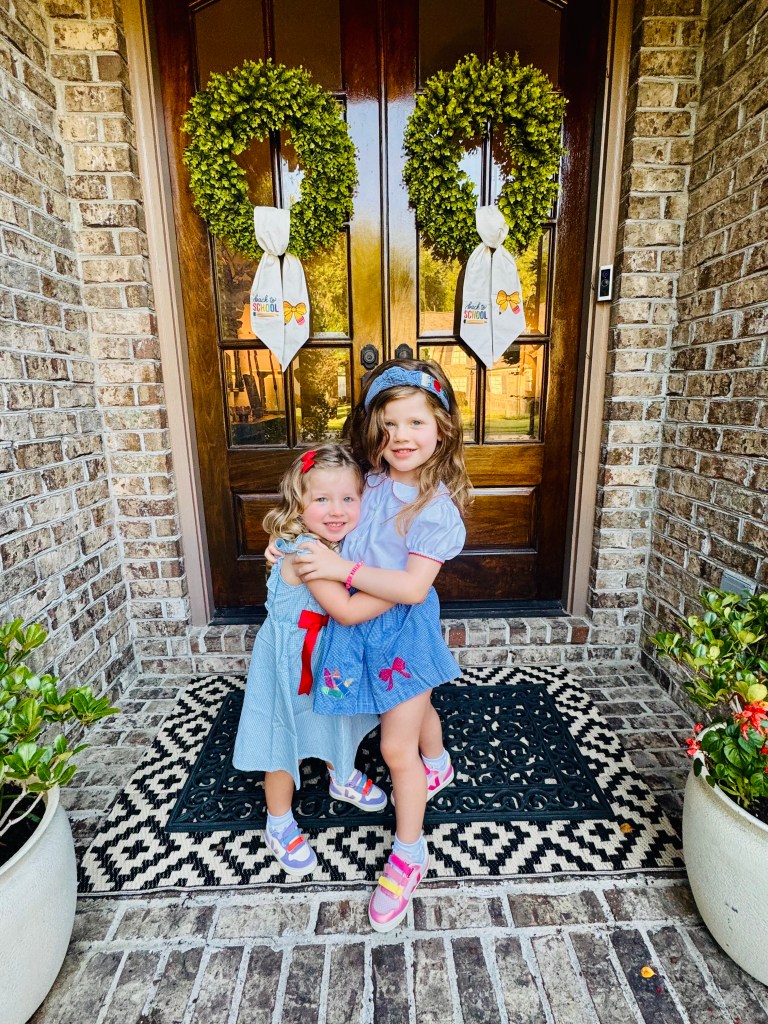
This photo has absolutely nothing to do with my post, but they’re just too cute, aren’t they? Yes, I’m being a proud Gigi. We grandparents are allowed to brag on our grandchildren, so I’m taking liberties!

But maybe this photo is applicable to my topic after all. Bear with me until the end of the blog, and I will explain.

With the wisdom I’ve gained over the years, I have come to understand that our greatest barrier to coping and healing when we go through hard times is our unwillingness or inability to accept the situation. We want to fix it or control it or deny it. Instead of acknowledging it and figuring out a way to move forward, we have a tendency to focus on what we can do to get rid of the adversity.

Here’s the deal. Many times we focus on changing others or changing our state when what we should be focusing on is changing our attitude. We must change ourselves.

I am not going to discuss bad relationships or living situations of which I have no knowledge or experience. But possibly the points I make about other situations can apply to those. As always, I do not claim to be an expert on any of this, and anyone with serious problems should contact a professional.

Years ago, a friend of mine was in an accident, and she ended up paralyzed. When I visited her in the rehab facility, she told me, “I’m going to walk out of this place.” She had a fighting spirit and was convinced she would be healed.

An admirable attitude in our culture, but she was not healed. She has spent the past 30 plus years in a wheelchair.

She eventually accepted her situation and learned to do many thing’s for herself. She was able to drive using hand controls. She cooked and did some normal household things as well as she could. A widow who now lives alone, she is self-sufficient for the most part and handles each day with strength because she accepts her situation. It’s not easy, but it is her reality.

In my own journey of becoming disabled due to vision loss, I accepted my condition from the beginning. My loved ones were not so accepting. They were seeking cures or clinical trials or devices to make my vision come back or at least be better. I even had a stranger pray for me one time. I was at a fast food restaurant with a friend, and when I was paying for my meal, I explained to the woman I was sorry for being slow to do everything because I was visually impaired. Maybe I said legally blind, I don’t know. Either term is correct. While my friend and I were eating, the woman went by our table several times to clean other tables, and I sensed she kept looking our way. When we got up to leave, she stopped me and asked if she could pray for me. Embarrassed but not wanting to steal her joy, I agreed, and she held my hand and prayed for my healing.

I don’t have the heart to go back there and tell her that not only did my condition not get better but it has also gotten progressively worse.

I accept that. I just deal with it. My retina specialist told meI may get to the point I can only see light and dark, but I don’t live in fear of that. It may never happen, and if it does, it may be years from now, and I’ll cross that bridge if and when I come to it. I do, however, continue to do what I can while I can and appreciate each day because today is all any of us have.

I have completed my book Living Fully with Vision Loss and am anticipating a release date within a few weeks. This book deals more with the lifestyle changes and emotional and mental states of those new to vision loss and their support system. It is for everyone, though, as I continue to educate others and advocate for the visually impaired community.

Some of the chapter titles are “First Steps,” “The Age of Technology,” “A Life without Limitations,” and “Our Support System.” There are 12 chapters, approximately 20,000 words (which is very short), and a resource guide. It will be available as an ebook and a large-print paperback. I am working on having it published as an audiobook as well.

In the first chapter, I make the point acceptance is the most important first step. I know of too many who are newly diagnosed who are seeing multiple doctors and looking for clinical trials. That’s okay, but the truth is even if they find a clinical trial for which they qualify, it may take years to see any benefit if at all. I admit I’ve applied for a couple of clinical trials but have been rejected, probably because my condition is too advanced.

By the way, if you’re new to my blog and confused about how I can write a blog and books as a legally blind person, be sure to buy the book when it is released or go to my Journey to Sight YouTube channel where I have videos demonstrating how it’s done.

Back to my topic. Acceptance is the first step in healing. Not the healing we think of. Accepting a physical disability or a broken relationship or the loss of a loved one doesn’t mean you’ve given up. It just means you are facing it and you’re going to handle it. You’re going to persevere despite it. It won’t be easy. It won’t be fun. But if you keep at it, it will happen.

When I pray for others going through health crises, I pray for their comfort and healing but also peace and acceptance. I pray they have a calm spirit while they endure the treatments or the knowledge they have a terminal illness. I pray for their strength to get through each day.

When I was praying for a new treatment for my vision loss or at least for my vision not to get worse, I cried when I prayed. How desperately I wanted to see normally again. How desperately I wanted my independence back (translated: the ability to drive). How badly I wanted to read to my granddaughters, to see my loved ones’ faces, to recognize people in the community when I was out and about.

It wasn’t until I changed my prayer to ask for help in accepting my situation and learning about how to cope with it that my mental state improved. And you know what? That happened. I have learned so much, and I am continuing to learn. I was paralyzed in my own way in a state of limbo until I changed my attitude. These days, I have an attitude of gratitude because I’m grateful for all the good things in my life.

As for the two girls in the photo, they accept me as I am. They know Gigi can’t read to them, so they’re okay with my Meta glasses reading to them, although they have to get very close to the frames to hear it. Sometimes when we’re playing, one of them will say, “Gigi, are your eyes working?” which is their way of asking if I can see what is going on. And I can see well enough to play with them, cook for them, “watch” Disney with them, and play with them.

They accept me for who I am. I have to do the same.

It’s Elvis Week in Memphis…the legend continues

First, let’s get this straight. I have been an Elvis fan since I was six or seven, but I liked the movie version of Elvis who paid attention to children. I liked his music, especially the ballads. I liked his rags-to-riches story. I related to the poverty in which he grew up since my parents did the same.

But I never wanted him to be my boyfriend or grow up to marry him. After all, he was 21 years older than I was. I did want to be in his circle of friends because of his fame and good looks (although he wasn’t always so handsome, especially in his later years), and as I got older and learned more about the man instead of the image, I wanted to set him straight.

Elvis was a talented entertainer but also troubled. The same man who started a rock and roll revolution and lived a promiscuous life loved gospel music and reading the Bible. Graceland has one of his Bibles on display, the dog-eared copy with pages full of his notes in the margins.

Elvis’s life was basically divided in halves. The first half was poverty, family, and pursuing his dream of becoming a singer. The second half was fame and fortune, family and friends, and a roller coaster ride of highs (hit records, a huge fan base, recognition, the birth of his daughter) and lows (the death of his mother, the cheesy movies, the career controlled by Col. Parker, the betrayal by two of his inner circle, his divorce).

With as much as I’ve read about Elvis and the number of documentaries and interviews I’ve seen have given me, I believe, a balanced view of him as a person. Unlike some fans, I recognize his shortcomings just as I recognize (hopefully) my own most of the time. I also recognize his good qualities.

I often say Elvis was a paradox. I also believe he is the epitome of arrested development. He never really grew up in the way most people do. And maybe that’s common for many who are thrust from poverty into riches, but for this blog, Elvis is the subject.

Elvis craved adulation and attention, but he was insecure. The first time his Sun Studio record was played on the radio, he didn’t sit in his living room with his parents to hear it aired. Instead, he went to a local movie theater. The song was requested to be played over and over until Dewey Phillips called and told his parents he wanted to interview him on WHBQ. Vernon and Gladys found him in the theater. When Dewey was talking to Elvis, Elvis thought he was going to be interviewed after they talked. He had no idea their conversation WAS the on-air interview.

He never wore denim when he made the money to buy his own clothes. Having grown up in Tupelo, Mississippi, and having been forced to wear overalls and go barefoot to school, he viewed denim as the clothing for the poor and never wore it again.

His father was one of those men who never held a job. Neither parent was well-educated, and the young Elvis witnessed their struggles. He loved his mother deeply and wanted to provide a better life for her. I think even the young Elvis sensed his father’s lack of a work ethic.

He kept an inner circle, who came to be known as the Memphis Mafia, because he was uncomfortable with friendships outside of his experience. No doubt he felt out of place among many Hollywood types, and his classmates from Humes High School (especially Red West and George Klein), some Army buddies, and his cousins were his constant companions, so much so that his wife Priscilla soon tired of so many of them hanging around Graceland.

He was generous, overly so. His father and Priscilla despaired because of his tendency to give away jewelry, cars, and other gifts to family, friends, and even strangers. He had a soft spot for the poor.

He appreciated his fans and never turned one away who wanted an autograph. He knew his fans were responsible for his success.

He was a daredevil. He loved roller coasters other thrill rides as well as fast cars and motorcycles, and in the 1960s he developed a passion for horses. His personal favorite was a golden palomino quarter horse named Rising Sun. And because Elvis wanted to ride, he insisted everybody in his circle learn to ride. He bought horses for all of them, whether they wanted one or not. And no one in his circle ever told him “no.”

He was like that pushy kid in elementary school who always wanted to do what he wanted to do and pushed everybody else to do the same.

I often wonder why so many stayed with him. He had a temper and in ways was selfish, but he also had a charm and a way of listening to someone that made them feel seen and heard. He had an aura that drew them in, and I’m sure they didn’t mind having small roles in his movies and getting to interact with Hollywood stars just because they were the satellites revolving around their sun, Elvis.

Jerry Schilling’s book Me and a Guy Named Elvis is a great read, and Jerry was one of the few who broke away from Elvis’s orbit to pursue his own interests. George Klein’s book Elivs, My Best Man is another good read because George, too, had his own life.

Whatever your opinion is of Elvis, you have to admit the Elvis Presley Enterprises machine has done an amazing job of keeping the legend in the public eye since opening Graceland to the public in 1982. Elvis died 49 years ago this Sunday, and about 600,000 visitors go to Graceland each year. His music is still being played, and with movies like Elvis starring Austin Butler (2023) have created a new generation of fans.

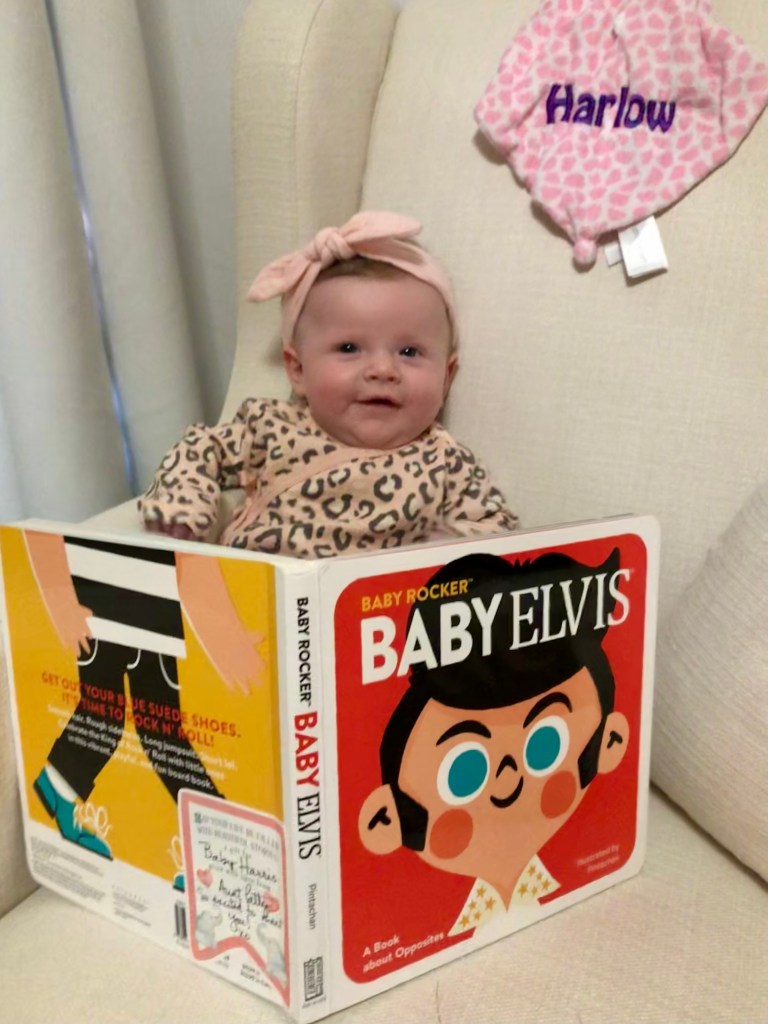
The photo of my granddaughter holding a book entitled Baby Elvis (purchased by my daughter-in-law or her mom as a joke since my son is or was an Elvis fan) was taken over four years ago. She is five now and in kindergarten.

The legend lives on. For how much longer, I don’t know. It may be there are teens and twenty-somethings who have never heard of him, which I don’t doubt since I’ve known teens who thought New Mexico was another country instead of a state, but that doesn’t change the fact that he is likely the most well-known entertainer in the world. I know Taylor Swift and more current artists have captured their own numbers of fans, but I wonder…will they be as well known almost fifty years after their death?

A writer’s thoughts

There are millions of us. People who have so many ideas swimming in their heads they don’t have enough time to get them written. People who feel the need to express themselves in words. People who will never be successful writers.

But we write anyway. And in this day of self-publishing for free on KDP (Kindle Direct Publishing), some really bad books are out there. So are some really good ones. Most, I suspect, fall somewhere in the middle.

My early fiction writing attempts were published by a traditional small press. I never paid anything to have them published, and I made a little money off the sales. Very little. But I wrote anyway, and I look back now and realize a few things about myself. First, my topics are antiquated. I write stories like those written by Janette Oke(Aimee) or the writers of children’s mysteries published in the 1950s and 1960s (The Ghosts of Graceland, Music City Mayhem). The romance themes were sweet and innocent, in a way (Smoky Mountain Brides).

In other words, most people under 80 or older than 10 would not want to read them.

All of those books are out of print now because the publishing company has sold and the time to make them available has expired. So, I rewrote Aimee, changed a few things, and self-published. I believe the newer edition is better. I took the novella in Smoky Mountain Brides and polished it before sell-publishing as Can’t Help Falling in Love.

I know I don’t have what it takes to be like John Grisham or my favorite author Lisa Wingate. I can’t write a Pulitzer Prize winner like Geraldine Brooks did with her book March. And I definitely can’t write books like those by Kristin Hannah, Kristi Harmel, Ann Patchett, and others.

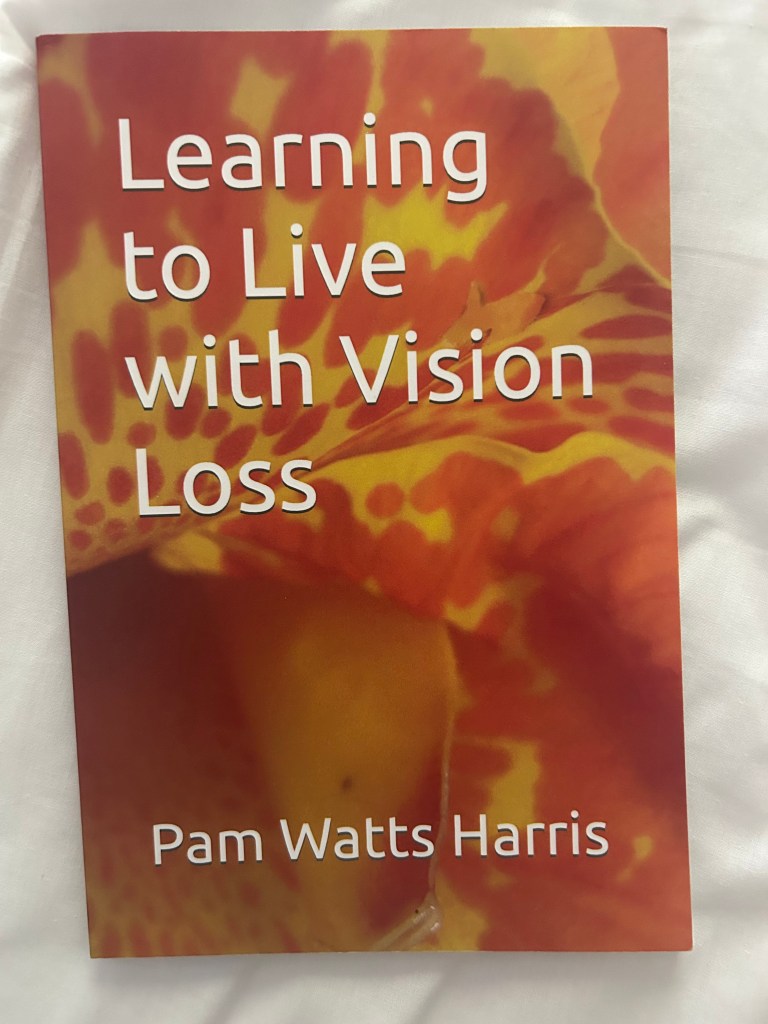
My best selling book so far is the one pictured. Don’t get me wrong, royalties are very small. I think my last royalty check was just under $15. But that’s okay because the purpose of the book is to help people.

I’m more of a journalistic style writer. Like with this blog, I write informally, as though I’m having a conversation (one-sided) with the reader. I kept the book short, knowing most people won’t ffiish a long book. I don’t think my own children have read this book even though it was published two years ago. They’re busy, I know, but neither do they read this blog. People read what interests them, and the number of people with an interest in vision loss or a the information is small.

That’s okay. That knowledge is not stopping me from writing a sequel to it. I’m almost finished with the first draft of what I am currently calling Journey to Sight but will be renaming it before publication.

I’m going to continue to write fiction because I’ve been writing stories since I was seven years old. I still remember the story I wrote and illustrated that my teacher allowed me to read to my class. Suzy the Elephant was about a circus elephant. Wonder where I got that idea? Yes, I loved all things Disney. When I was nine, I wrote the riveting story “The Tale of the Bloody Bluff Brothers” set in Arizona where I lived at the time.

Writing to me was what some of you experienced with Little League and other sports. It was what I loved.

All I ever wanted to do was be a writer, but just like those of you who had dreams of becoming a professional athlete, that never materialized. I focused on reality and discovered interests in other areas.

I’m still going to write fiction. I’ve promised a young girl to finish Secrets of the Smokies, the third in the Mandi mystery series. I’m working on a sequel to Aimee. This one is set in 1911 at the Yuma Territorial Prison in Yuma, Arizona. By the way, the prison had closed at that point (1909), and when the local high school burned, classes met at the prison from 1910 until 1914. Their mascot to this day? The Criminals. And I’m likely going to rewrite my novella Surf Song that was part of now out-of-print Coastal Promises before next summer. It’s a beach read set in the Outer Banks of North Carolina. I’ve even started on a book for women that can be used in a class setting with a working title of The Woman God Sees.

Writers, you understand how I feel. You love books. You love to write. No matter how unpopular the end product is, you have to express yourself.

What’s wrong with public education

Don’t get me wrong. There are many things good about public education, but as the beginning of the school year approaches, I can’t help but think about what’s wrong with it. Specifically at the high school level. I know that is a sentence fragment, grammar police, but I intended it to be that way.

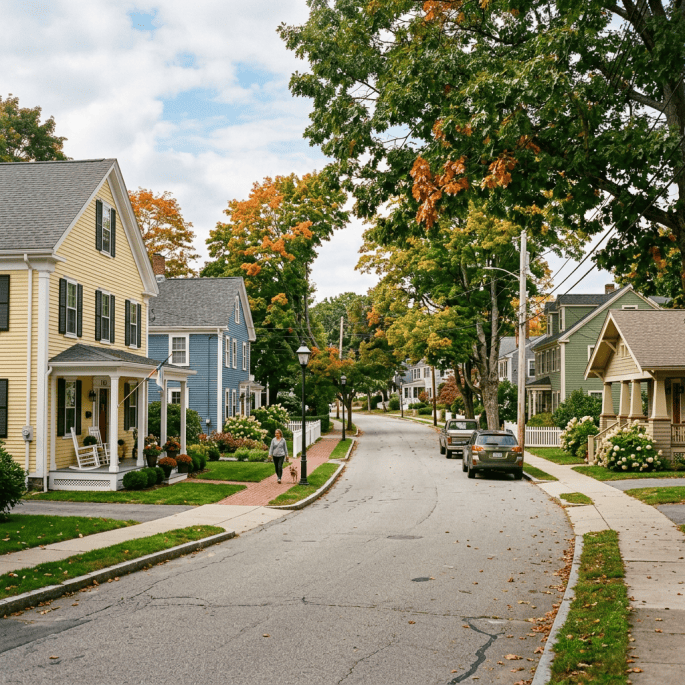
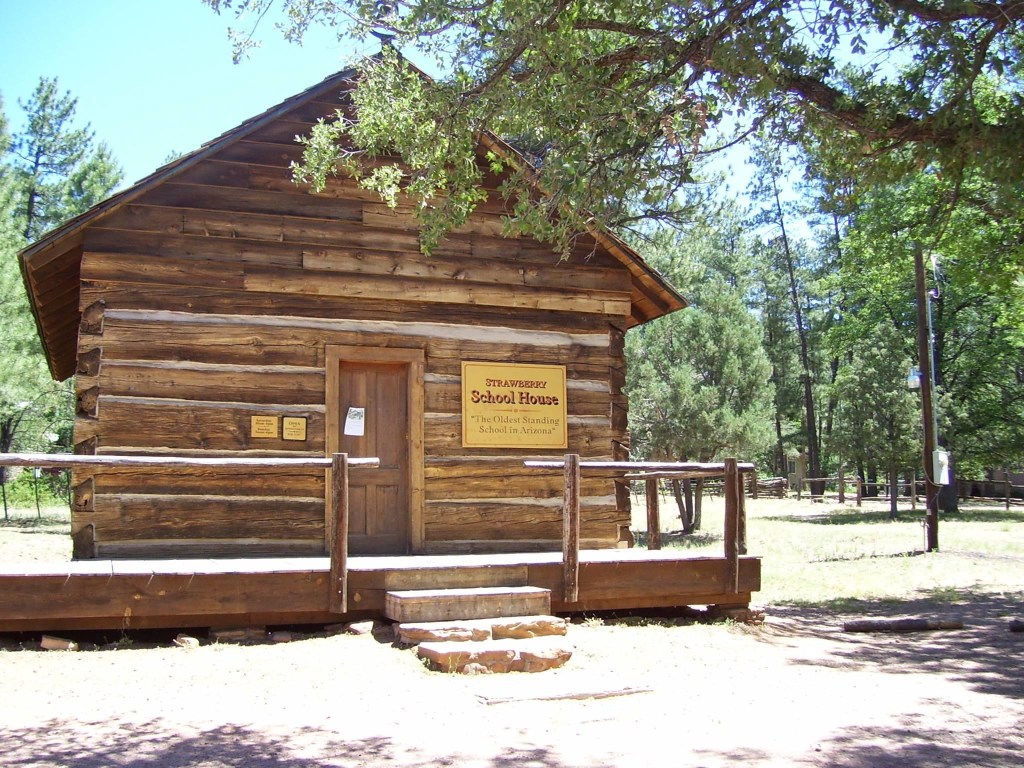
Public education has come a long way since this one-room schoolhouse was built in 1885 in Strawberry, Arizona. It’s the oldest standing schoolhouse in the state, built when Arizona was still a territory.

I’ve been out of the education field since 2018, but I talk to people who are in the classroom and hear their stories of what is happening today.Keep in mind my statements are my opinions based upon personal experiences and observations, not research.

First, I’ll address teachers. You have a difficult job, and I know many of you once loved your career but are discouraged by the changes that have taken place. It’s a shame you are not treated like the professionals you are. Your profession is the only one I can think of that is governed by people who do not work in your profession. Legislators and school board members with no experience (or limited experience) in education are telling you what to do and how to do it. Evaluation models you are expected to follow are based on research, and as a former principal who observed multiple teachers, I have to agree that the TEAM approach was effective. The best teachers were the ones doing those things already. It was reflected in the learning and test scores. It was reflected in how the students responded in class. And you know what I saw? The teachers who had the highest test scores were liked and respected by their students. Keep that in mind. Be firm but kind. Encourage. Don’t take your bad days out on your students. Be professional by arriving when you’re supposed to arrive and doing what you’re supposed to do. You know what makes life harder for teachers? When fellow teachers are not abiding by the policies.

Next, administrators like principals and supervisors. Many of you, if not all of you, are in your positions because you were tired of the classroom and wanted to earn a higher salary. Don’t forget what it was like to be in the classroom. If done correctly, it is a demanding, exhausting job. My seven years as principal were stressful in ways, but it was a nice break from being in the classroom and being observed by the powers-that-be who seemed to be looking for what I was doing wrong instead of what I was doing correctly. Treat your teachers with respect and professionalism. To the teachers at DMS, I apologize if I ever treated you badly. It was not my intent. I know of one school district in which a team of supervisors is observing teachers DURING THEIR PLANNING TIME. All caps are intentional. This is the craziest thing I’ve ever heard of. If you have someone looking over your shoulder constantly, how do you feel? Do you want to stay in that job? Give your teachers the support they need. If they’re not doing their jobs, address it and let them go if necessary. I know that sounds harsh, but education is about the students, not a teacher’s feelings. Some enter the profession who are not suited for it. But treat even those teachers with professional courtesy.

Third, school board members. Listen to the teachers. Listen to the administrators. I know you want success for the students, and because everyone went to school while they were growing up, they think they’re experts in education. Really? I’ve been going to doctors all my life but would never presume to tell a doctor or nurse how to do their job. Do corporations have non-business people determining policy? Would I presume to be on a board for an airline just because I fly? Yet we have farmers, business people, some former educators, and other occupations sitting on our school boards and making policies without listening to the experts: the teachers.

Fourth, parents: What I am hearing about parents in general these days just blows my mind. Apparently you feel your child should not be held accountable for anything. Not for grades. Not for behavior. Not for attendance. When I heard the state had changed the grading scale to below 60 being failing instead of below 70, I couldn’t believe it. Look, I know there are some tough teachers who seem to be harsh (shame on them) or expect too much (if they’re doing their jobs right, they will expect more). But your disrespect of the teachers and the school in general is teaching your child to be disrespectful of authority, to make excuses for failure instead of working to overcome it, and preparing them for a future of irresponsibility in life. I know not all parents are this way, but there are enough of you out there that, once again, your attitudes are lowering the quality of education for all students, not just your child.

As I said, there are many good things about public education despite the negatives I’ve listed. You’ve stuck with me this long. Please consider these suggestions:

Teachers, be kind and patient with your students. Harsh treatment, especially in elementary grades, can damage them psychologically for many years if not for life. Students have varying abilities to learn, and your job is to teach them in ways that help each one. Remember that teaching is not a “one-size-fits-all” approach. I didn’t learn that for many years, and once I learned that and figured out ways to address it, students actually learned what I was trying to teach them.

Legislators, administrators, school board members: be willing to listen. And as for the test scores situation…well, that will be another blog. What you legislators have succeeded in doing is to teach students how to take a test, not given them the skills they need to succeed. My generation was not tested like students are today. And yet many of us became successful in life. The only standardized test I took in high school was the ACT. Yet I went on to be successful at the university level. How did one of my classmates become a Harvard professor? How did many become doctors, teachers, business people? (Are you picking up on my sarcasm?) By the way, I think Tennessee should go back to career/college/dual path system instead of the Tennessee Diploma Project. That, too, will be the topic of a later blog.

Parents, teaching your child to be responsible and accountable is not easy. You don’t want to see your child hurt or upset. I get that. But if you lay the foundation of expectations and get the help your child needs when struggling, you will prepare them for a more successful life. In high school, I was used to making mostly A’s, but I struggled with Algebra 2. Mom found a retired teacher in our church who tutored me two afternoons a week, and my grades improved. That prepared me for college algebra. She didn’t go to the principal and complain. She didn’t send the teacher hateful notes or ask the teacher to accept my homework late (which I had not done because I had no idea how to do it). That was in the 1970s. In today’s educational system, free extra help is available at school. And if your child gets in trouble at school and receives a detention, make them serve it. Stop making excuses for them.

If you’ve made it this far, you may be disagreeing with my opinions, and that’s fine. Because this is my blog, I’m expressing my own. We can agree to disagree.

As a product of public education in a rural setting, I am not knowledgeable about inner city schools or schools in suburbs in which the standard of living is much higher. I attended schools that were an assortment of races, socio-economic groups, and ability levels. I taught in the same type of schools.

So, to say I’m passionate about public education is an understatement. I believe in it. A strong public education system makes a strong community. We need public education, but some things need to be fixed.

Life lesson learned: you can’t control everything

This is an AI image my daughter-in-law created when my son’s boss approached him with the idea of the family moving to Amsterdam for a. couple of years. My initial gut reaction was tears because I wouldn’t be able to see the girls as often as I do now. They live just over two hours away. Amsterdam is a bit farther than that!

But then I told myself if is their life, not mine. I told myself I would always be the kind of parent and grandparent to give my children/grandchildren wings and not be a wing-clipper. My mom, bless her, was very much a wing-clipper. She meant well, but I never had to freedom to do as I wanted because of the guilt placed upon me if I were to do so.

So, I told myself we would just have to go to Amsterdam to visit. We’d have to FaceTime. Maybe it would even be a good thing since I’ve never been to Europe and always wanted to go. With them living there, they could be our hotel and our tour guides.

I was making lemonade out of lemons.

They’re not moving to Amsterdam, but with his job, I know I can’t count on them always living two hours away. There are countless grandparents who livelong distances from their grandchildren, and they cope. I could do it too.

I never told my son my feelings. I just listened and asked questions. My role, I believe, is to support, not chain. To give advice only it is asked for. Sometimes I go the “Mom” route when a problem arises with one of my kids and I’m trying to make suggestions when all they need is someone to listen or bounce ideas off. They’re adults.

My journey to accepting I can’t control many things in life came to full fruition about 15 years ago when I realized my adult life was not the perfect one I had envisioned in my younger days. I realized I couldn’t control other people. I couldn’t control certain aspects of my health (vision). I couldn’t control my life in many ways.

So, the Serenity Prayer became a part of my routine. I said the words. I wrote the words. I thought about it. Finally, I meant it.

I really and truly meant it. I stopped telling God what he needed to do for me. I stopped wondering why certain things I had prayed about and for had not happened. I just accepted.

That doesn’t mean I don’t still pray about some of those things, but no, I don’t pray my vision will get better. It won’t. It’s getting worse all the time, but I still have functional vision to do a lot of things. Sure, maybe some technology will be invented that will help me see better someday, but I’m not banking on that. I still pray about some things I know are out of my control like my loved ones’ safety, their spiritual conditions (as well as my own), and their choices.

But I don’t worry about those things.

Several months ago, my son (the one who had been asked to go to Amsterdam) had to go to Singapore on business. He flew to California where he boarded a plane and flew 16 hours to his destination. I prayed about it and never worried a bit. Worry, I knew, wouldn’t change anything. It was out of my control.

Accepting that and practicing it has given me a peace I never had. That doesn’t mean I don’t have my moments. That doesn’t. mean I don’t shed tears about things that weigh heavily on my spirit.

The thing is, when we want to control everything, that need to control actually controls US. It can be as simple as being a “backseat driver,” or it can be as overt as telling our adult children or out spouse what moves to make and becoming…well, bossy.

If you are a regular reader of my blogs, you know I’m super independent. I have resisted bossiness all my adult life, but at the same time I’ve been compliant. I’ve given in to the person bossing me around.

My choice, so I have to accept it and not resent those people for trying to control me. I just go with the flow to keep the peace. That’s the way I’ve lived most of my life.

Here’s my sidenote about this topic: You may not be that way, and that’s okay. I’m independent but not strong-willed. I can’t be happy if what I want out of life makes someone else unhappy.

Back to my topic. What worked for me might work for you, but please know it may take a long time. Please know it doesn’t always work, but it does most of the time.

To me, accepting what I can’t control is a matter of faith.

Here’s my version of the Serenity Prayer:

God, grant me the serenity to accept what I can’t change, courage to change what I can, and wisdom to know the difference.

Living in a prison

This is my friend Myrna with Stevie Wonder at a technology conference where she was representing Blind Shell, a company that makes smart phones for the visually impaired and blind. She doesn’t know I’m doing this, but I will ask forgiveness later. If she objects, I will take this post down.

The connection to the photo and the title will be at the end of my blog, as usual.

The other day Barry was watching “The Shawshank Redemption.” It’s a great movie in many ways, but some may not care for the violence and what they consider (maybe accurately) the misrepresentation of prison life. But the thought struck me about an analogy to life.

Brooks, played by James Whhitmore, is an elderly prisoner who has spent most of his life in prison. When it is time for his release, he doesn’t want to go. He has become “institutionalized” as Red (played by Morgan Freeman) puts it. He doesn’t want to go, but he must. He ends up committing suicide because he can’t handle life on the outside.

Now, the average person would watch the movie, think it’s good or bad, and then not think about it again except to express an opinion or describe a scene. But me being me…well, you know I look for deeper meaning.

I think many of us become institutionalized in our own way. We work in a job that is low-paying or even one we don’t like because we’re comfortable with it. We’re afraid of the unknown. We stay in towns with little opportunity because our family members are here when even just a short move an hour away would provide a better quality of life. We do the same routines over and over and tell ourselves that is what we enjoy when maybe the truth is we do those things because they bring a certain amount of comfort.

I live in my hometown, but we moved away when I was three. I did not come back to stay until I came here to attend college and stayed after graduation. While growing up, due to the circumstances and situations of my many aunts, uncles, cousins, and maternal grandparents, I did not want to live here. “I will never live there,” I used to tell my parents. My impression of the town was not a good one.

Attending the university, though, was a different matter. I loved the college, the campus, the professors, and the friends I made. When college was over, I found a job in the area and continued to live here. I learned that the college and the town were two separate entities, but it was okay. I didn’t love living here, but I liked it. My friends were here. I was making new friends at work. My parents moved back here, so I stayed. Then I met my future husband, eventually got married, and yes, stayed.

Yet over the years I daydreamed. I thought about places I’d rather live, jobs I’d rather have, things I’d rather be doing. Time marched on, and life moved on as it was with improvements along the way. Yet I never felt that this was to be my permanent home. I dreamed of retirement and moving somewhere else.

You could say I had a restless spirit. That would be an understatement.

Now, however, I no longer have those desires. I’m involved in community activities. My friends are here. No, my closest relatives are not here, and my parents passed away years ago. My children and grandchildren are not here, but they are only 40 minutes away or two hours away. Moving to a new place does not appeal to me because I know it would be difficult if not impossible to make new friends at my age. I have friends here I can count on more than I can count on relatives.

Maybe I’ve become institutionalized, but that’s okay. Maybe I’m just more comfortable with the familiar, and if so, I have no doubt that is due to being the age I am. The things that were so important when I was younger are not important anymore.

But I don’t need to feel too comfortable. I shouldn’t fear new experiences or change, and really, I don’t fear those things. I will admit my vision loss situation has robbed me of independence in more ways than not driving. I am fearless in my comfortable surroundings but apprehensive in other surroundings. I want to overcome those fears and learn to adapt to new settings in which I don’t have to depend on Barry or someone else to help me do things.

I want to be more like Myrna and Stevie Wonder. Myrna has Stargardt’s disease, an inherited retinal condition that made her legally blind when she was 12. She attended public schools for awhile and then a school for the blind. She, like me, relies upon peripheral vision, aids, and technology to do the things she does, including working, raising two daughters, and traveling independently. Yes, she flies to new places alone.; Did you know airlines provide help to the blind at check-in to go through security, find their gate, and give them access to early boarding to find their seat? As for Stevie Wonder, he has been blind since birth because of damage due to too much oxygen when he was born prematurely. Yet look at his success as a musician and singer!

They don’t allow their vision to lock them into a prison. Yet people with perfect health and perfect vision and hearing allow themselves to stay in a prison of their own. I’m not talking about people who are happy with their situation. I’m talking about people who are unhappy with their situation but are too afraid or lazy or intimidated to try to change it.

I’m no longer living in a “prison,” although I confess may home and neighborhood sometimes feel that way. But I would feel that way no matter where I lived unless our town decided to create a wonderful community that is walkable to stores and activities. (Side note: the perfect area, to me, to live is near the university, but there’s nothing near there except for older homes and student housing. Across the bypass doesn’t work because I can’t walk across the bypass, too much traffic, too dangerous. The condo complex behind E.W. James in Union City is perfect–any local developers have any ideas/??)

I now there are some spelling and possibly grammar mistakes in this blog today, but I fixed what I could as I listened to the screenreader. I have it enlarged as large as possible on my 55 inch television, and I can’t find all the mistakes because the words are jumping around, so forgive me. It’s not the most polished piece I’ve ever published,, but maybe you get the meaning.

Which is this. If you are unhappy in your situation, do something to fix it. You may have to fix yourself first. And don’t take this blog as a license to end a marriage. Work on it, if at all possible. Seek professional help. Seek counseling. Your job drives you crazy? Seek a life coach of talk to Chat GBT about jobs that might be a better fit. I’m not suggesting there’s a perfect job out there. I’m saying a better, higher paying, more satisfying job. Believe me, any job you do is going to get old after a while. That’s just life.

We all feel stuck at times. But if we fail to explore possibilities, it is a prison of our own choosing.

“Family is everything.”

A decorative sign saying “Family Is Everything” that was gifted to me several years ago hangs in our bedroom.

I understand the meaning behind it. For most of us, family is what gives our lives purpose. They fill our lives with joy and friendship, but sometimes family can be the source of our greatest sorrows. Sometimes a family member is someone who is “better loved from a distance.”

The devout and faithful of religions honoring God souls argue that God (or Jesus, the Holy Trinity, etc.) is everything. Some would argue that self is everything. Others would say that friends and social connections are everything.

When my oldest son was being recruited to play college football, the coach told us his order of priority was “faith family, football.” He knew our culture and knew what to say. Unfortunately, his actions did not reflect that philosophy, so lesson learned: don’t believe what people say when they’re trying to get something from you. They’ll use whatever persuasive tactics they can.

What have I learned about family over the years? First, they are not perfect. I write this a lot–I’m not perfect, so neither are they. Next, some are closer than others. This is due to common interests, personality, and proximity. Third, the more distant. the family connection, the more distant the relationship. For example, second cousins are not as close as first cousins. A great-aunt or uncle is usually not as close.

I’ve also learned that siblings are not always someone we can count on. They’re not always someone we hang out with or share our thoughts.

When I was growing up, I adored my only sibling, a brother nine years older than I was. That adoration was made even stronger when he became a father when I was only 12, and I adored my niece. We didn’t live in the same town, but we did get to see each other for weekend visits.

When he and his family moved to California, we only got to see them once a year, and because of Dad’s work schedule, that visit was usually just over a week long. So we filled in with letters and phone calls, but of course, that wasn’t the same as spending time with them in person. There were times over the years that we did spend more time with each other (talking about my niece), but where she and I landed permanently and our individual circumstances sometimes caused us to go years between visits.

That is one of my biggest regrets.

My brother changed over the years, and although I always loved him, spending time with him was not as enjoyable as it had once been. He and I differed in too many ways, including our moral codes, attitudes about life, and faith. My youthful adoration was shattered, but my love for him remained.

Each family has its own dynamic. A friend once joked “We put the ‘fun” in dysfunctional,” and probably most of us could say that.

I’m going to be honest. (My husband would say, “Oh, really?” as a joke meaning why would I be dishonest?) I always wanted siblings. I wanted sisters and brothers close to my age. I loved books like “The Five Little Peppers” because there were five children. I loved “The Sound of Music” partly because of the large number of children. One of my friends when I was growing up was one of five–and I envied that.

Idealistic? Sure. But that was what I wanted.

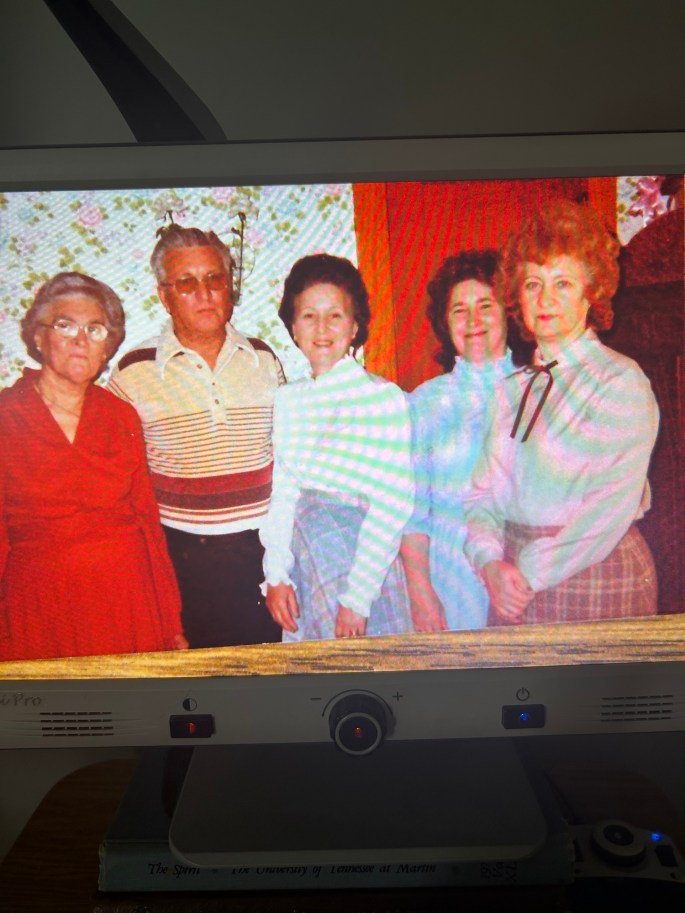
This photo is of my mom ( seated center” and her brother and two sisters. They were very, very close. Growing up on a farm, they were each other’s playmates, co-workers, and confidants. Yes, they argued at times. But they were there for each other through thick and thin. They loved spending time together.

I am thinking about family today because of a get-together last night with my husband’s aunt and her extended family. She, the great-grandmother, with all three of her children and their spouses and some of her grandchildren and great-grandchildren. Plus a couple of friends of her son and us. It was great being with all of them and sharing in the celebration of July 4 by doing the very American activities of grilling hamburgers and hot dogs, and having plenty of sides and desserts (including homemade ice creamK) along with newer American activities like playing corn hole and watching France play (and defeat) Paraguay in the World Cup competition.

Since vision loss, I have wished even more for a sister or two or three. Only a sister (or daughter, which I don’t have) could be the pal I want to go shopping, take me places, listen to me when I want to discuss something relevant to women, and that sort of thing. At the same time, I know there are many women with sisters and/or daughters who don’t have the kind of relationship that would allow them to do those things.

So, maybe “Family is everything” is better said “A family that is the kind it should be is invaluable.” Not perfect. Not ideal. But people you can count on and always, despite your differences, love.

By the way, I have had my screenreader read this blog to me twice, and I’ve tried to catch mistakes, but my vision is getting worse all the time, and it’s a struggle to do this today, so I’m going to be lazy and let the mistakes remain. No doubt you can figure out what I’m attempting to say!

Age is just a number. Really?

I can’t remember if I’ve posted this photo in a previous blog, but it fits today’s topic.

I heard a speaker last week say, “I’m 80, but age is just a number.” He’s right…in a way. He’s wrong in another.

Age is more than a number. It’s your health, your attitude, your genetics, your abilities. An 80-year-old, no matter how healthy, is not as strong or young-looking as he was at 30. But even some 30-year-olds are “older” than others their age.

I’m fortunate to be physically fit, and I often say I can out-walk most 40-year-olds and am proud of the fact I can bounce up from sitting on the floor without any problem. But I can’t do without sleep as I used to be able to do, and the fact that my hair is graying, and my skin is thinning demonstrates that I am, indeed, not 40 anymore.

Lifestyle choices affect the aging process. The 50-year-old who has made unhealthy choices such as smoking, drinking to excess (new research shows that even one alcoholic beverage a day, wine or otherwise, will damage your health and make you more at risk for cancer, dementia, etc.)), not exercising, and eating an unhealthy diet may not see the results yet, but when he is 65, he may be more like an an 85-year-old while a peer who has made healthy choices is still full of energy and living an active lifestyle.

Genetics play a huge role, in appearance, health, and longevity.

But, still, age is not just a number.

It’s also a mindset. I feel much younger than what the calendar indicates, but other things remind me of my age. One thing that makes me feel older than I am is my vision loss.

You may wonder why that’s a factor. There are several reasons. First and foremost, I’ve lost my independence. Being unable to drive has robbed me of my independence and of many of my joys in life. That’s okay, I accept it. But it doesn’t change the fact how it feels to rely on others for transportation. My mom drove until she was 87. When she was 85, she was driving herself to radiation treatments. I can’t do something as simple as get in the car and drive to the Dollar General a couple of miles from my house. I stopped driving at the age of 62, and it has been the most frustrating, discouraging, and humiliating part of this vision loss journey.

Like the time the 90-year-old gave me a ride home after a civic group meeting. There I was, all five feet seven inches of me sitting in the passenger seat of an older car driven by a very sweet woman who was maybe four feet eleven inches tall. Such a sweet gesture. Such kindness. Such a kick in the gut.

I often say I’m not complaining, I’m just explaining. Well, in this case, I’m complaining. I’m appreciative of all the people w who drive me places, more than they know, but I admit that the loss of independence is … well, you get the idea.

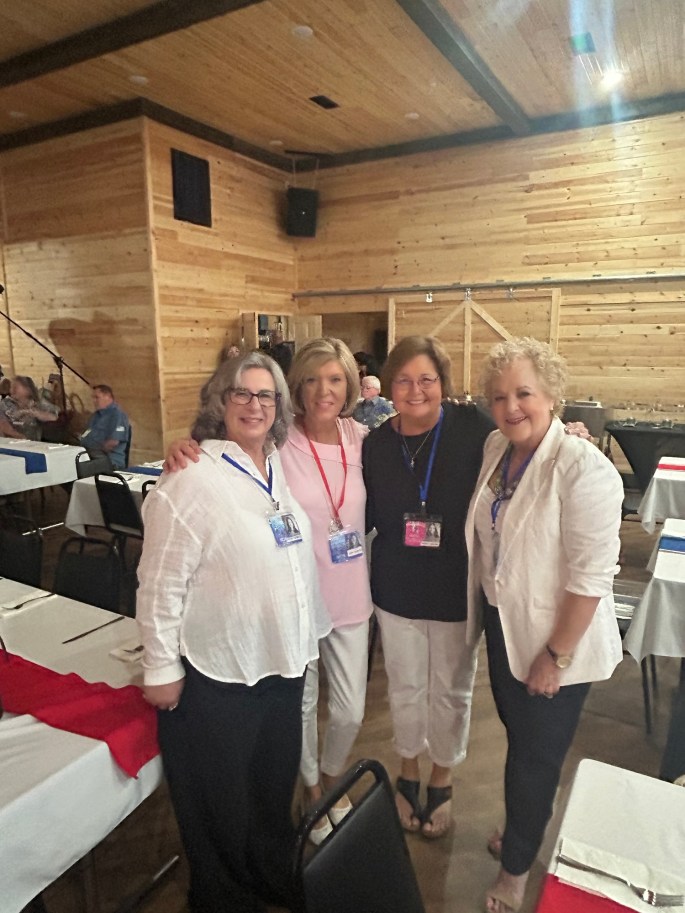
These ladies in the photo agree. Unless they have a family member to take them places, they are stuck in the facility or on the grounds. One of the ladies told me, “The days sure are long.” They’re such sweet ladies, and they tell me I’m just a baby. I tell them that’s why I like hanging out with them, ha ha!

I suppose I’m rambling with this blog, but when the gentleman made that comment last week, it weighed on my mind. He was not the eloquent speaker he once was. His voice was weaker and shakier than it used to be.

Don’t get me wrong, I think his attitude is great. But to say age is just a number is, to me, an inaccurate statement. And maybe what people mean by that is you’re as young as you feel. If that’s the case, we all feel different ages during the course of one day!

What makes someone “weird?”

The definition of “weird” involves suggesting the supernatural or uncanny. We use it that way, but we often use that word when it would be more accurate to say “odd” or “different.”

But, how do you determine what is odd?

The fact is we often see people who are different from us as being odd. Cultural norms in another country strike us as odd. Greeting someone with a bow instead of a handshake? Eating fried grasshoppers? Believing in aliens or reincarnation?

How odd. Unless you are one of those people.

“Different” often has negative connotations, but each one of us is unique. We have our mannerisms, our fears, our quirks, our likes and dislikes, and our value system. We want people to respect our differences, but sometimes we are not respectful of theirs.

I like to think I respect other people’s differences, but sometimes I’m guilty of not understanding. I’m not judging. I just don’t get it.

This morning I was kidding my husband about something and told him he was weird. But, when thinking about what we were talking about, I am more likely the weird one because my stance on that topic is less common. His is more normal. (Can you tell I’m apologizing to him?)

I admit to being different. My taste in food and music, my “never meet a stranger” attitude, and my desire to express my thoughts as I’m doing now are not the norm.

You may be wondering what the specifics are of my “not the norm” components. Well, here are just a few.

I’ve always preferred vegetables and fruit, even as a child, and hamburgers and pizza are at the bottom of my foods list. I don’t love chocolate.

I don’t mind eating in restaurants by myself. I’ve done it many times over the years.

When I could drive, I never minded driving on the interstate, even the horrendous, semi-dominated I-40 that crosses our state and puts fear into the hearts of many. In the past, I drove cross-country without a thought.

I don’t mind doing things alone. If there’s a movie I would like to see and no one would be interested in going with me, I’m the type that would go on mown.

I like change. I worked in banking for 8 years then switched to teaching. I switched to a different school after working in one high school for 18 years–a decision my husband thought was a mistake– and took a principal’s job without having served as an assistant principal to “learn the ropes.” I stepped down from that after seven years because of my aging mom needing my help more frequently and got a job in another school district before returning to my home county.

Most teachers I know stayed with the same school their entire careers.

Other quirks include hating unloading the dishwasher, wanting a perfectly made bed even if we are the only ones to see it, and a hatred for fried catfish. Let me change that. I hate catfish no matter how it’s cooked. On the other hand, I love broccoli.

My point? I need to respect other’s differences just as I want them to respect mine. We don’t have to agree. But we can accept. No, not accept everything. We shouldn’t accept what is wrong or participate in it, but accept differing viewpoints about life. We can seek to find common ground instead of focusing on how we’re different.

Those sweet girls in the photo are sisters, but their personalities are not similar at all, other than their hugs are extra special and sweet. One is shy and imaginative. The other is outgoing and a daredevil. Is either one odd? Of course not. They’re just different. Each one is unique.

This post is, primarily, to remind me to practice what I preach. While I may not understand why one person is an introvert or a loner and not understand why someone handles grief differently than I do, I don’t need to think of that person as odd.

My husband often says “We’re all different.” He’s right.

Thinking of retirement? Here are some questions answered.

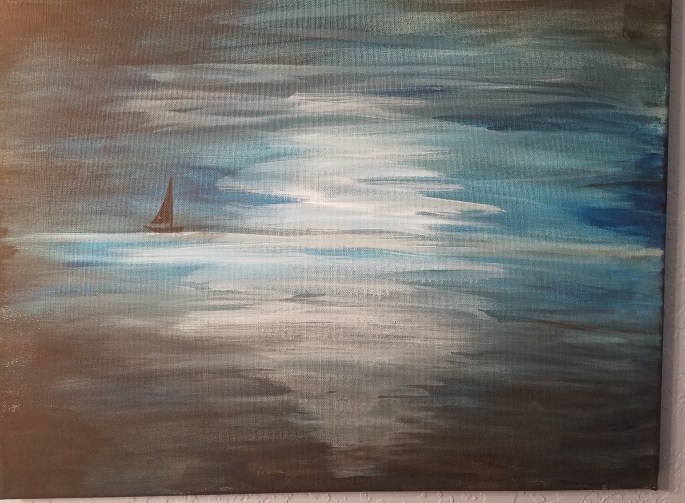
I’m not sure who sent me this photo. I may have taken it, but I doubt it. I am not sure if it is a sunrise or a sunset. I’m guessing a sunset. I’m not sure if a storm later developed, a storm had just happened, or if those clouds will simply dissipate.

This photo, then, serves as an analogy for retirement.

Retirement can be the end of a good or bad situation, or it can be the beginning of a good or bad one. It all depends on the individual’s circumstances and personality.

I’m not going to give financial advice. That is up to you and maybe your financial advisor. I am, however, going to give you the facts as I see them.

The reason I decided to blog about this topic was because of a conversation my husband had. Some friends that play pickle ball with Barry asked him the other day about retirement, whether he liked it or not. They are approaching that age, and their concern is not financial. Their concern is quality of life. Will they enjoy it?

Many people I know absolutely love it. Probably most. Based upon my observations, here are the reasons I think they love it:

  1. Their children and grandchildren live in the same town and keep them busy. They go to ballgames, chauffeur and baby-sit when needed, and have “the kids” over for meals.
  2. They have a hobby that is more of a passion, and now they have plenty of time to enjoy it. Golf, pickle ball, painting, sewing, whatever–they have the time.
  3. They enjoy just being at home. Whether it’s watching Netflix or reading a book or sunning on a float in a backyard pool, they are perfectly content doing their own thing.
  4. They’re involved in volunteer activities and civic clubs. They are busy because they choose to be, not because they have to be. They now have more time to help others, and doing so gives them a sense of purpose.

Now let’s talk about the people who don’t like retirement as much.

  1. They miss being around other people. This is especially true for the divorced and the widowed. Living alone is difficult for them, and retirement makes it even worse.
  2. They struggle financially because they didn’t plan well for this stage of their lives. They can no longer enjoy things that cost money because of budget concerns.
  3. They miss having a purpose in their lives. They’re not “joiners,” so civic clubs are out of the question. They don’t enjoy television with a couple of hours each evening being more than enough.
  4. They’ loved the work they did, and they miss doing it. They retired before they burned out, or their burn-out went away after just a few months of leisure.
  5. Their spouse is not on the same page as they are. One wants to travel or even move away while the other wants to stay home more and stay in the same home they’ve lived in for years.

I have to admit, I don’t love retirement, and I’ve been retired for eight years now. I had to retire earlier than planned because of the vision loss issue. I was still able to drive, and I worked as a substitute teacher for about four months. That was an ideal situation for me. The downside? Most of my friends were still working, and I didn’t have anybody to do anything with. My husband was working, and although I did quite a bit taking care of my mom, I was bored much of the time. The boredom magnified times ten when I became unable to drive, so I’m probably not the best person to write about this.

But I think, even if I had perfect vision, I would have been much happier doing part-time work when I retired. Like most people, I used to dream about retirement, but I never dreamed about a do-nothing retirement. My idea was to retire from education and work part-time in a fun job. Unrealistic, I know, to think of selling tickets at Graceland so I could be around Elvis stuff three days a week. Unrealistic to think I’d be writing one novel after another and making the best-seller lists. Any idea how many people are writing books these days and how few actually make money from it?

My advice then?

See if you can go to part-time work before you quit work for good. Figure out how much you need from your 401K or draw your pension and social security and supplement with your part-time income. This will help you make emotional and financial adjustments.

Be sure you consult with a financial planner to see if it’s even possible. If you haven’t planned for this season of life, you may have to delay retirement much longer than you had intended.

Know yourself. Don’t let your hatred of your job or your burn-out to cloud your judgment. Countless teachers are ready to quit teaching every year in May, but time off in the summer revives their spirits, and they find the strength and regain their enthusiasm for what they do. And, folks, I’ll say it again. Teaching is the hardest job I ever had. My favorite jobs in order: banking (loan officer), middle school principal, and teaching. Teaching, if done right, is challenging. I hear it’s worse these days because of complaining parents who don’t think their children should be held accountable for anything, even grades. Well, that’s a topic for another post.

A final thought. Regardless of how you feel about your job, know your strengths and abilities. There comes a time when you can’t do the job you once did. There comes a time when your co-workers and you have nothing in common and do not work as well together. There comes a time when you’re the “older” one who no longer garners respect from your co-workers. A clue? If they call you “sweetie” or “honey.” If they’re calling each other that, fine. If they’re just calling you that, it means they think you’re…well, old. They’re treating you like a child.

And, if you live in the South, you know the differences in the “Bless your heart” comments. We can tell what they mean.

If you retire, I hope you love it. I hope it is everything you imagine. I hope you enjoy this season of life as much or more than you’ve ever enjoyed any stage.

And I hope no twenty-something has the gall to call you “sweetie.”