“Family is everything.”

A decorative sign saying “Family Is Everything” that was gifted to me several years ago hangs in our bedroom.

I understand the meaning behind it. For most of us, family is what gives our lives purpose. They fill our lives with joy and friendship, but sometimes family can be the source of our greatest sorrows. Sometimes a family member is someone who is “better loved from a distance.”

The devout and faithful of religions honoring God souls argue that God (or Jesus, the Holy Trinity, etc.) is everything. Some would argue that self is everything. Others would say that friends and social connections are everything.

When my oldest son was being recruited to play college football, the coach told us his order of priority was “faith family, football.” He knew our culture and knew what to say. Unfortunately, his actions did not reflect that philosophy, so lesson learned: don’t believe what people say when they’re trying to get something from you. They’ll use whatever persuasive tactics they can.

What have I learned about family over the years? First, they are not perfect. I write this a lot–I’m not perfect, so neither are they. Next, some are closer than others. This is due to common interests, personality, and proximity. Third, the more distant. the family connection, the more distant the relationship. For example, second cousins are not as close as first cousins. A great-aunt or uncle is usually not as close.

I’ve also learned that siblings are not always someone we can count on. They’re not always someone we hang out with or share our thoughts.

When I was growing up, I adored my only sibling, a brother nine years older than I was. That adoration was made even stronger when he became a father when I was only 12, and I adored my niece. We didn’t live in the same town, but we did get to see each other for weekend visits.

When he and his family moved to California, we only got to see them once a year, and because of Dad’s work schedule, that visit was usually just over a week long. So we filled in with letters and phone calls, but of course, that wasn’t the same as spending time with them in person. There were times over the years that we did spend more time with each other (talking about my niece), but where she and I landed permanently and our individual circumstances sometimes caused us to go years between visits.

That is one of my biggest regrets.

My brother changed over the years, and although I always loved him, spending time with him was not as enjoyable as it had once been. He and I differed in too many ways, including our moral codes, attitudes about life, and faith. My youthful adoration was shattered, but my love for him remained.

Each family has its own dynamic. A friend once joked “We put the ‘fun” in dysfunctional,” and probably most of us could say that.

I’m going to be honest. (My husband would say, “Oh, really?” as a joke meaning why would I be dishonest?) I always wanted siblings. I wanted sisters and brothers close to my age. I loved books like “The Five Little Peppers” because there were five children. I loved “The Sound of Music” partly because of the large number of children. One of my friends when I was growing up was one of five–and I envied that.

Idealistic? Sure. But that was what I wanted.

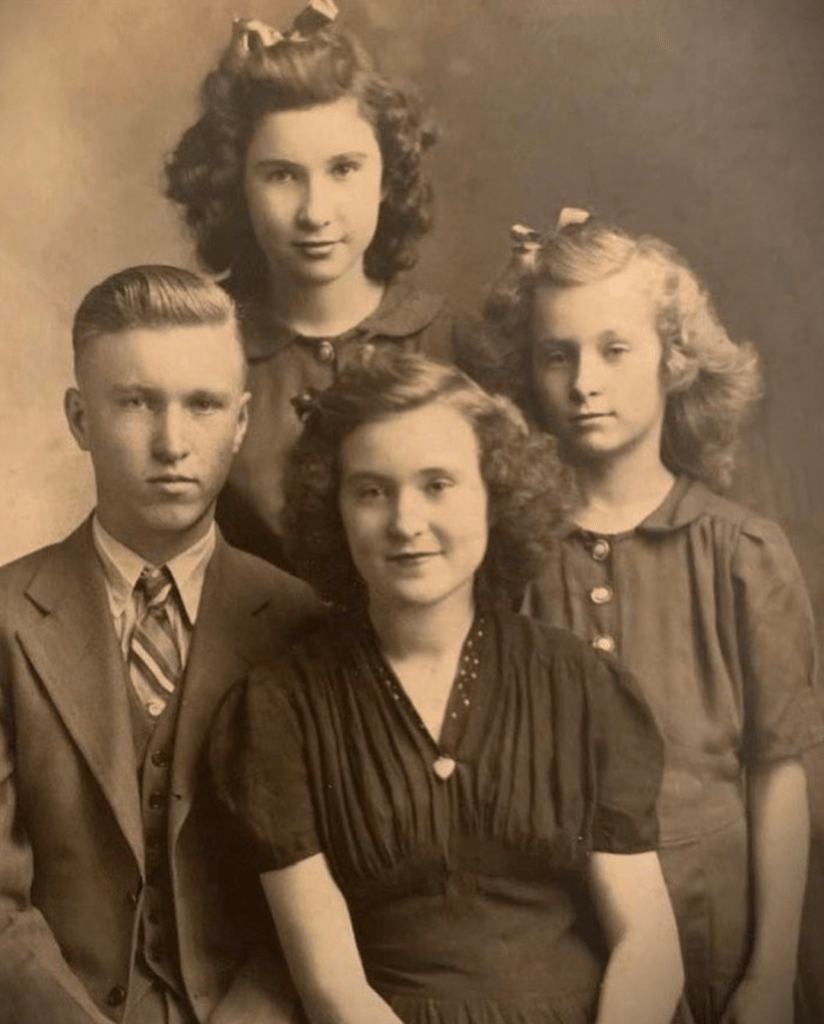
This photo is of my mom ( seated center” and her brother and two sisters. They were very, very close. Growing up on a farm, they were each other’s playmates, co-workers, and confidants. Yes, they argued at times. But they were there for each other through thick and thin. They loved spending time together.

I am thinking about family today because of a get-together last night with my husband’s aunt and her extended family. She, the great-grandmother, with all three of her children and their spouses and some of her grandchildren and great-grandchildren. Plus a couple of friends of her son and us. It was great being with all of them and sharing in the celebration of July 4 by doing the very American activities of grilling hamburgers and hot dogs, and having plenty of sides and desserts (including homemade ice creamK) along with newer American activities like playing corn hole and watching France play (and defeat) Paraguay in the World Cup competition.

Since vision loss, I have wished even more for a sister or two or three. Only a sister (or daughter, which I don’t have) could be the pal I want to go shopping, take me places, listen to me when I want to discuss something relevant to women, and that sort of thing. At the same time, I know there are many women with sisters and/or daughters who don’t have the kind of relationship that would allow them to do those things.

So, maybe “Family is everything” is better said “A family that is the kind it should be is invaluable.” Not perfect. Not ideal. But people you can count on and always, despite your differences, love.

By the way, I have had my screenreader read this blog to me twice, and I’ve tried to catch mistakes, but my vision is getting worse all the time, and it’s a struggle to do this today, so I’m going to be lazy and let the mistakes remain. No doubt you can figure out what I’m attempting to say!

What makes someone “weird?”

The definition of “weird” involves suggesting the supernatural or uncanny. We use it that way, but we often use that word when it would be more accurate to say “odd” or “different.”

But, how do you determine what is odd?

The fact is we often see people who are different from us as being odd. Cultural norms in another country strike us as odd. Greeting someone with a bow instead of a handshake? Eating fried grasshoppers? Believing in aliens or reincarnation?

How odd. Unless you are one of those people.

“Different” often has negative connotations, but each one of us is unique. We have our mannerisms, our fears, our quirks, our likes and dislikes, and our value system. We want people to respect our differences, but sometimes we are not respectful of theirs.

I like to think I respect other people’s differences, but sometimes I’m guilty of not understanding. I’m not judging. I just don’t get it.

This morning I was kidding my husband about something and told him he was weird. But, when thinking about what we were talking about, I am more likely the weird one because my stance on that topic is less common. His is more normal. (Can you tell I’m apologizing to him?)

I admit to being different. My taste in food and music, my “never meet a stranger” attitude, and my desire to express my thoughts as I’m doing now are not the norm.

You may be wondering what the specifics are of my “not the norm” components. Well, here are just a few.

I’ve always preferred vegetables and fruit, even as a child, and hamburgers and pizza are at the bottom of my foods list. I don’t love chocolate.

I don’t mind eating in restaurants by myself. I’ve done it many times over the years.

When I could drive, I never minded driving on the interstate, even the horrendous, semi-dominated I-40 that crosses our state and puts fear into the hearts of many. In the past, I drove cross-country without a thought.

I don’t mind doing things alone. If there’s a movie I would like to see and no one would be interested in going with me, I’m the type that would go on mown.

I like change. I worked in banking for 8 years then switched to teaching. I switched to a different school after working in one high school for 18 years–a decision my husband thought was a mistake– and took a principal’s job without having served as an assistant principal to “learn the ropes.” I stepped down from that after seven years because of my aging mom needing my help more frequently and got a job in another school district before returning to my home county.

Most teachers I know stayed with the same school their entire careers.

Other quirks include hating unloading the dishwasher, wanting a perfectly made bed even if we are the only ones to see it, and a hatred for fried catfish. Let me change that. I hate catfish no matter how it’s cooked. On the other hand, I love broccoli.

My point? I need to respect other’s differences just as I want them to respect mine. We don’t have to agree. But we can accept. No, not accept everything. We shouldn’t accept what is wrong or participate in it, but accept differing viewpoints about life. We can seek to find common ground instead of focusing on how we’re different.

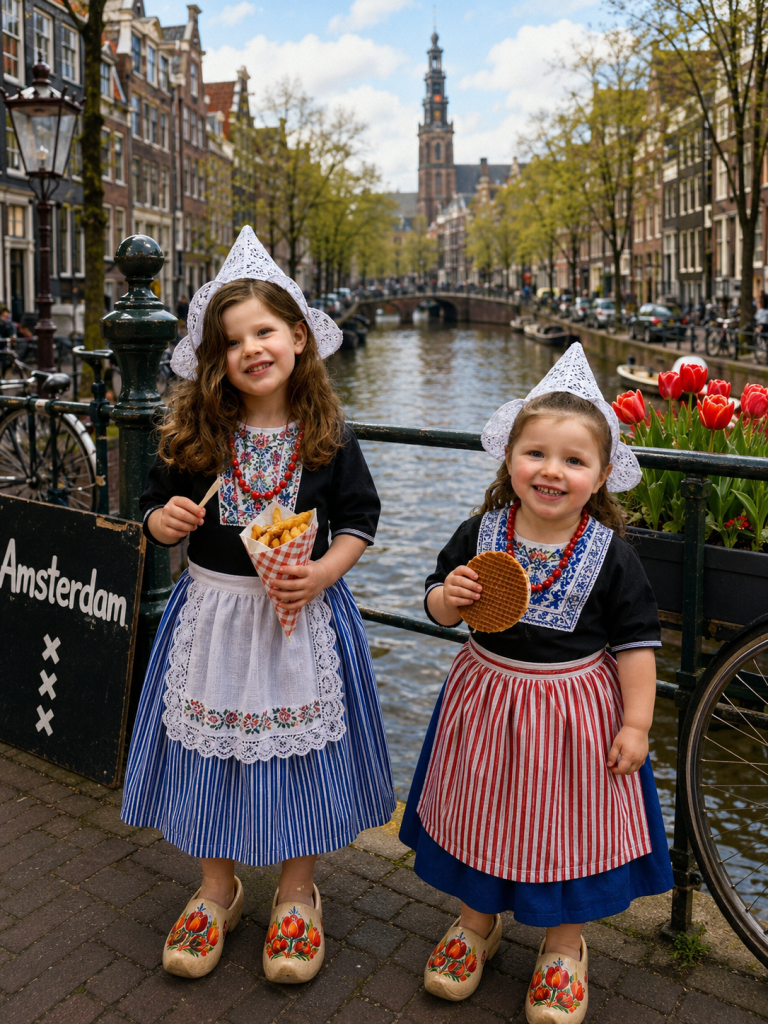
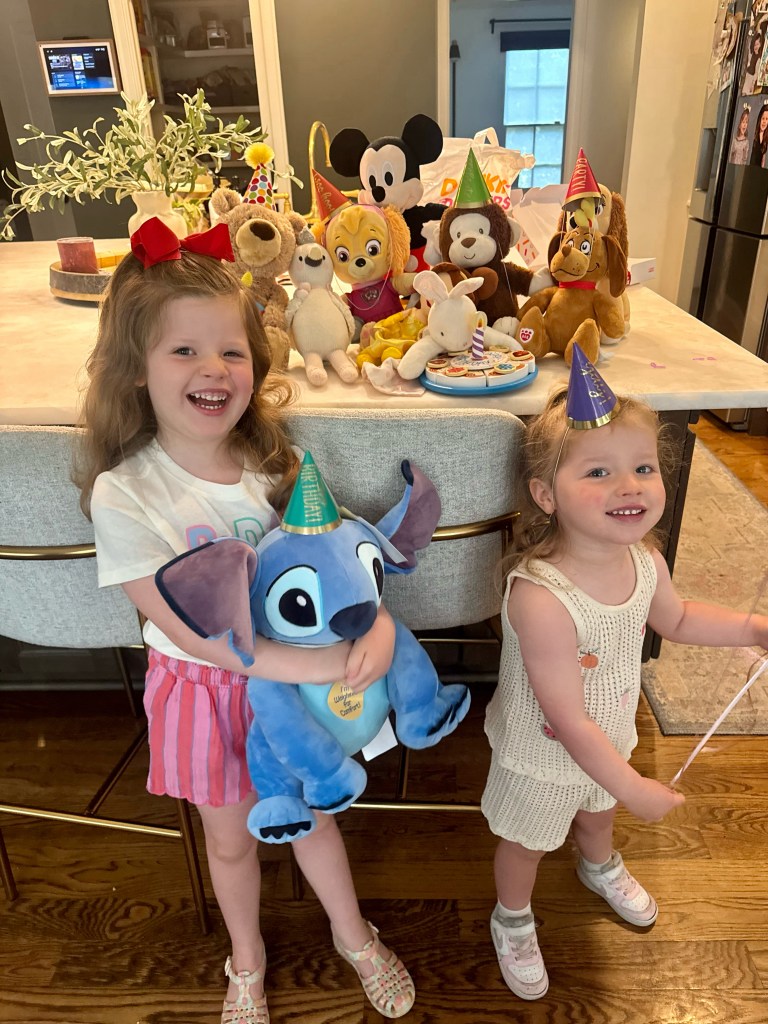
Those sweet girls in the photo are sisters, but their personalities are not similar at all, other than their hugs are extra special and sweet. One is shy and imaginative. The other is outgoing and a daredevil. Is either one odd? Of course not. They’re just different. Each one is unique.

This post is, primarily, to remind me to practice what I preach. While I may not understand why one person is an introvert or a loner and not understand why someone handles grief differently than I do, I don’t need to think of that person as odd.

My husband often says “We’re all different.” He’s right.

Riding the Roller Coaster of Life

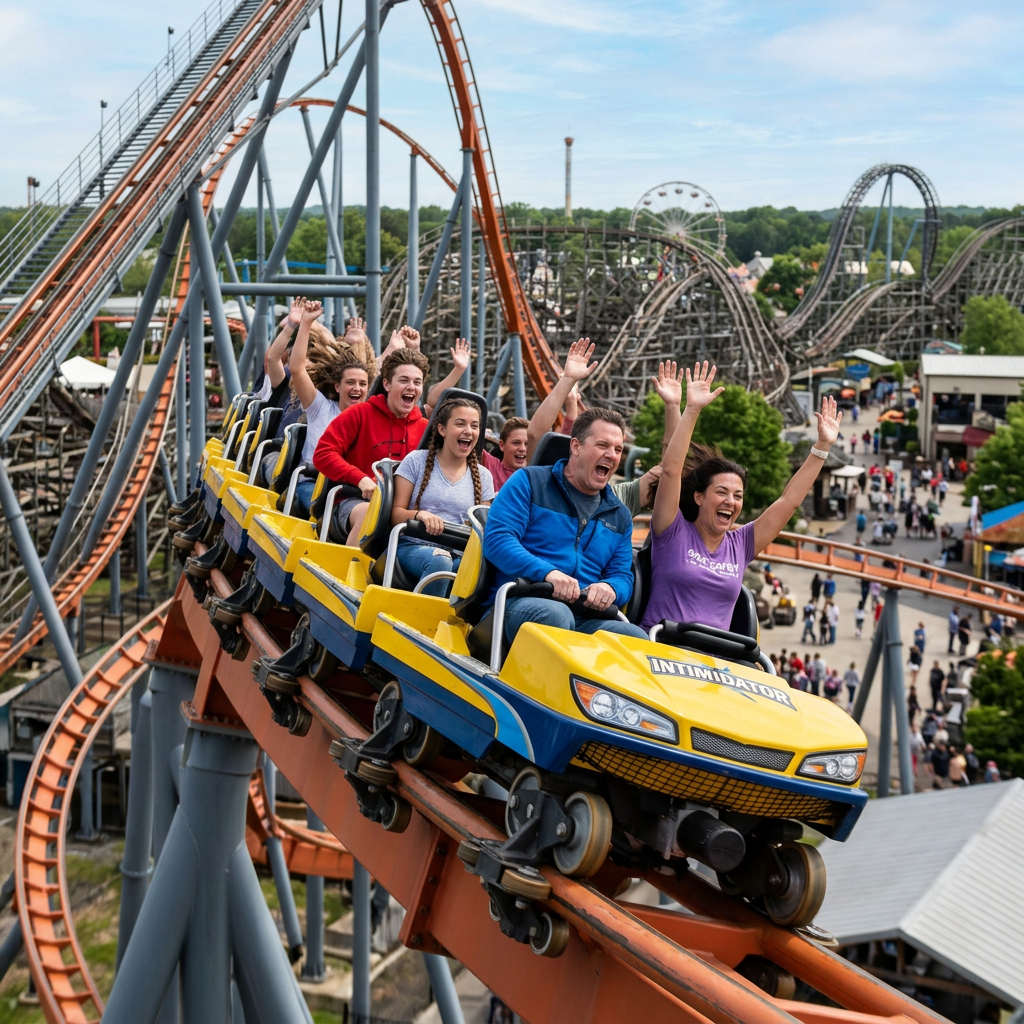
People enjoying a roller coaster ride with hands raised and excited expressions
I know I just blogged on Sunday, but writing seems to be my go-to when I’m bored or restless if I have no other option. I have about an hour to kill before I go to the wellness center and to the assisted living facility where I do a program once a month, so I’m thinking about everything from grandchildren to the weather to technology.

Speaking of grandchildren…our five-year-old granddaughter did a FaceTime call to us last night, and it was so cute. She showed us some toys, demonstrated a dance from “Lilo and Stitch” (although we couldn’t see the actual dance because she was holding the phone), and reasoned with her younger sister. So, so adorable!

Okay, off the proud Gigi share and back to the topic

I think most of us experience highs and lows in life with plateaus in between, but I must confess retirement has brought more lows than highs for me.

Before you judge me, please understand I don’t want to go back to work full-time. I don’t want to be locked into a schedule, but the only reason I don’t want to be working on a schedule is because I want the flexibility to go see those grandchildren or have them here when their parents need us. If not for those girls, I would be looking for a part-time job.

But who wants to hire a (number) -old with vision loss? Nobody.

Okay, so maybe we can travel more. Hmmm…do I really want us to spend our savings that might be needed for future healthcare? Spend some, sure. Spend it all or most of it? No. We may never need it, but we want to be prepared. Besides,

Move to be closer to the grandchildren? Not an option. With my inability to drive, a new place in a new city would be tough to learn. Plus, those girls are going to get older and not need or want to be around their grandparents so much someday, so maybe we need to stay where our friends are.

It is funny how, in my situation, the smallest things can bring me the greatest joy. Like when my family comes to visit–all of them–or we go visit them at their homes/towns. I admit to being jealous of people whose families live in the same town, but I’m glad you have that perk. Maybe it’s not the perk I imagine. Maybe you wish your children and grandchildren lived at least 30 minutes away? Ha, ha!

Last week, a friend asked if I wanted to go along with her and her daughter to Sam’s in Jackson, about an hour away. I accepted immediately. We went to Walmart where her daughter did much of her grocery shopping and to Sam’s, where I bought some salmon, and came home. That was it. But we talked. We laughed. And it was the highlight of my week.

Who would have thought going to Walmart and Sam’s would be a highlight? Obviously, it wasn’t the destination. It was the company.

My husband injured his foot recently while playing pickleball, and the PA put him in an air cast for activities and prescribed a steroid pack. He has had incredible energy, and after walking the dog two miles yesterday morning and playing pickleball for 2 1/2 hours, he came home still full of energy. I think he’s going to miss that medicine.

I told him he knows now how I feel most of the time. I have the blessing (and also the curse) of having boundless energy because, as of right now, I’m in excellent health. I confess I did take a nap Sunday afternoon, something I rarely do, so maybe age is catching up with me, at least a little.

As I often write in my blogs, I’m weird. I’m not like most of you who love and thrive in retirement. I do not find this season of life to be the best season.

But, you know what? If the worst problem I have is perpetual boredom, I am very fortunate. If the worst low I have is frustration because I can’t go and do what I want to do when I want to do it, I’m fortunate. And if I don’t love this season of life, I can be grateful I’m still here and appreciate the perks it offers.

Like no alarm clocks, although I now wake up early anyway. Like no stress from a job. Like not being so busy I can’t enjoy something as simple as reading a book.

I have a feeling I’m not alone in thinking of life as a roller coaster. As someone who was never a thrill-seeker, I didn’t like roller coasters. Not because of the height or being scared, but because of that dropping sensation. I don’t like it. Thankfully, the emotional roller coaster ride doesn’t create that. It may bring tears at times (for which I’m ashamed), and it may create a state of being “blah,” but that’s okay. It could be worse.

To the few of you who read this, thank you. If no one reads it, that’s okay. It helped me sort my thoughts, and if someone else can relate or benefit from it, it’s worth my sharing. If you know me at all, you know I’m introspective and think about what makes us all tick. I don’t know why I’m like that, but it is who I am.

We have no control over the future, and if we are wise, we will just appreciate and make the most of each day. That’s what I’m going to do. I hope you can do the same.

Developing an Attitude of Gratitude

You may not be a Christian. You may not be a person of any sort of faith. But I strongly believe developing a grateful attitude is an important component of finding contentment and peace in this troubled world in which we live. No doubt there are other factors, but having a grateful attitude, no matter what the circumstances, can help.

I was privileged a couple of weeks ago to lead our ladies’ class at church in a devotional and discussion about this topic. The reason? My own journey and what I’ve learned.

Why have I finally learned to grasp the full meaning of gratitude? Call it having lived long enough to have experienced many of life’s ups and downs.. Call it having a lot of time on my hands to reflect. Call it being a deep thinker.

It’s all of that and more.

The truth is that it’s easy to be grateful for our blessings and good things in life when things are going well. Yet even when they’re goin well, we often are guilty of not appreciating what we have. For example, are we not only grateful for our food but also for the fact we get to choose what we want to eat? In the United States, people relying upon assistance to buy groceries cannot afford the healthier options, but even they have more choices than people in many third-world or developing countries. In Cuba, for instance, residents are given a ration card that allows them to have one pound of chicken per person each month. They are allowed five eggs per month per person, but that has been unstable, and they often don’t get eggs at all.

Cuba is just one example.

We’re spoiled. We have heat in the winter and air conditioning in the summer. We have enough clothes that we are concerned with fashion instead of clothes to wear for modesty and comfort. Most of us sleep on a comfortable mattress at night instead of a thin pallet on a hard floor.

You see where I’m going with this. We take things for granted until or unless we don’t have them.

Like income until we lose our job. Like health until we get the cancer or another life-threatening r diagnosis. Like walking until an accident or health issue robs us of that ability. Like family and friends until death takes them away from us.

Yet even in those times we can have gratitude. Maybe not at first. We are grieving, and there is nothing in the Bible that tells us not to grieve. It is a human emotion, and God doesn’t expect us to be a Miss Pollyanna about everything in life. It’s okay to hurt. It’s expected. It’s okay to grieve. It’s normal and part of the healing process. Even if it takes years.

Experiencing loss of a loved one? Grieve, but be grateful for the friends and family who are there to support you. Diagnosed with cancer and enduring harsh treatments? Be grateful there are medicines available now to treat the condition. Being grateful for those things doesn’t make the struggle you are enduring go away, nor does it make you feel better in the moment. The weight of your struggle far overshadows the good things we are guilty of taking for granted. But maybe, just maybe, counting your blessings and expressing gratitude for them will help.

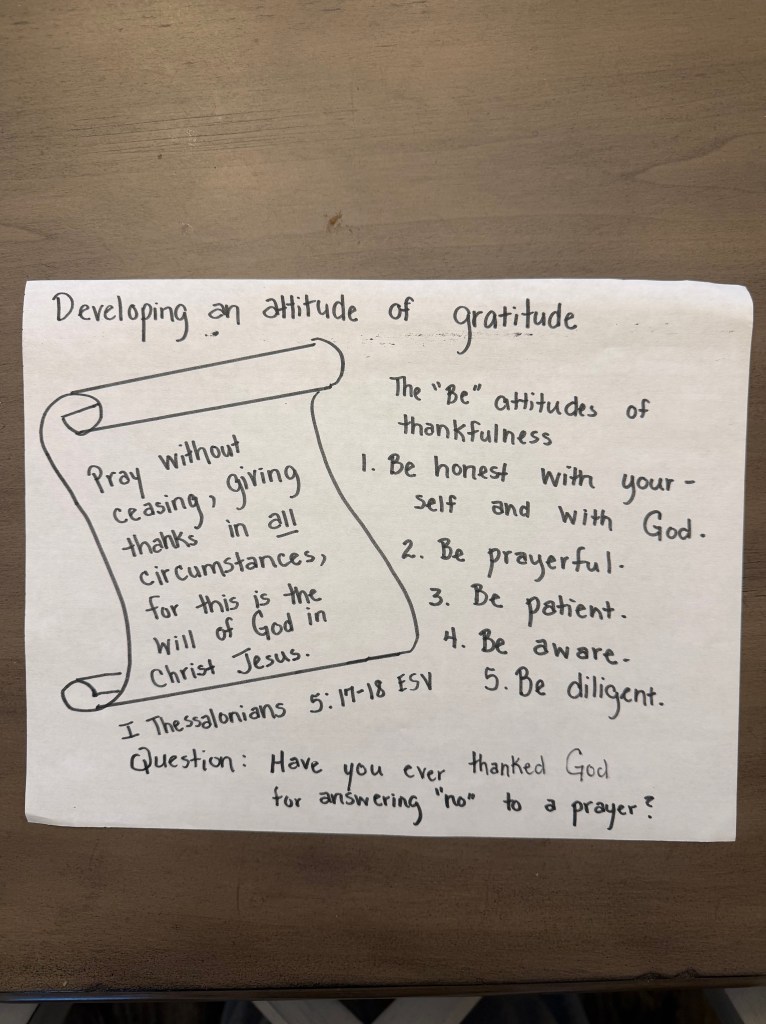
Christians know about the apostle Paul, who penned the verses I have written on the handout pictured, He endured beatings, imprisonment, rejection, public ridicule, and shipwrecks. He eventually was killed because of his Christian faith. Yet he wrote that the people of Thessalonica, and us as readers of his letters, should give thanks in all circumstances. He practiced what he preached.

You know what I’m thankful for with my vision loss? I went through two or three years of true depression. I cried. A lot. I never asked, “Why me?”, but I desperately wanted my independence back and my ability to see the world clearly. I started praying for the ability to accept and adapt, and that is what happened. I didn’t receive a treatment that would fix things. I didn’t get normal vision back. But I found a new purpose in life.

My purpose is to help others going through vision loss. I have made friends with legally blind and completely blind people from California to Arizona to Kentucky to Virginia to all parts of Tennessee. I am so grateful for those friendships. I am grateful for the opportunities to share and to help.

Please don’t tell me you admire me or that I inspire you. I’m just a person being true to who I am. It is nothing special. And my functional vision allows me to live a very normal life in most ways. The people that inspire me are the ones who have endured much worse, such as the loss of a child or spouse or health, who endure what I cannot imagine.

And the truth is, I may join that number someday if I live long enough. The vision loss has made me more empathetic to others, and I’m grateful. It’s made me more appreciative of the sounds of birds in the early morning, m ability to walk for miles at a time, of friends and family who drive me places or serve as my eyes when needed. I’m grateful for technology that allows me to do what I’m doing right now–writing–since that has been one of my greatest joys ever since I picked up a pencil and learned to spell.

I hope you no matter what you are enduring, can feel true gratitude for the other things in your life that are good. I hope you can find the peace I’ve found. I’m not always content, I’m ashamed to say, because I am restless and get bored easily, so when I can’t go and do what I want to do when I want to do it, I can get down and out.

Then I think of some friends and family going through much worse, and I’m ashamed for my feelings. How minor they are in the scheme of things.

Gratitude. True gratitude. Maybe it’s the first step toward true peace and contentment.

Do you feel blah on “gray days?”

I do. I admit it. Some people may call it SAD (seasonal affective disorder), but where I live, it’s not seasonal. It’s any season at any given time, so I just call them “gray days.”

January, however, is the worst. Anyone own a beautiful home in Arizona we can rent cheaply for the month of January…and bring our 70-pound dog who thinks it’s his duty to find every underground creature in existence, even if it means digging all the way to China?

I didn’t think so.

When I was working, gray days didn’t bother me as much. I was working in a school with artificial lighting and was very busy. Retirement, however, means I am home almost every day, and according to my research our state has 116.1 days of rain, on average, and that’s not counting those days that are just cloudy.

Some people love cloudy days. Kudos to you. Wish I did. Once every couple of weeks is okay. But I have no control over any of that, and I realize we need the rain to support life as we know it. (Like how I brought in a reference to the title of my blog? Speaking of which, I normally blog once a week but because of family being here this weekend, I was compelled to blog today.)

Back to gray days. If you are prone to that blah feeling, you have two choices. Curl up with a book or in front of the TV, drink some hot tea, and wait for sunnier weather. I can’t do that. I hate…let me repeat, I hate…inactivity during the daytime. Sure, I don’t mind taking my time getting started in the mornings, but to sit around and watch TV or listen to audiobooks all day is my idea of torture. It’s almost as bad as sitting with someone in a hospital, and while that is sometimes necessary and the kind thing to do, I don’t know of anyone who actually likes it.

So what do I do to counteract the gray days? I ask Alexa to play music from the sixties or seventies, and when I hear songs that make me want to move, I get up and move. I might do an exercise routine or simply dance around the room (thank goodness no one is watching). If it’s not raining, I take that 70-pound dog for a long walk and sometimes drop him back to the house and continue the long walk. I call shut-ins, thinking they may be experiencing the blahs more than usual on a gray day. Sometimes I reach out to a friend to go to lunch. I dig out old photos and look at them using my DaVinci CCTV or while waring my IrisVision headset, but to be honest, that is so much work with the vision issues, I can’t do it for long. I still can’t see them very well, and it can be exhausting. I do art projects. I play solitaire with large-print poker cards Barry gave me years ago.

You may not care about gray days or my suggestions, and that’s fine. We each handle things in our own way. And maybe I’m blogging about this as a form of therapy to sort out what I will do with myself today while my husband is at work and I have no transportation to go do things away from the house. Don’t tell me to call a friend and ask her to take me places. It’s not happening. I only call friends to take me places when it’s absolutely necessary not just because it’s a boring, gray day. And, you know what? Even if my husband were not working, I wouldn’t ask him to drive me around while I do…what? He is always willing, but it’s just not the same as when I was able to get in the car and just do my own thing.

Not complaining (well, not much), just explaining. It is what it is. There are people dealing with many more serious problems–physical, mental, emotional–, and this minor bump in the road is nothing compared to what they’re going through.

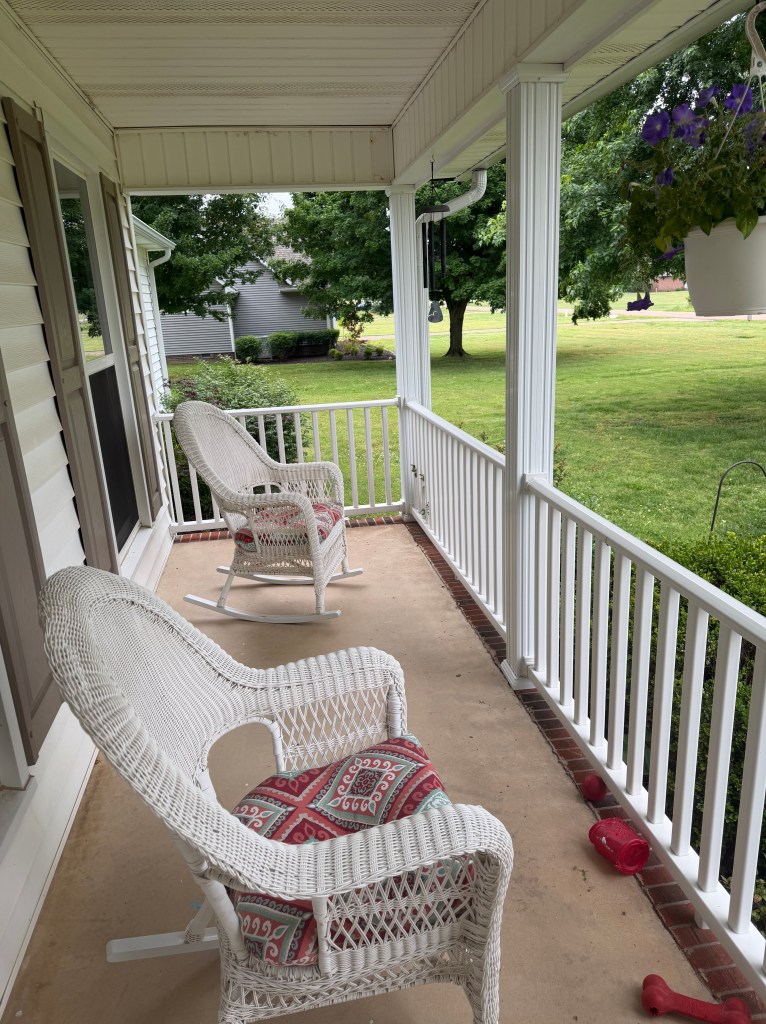
You may be wondering about the photo. I took it a few minutes ago to show the gray sky, but while I was doing so, I was reminded of how much I love sitting on my front porch. It is one of my happy places. In the early mornings, the birds make beautiful music I can hear so well because there is no traffic at 6:30 in the morning. When it’s raining and not lightning, I can enjoy the sounds of the rain. I sit out there and listen to audiobooks at times. I chat on the phone with friends. Sometimes I just sit and listen.

Everyone should have a happy place, so I hope you have one. Thanks for allowing me to write (one of my joys) and sort out my thoughts. I think it’s time to move to some music by The Beach Boys and other groups from the past then pull out the watercolors and do something abstract, then walk that dog of mine. I’ll just have to make sure no rain is on the way when I do.

Happy gray day to those of you experiencing what I am, and happy sunny day to the rest!

Accepting your limitations doesn’t mean giving up

Oh, my, I can’t believe the irony of trying to get this post done! I typed the title then encountered several tech problems, and I was so frustrated I was talking out loud to my laptop and TV to which it is attached–really! But I didn’t give up, so here I go.

First, let me clarify the title. This is not a “Michael Jordan didn’t make his high school basketball team, and look how his perseverance paid off!” type of blog. Nor is it a “you can do whatever you set your mind to do!” That is the biggest lie we tell our children and the biggest lie we tell ourselves.

Don’t get me wrong. We should aspire to achieve. Well if we are made that way. The truth is, many people don’t care about ambition or achievement or success. They are perfectly happy living their lives more simply and are satisfied with the amount of money they earn, the place they live, and the life they’re living. But even they may find themselves giving up when facing an obstacle that seems insurmountable.

What I’m talking about is giving up on yourself. Giving up on doing the things you love. Giving up because you feel you don’t have what it takes to do certain things.

Another clarification: There ARE things in life we can’t overcome. My friend who has been paralyzed for over 30 years can have all the positive thoughts she wants, but those thoughts won’t make her walk again. I can will myself to see better all I want, but those retinas aren’t going to do what I will them to do. I can’t drive anymore. I can’t read books to my granddaughters. I accept those facts.

The interesting comparison of my friend’s disability and mine? She, the paralyzed one, can drive using hand controls. She can move about in her wheelchair. I can’t drive, but I’m strong and healthy and can walk long distances. She can read to herself and to others. I rely on screen readers and audiobooks.

She and I both had choices to make. We could be afraid to learn something new and wallow in our unfortunate conditions or we could look for ways to overcome.

You don’t have to have a disability to give up on yourself. I’ve seen it far too many times. The talented singer who is afraid to sing in front of others yet wants to have a recording career. The student with average intelligence (she thinks) who is too intimidated to go to college or to train in a job that is interesting to her. The overweight adult who wants to lose weight but refuses to exercise or eat a healthy diet because it’s too hard.

They’ve all given up on themselves.

I did that a few years ago. Before I knew about the resources and technology that would help me live a more normal life, I gave away all my art supplies because I thought I’d never be able to paint or sketch again. I cancelled my WordPress subscription. I even cancelled my Microsoft Word subscription.

Bad mistake. I grew even more depressed. It was bad enough being stuck at home with limited things to do, but to deny myself the two activities in life that I love the most–writing and art–was much like you sports fans who stop watching ballgames and golf just because you can’t play them anymore.

Hmmm…I’m not too sure about that analogy. There are plenty of sports fans who never played sports or who were never super good who still love to watch them, so…oh, well, I think you get what I’m trying to say.

I missed art, and after about a year, I bought more supplies. My neighbor is a talented artist who has an art studio in which she hosts art classes. She teaches techniques, but she allows each person to work on their own projects, and she is available to help when they have a problem. I went to her classes off and on for about a year before I decided my amateur attempts with my vision loss were not worth the small amount I paid to use her expertise and facilities.

That doesn’t mean I stopped painting. I do my own thing, and even though my projects (two are in the picture) will never grace anyone’s walls but my own (or actually shoved away in a closet), that doesn’t stop me from “channeling my inner Picasso.” Would I love to be a serious student and produce good quality work? Of course. But I can’t, so I do what I can.

I renewed my subscription to WordPress and Microsoft Word, and I began to write again. It didn’t matter to me if anybody read what I wrote or not. Writing was, and is, just something I have to do.

A good thing to come of that? My book about vision loss. I’ve given away as many copies as I’ve sold, so it’s not a money-maker, but it has helped people.

I have a feeling some of you reading this have given up on yourself in some way. You’ve told yourself something is too hard to do or you don’t have enough talent or you don’t have enough ability. And I’m not saying you will achieve whatever you want in life if you work hard enough. You might. You might not.

Accept your limitations. Accept your circumstances if they can’t be changed. But don’t give up on yourself. Find joy in the journey.

I still believe in the goodness of others

Call me naive. Call me Pollyanna. Accuse me of looking at the world through rose-colored glasses. But I believe most people, deep down, are good.

No doubt there are people in this world that are evil. But I believe, at least in my community and circle, those people are rare.

I have always had a tendency to like most people. The joke in our family is that I can probably count on one hand the number of people I dislike. But liking someone has nothing to do with their innate goodness. Even the people I dislike have some good hiding in there somewhere. Just because I’m put off by their personalities or other factors doesn’t mean they don’t have elements of goodness.

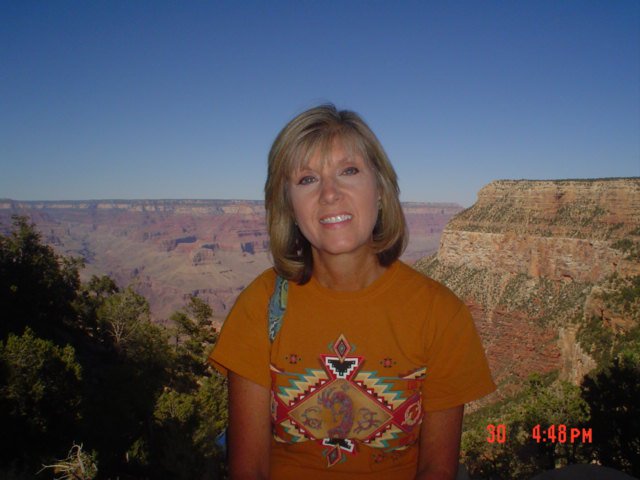
Notice the shirt I’m wearing in the photo. (My four-year-old granddaughter took this photo of me last falll–isn’t she talented???) I received the t-shirt when I registered to raise money for St. Jude Children’s Research Hospital by completing a three-mile walk/run. For those of you who know me, three miles is a piece of cake. No biggie on my part, but several people donated to my cause to help fight childhood cancer.

Good, generous people. The workers at St. Jude are kind, caring people. The ones who interact with the children and witness suffering on a daily basis have a strength and compassion that enable them to do their jobs.

Good people.

The teachers who truly care about their students, no matter how challenging it is, are good people.

The stranger that stops to help a stranded driver, the people who help those who can’t help themselves. Good people.

I could go on in generalities, but I’ll share a specific experience that happened to me this week. I was to speak to a class at the local university, and my ride (remember, I can’t drive anymore–haven’t driven in over seven years, and I still HATE that situation) was almost two hours earlier than my scheduled time to speak. So I went into the university center to indulge in a Chick-Fil-A breakfast of the chicken minis.

The area had been renovated since I was last there, and I was using my identification cane. I don’t need to cane to see how to walk. I use the cane to let others know I am visually impaired. The cane explains, without my having to use words, why I move more slowly in certain situations, why it takes me longer to do things, why I pause a very long time before crossing a street so I can listen for oncoming vehicles.

So when I approached the counter, I went to the wrong side to place my order. The kind woman at the other end said something, and I went to that side. When the gentleman gave my large unsweetened iced tea (yes, call me a traitor to southern culture), he handed it to me very carefully and asked in a nice tone, “Do you have it?”

When I finished eating, I picked up my trash and headed to what I assumed were the trash bins. But when I got there, there was no opening on the top. I looked on the sides. No opening. I was about to turn around and look somewhere else when I young man came up behind me and in a cheerful tone said, “They’ve still got these covered.” He reached over and slid a dark object (which I figured out was a tray) away. There was the hole to dispense the trash.

He was not a worker. He was just a college student there to eat some breakfast.

I thanked him, and he made another nice comment. What a nice young man. No doubt he has a kind heart.

Unlike some, I have hope for the future. I have hope for our world. I have learned that kindness is reciprocated by kindness. Grouchy, unkind remarks are likely to be met with grouchy, unkind remarks. But kindness in tone and a pleasant smile can make all the difference.

I’ve had people tell me they could never teach high school students like I did for most of my career. But I loved high school students–at least, most of them. My first year of teaching was a bumpy ride, but I learned the balance of discipline and kindness (I hope), and my experiences created great memories I cherish to this day.

I know not everyone shares my attitude. I know of many people who focus on criticizing others and looking for their faults or flaws.

But I choose to look for the best. It’s a challenge with those four or five people I’ve known and disliked, but I try to give them some grace. It doesn’t mean I have to spend time with them. It just means I need to try to see things from their point of view.

Unless they’re evil. But those few are not.

We played a game Sunday afternoon with my son and part of his family, and the purpose of the game was to write things that fit a category. Jake drew a card that said, “Things that are evil.” My immediate response? Social media.

It’s not evil if used in the right way. But it’s evil if used in the wrong way. All the political stuff, all the unkind and hateful remarks, all the insults that people feel free to hurl hiding behind their phones. What’s the point? I know each person has freedom of speech but how sad is it that freedom of speech gives us justification for being unkind.

I guess this is enough of my opinion today. But I think part of the solution to the problems we have in this life is being good and kind to others. It’s hard to be mean to someone who is kind to you.

Attention, Milennials and GenZ’s aka Zoomers

Today, a clerk in a store called me “sweetie.” Twice

I get it. To her, who might have been as old as 19 or 20, I am old. After all, my childhood photos are now fuzzy black and white images with no color photos of me until I’m nine years old. So, yes, I am that old. I’m old enough to have had only a black and white TV (controlled by an antenna) until I was 15 when Dad finally broke down and bought a Magnavox color TV. I’m old enough to remember life with party-line telephones that sat on tables or were attached to walls, life before microwaves, and life before…well, a lot of things that are normal today.

But when she called me “sweetie,” I immediately felt like a white-haired lady with tight curls using a walker, which is not me at all.

I’m sure she was trying to be kind, but I don’t think she realized it is an insult. I know some people my age who don’t like to be addressed as “ma’am,” but after years of being a teacher and principal, I have no problem with that. It is a sign of respect, and when I started teaching at the age of 30, I needed that respect from high school students. Without respect, a teacher can’t manage a class.

But when medical staff and others address me as “honey” or “sweetie,” it’s not respectful. It’s patronizing. It’s what we do with small children to soften our words. They’re terms of endearment we use with those we love. But they’re not appropriate terms for anyone else.

At least they’re not to me. My mom, who lived to be almost 94 loved it when medical staff and others used those terms. I have a feeling, though, she didn’t feel that way at my age. After all, she was still working part-time at Walmart, maintaining a home, sewing, cooking, and keeping busy with family and friends.

If you are someone who uses those terms, please re-think your choice. In our culture, people 65 and older are lumped together as “senior citizens,” but there is usually a huge difference between a 65-year-old and an 85-year-old.

What this young woman didn’t know was my friend and I had just left the Wellness Center where I had done 45- minutes of weight training, walking, and stretching. She also didn’t know I had already walked my dog a mile before going and that I was coming home to walk him another mile and a half.

She didn’t know I did a half-marathon (that was 13.1 miles jogging/running) at the age of 62 and did it again at 64 (all walking). She didn’t know I’m planning to do it again this December (walking) at the age of…well, never mind.

I know a lot of millennials and GenZ’s who could not, would not, and have no desire to do any of what I’ve done today, let alone the half-marathon accomplishments, so my advice to all is: please respect us but don’t patronize us. And now that I think about it, all of us older adults need to be careful about patronizing younger generations. Believe me, they are more capable than we are in areas of technology and other areas. They’re smarter in ways that didn’t even exist when we were younger.

Respect for each other. Maybe we all need to work on that.

Loneliness–it affects your health

Once again, the photo doesn’t seem to match the title of my blog, but bear with me. I’ll explain.

A fitness/health expert with multiple degrees and certifications recently spoke to one of the civic groups of which I am a member, and this statement shocked me. “Loneliness,” she said, “is as harmful to your health as smoking 15 cigarettes a day.” She explained the research that backed this up, but I am still amazed.

I know some people prefer being alone, and likely they are perfectly happy spending most of their hours alone. But loneliness can affect anybody at any age in any circumstance.

The wife or husband whose spouse is not the companion they hoped for, whose distant demeanor or even abusive treatment creates a sense of isolation. The elderly shut-in who has no family to come visit and no friends who seem to care or whose friends have already passed away or in the same shut-in situation they are. The young single whose friends have all married and are living their lives with jobs and raising children.

When I was working and raising my family, there were times I dreamed of just a day to myself. There were times I suffered from what I called “people pollution” and wanted nothing more than time away from the crowds. I’m sure many have felt the same.

Loneliness, though, is as much a state of mind as it is a circumstance. We’ve heard the saying that someone can be lonely in a crowd, and that’s true. And being alone doesn’t always equal loneliness.

Those of you who read my blogs regularly know I’m always advocating for people to reach out to shut-ins. If that person is content with the situation, there is no need to push him or her to get out or make phone calls. Just give them a book to read or a remote they can operate, and they may be perfectly fine. Others, however, may need visits, outings, and phone calls to alleviate the loneliness they experience each day. That’s why I advocate and remind all of us to keep those people in mind and actually DO something to help them.

But let’s say you’re lonely. Maybe you’re divorced, widowed, never married, or in a bad marriage that you remain in for personal reasons. What do you do?

First, seek groups you can join. Sign up for fitness classes, art classes, and volunteer organizations. If you’re a person of faith but have neglected attending corporate worship services, find a church and attend long enough to get to know some of the people. Participate in some of the activities available instead of being simply a pew warmer. ” Obviously, I am referring to Christian faiths, but the same idea applies to any religion.

Be the instigator of social events. Invite people into your home, but if that doesn’t work for you, invite people to join you for lunch or outings. Invite someone to participate in one of your hobbies–playing golf, pickleball, tennis, etc.

In my town, our Friends of the Library group is active and involved, and I’ve gotten to know people outside of my normal circles. I’m active in our local retired teachers association. I’m in three other civic groups (invited to join) that, at first, were foreign to me, but as time went on, I began to feel like a part of the group as I strengthened acquaintances into friends and met new people.

Side note: (you know I always have a side note) For the visually impaired, meeting new people is especially challenging because we can’t see what you look like. It takes time for us to learn your voice and body type (tall, short, etc.). That means we may know you in a specific situation–as in a group meeting–but we have no idea who you are in a restaurant or some other public place. So, we do one of two things. We pretend we know who you are until you say something that clicks with us, or we do as I usually do and ask, “Who am I looking at?” If you see us out and about, it’s very helpful to say, “Hi, Pam, it’s Jean, Jones, how are you today?” I’ll eventually recognize you. Oh, another side note: If my husband is with me and sees someone he realizes I know, he says in a low voice, “Jean Jones is coming our way,” and I’ll say, “Hi, Jean!” as she gets near us.

Okay, back to my topic. I think one reason I found this statistic to be so impactful is because I talk with, by phone, several older women with vision loss who are living in loneliness. They’re sad, depressed, and discouraged, yet they’re trying so hard to be upbeat. One lives near Nashville. Another lives in Maryville. Another lives in Virginia. They are always thrilled to get a phone call. One of them told me when I called that she hadn’t talked to anyone in several days. She has mobility issues and is completely blind in one eye with glaucoma affecting her vision badly in the other. A nearby family takes her to church services each Sunday morning, but I know she would love it if her granddaughter would bring the great-grandchild over every now and then or if some of those church members would visit or include her in activities.

If you know someone like that, please consider reaching out. If you are one of the lonely and have the means to get out and about, do it! If you have the health and ability to drive, your choices are wide open. You just have to look for the opportunities.

The cure for loneliness is to get out of your comfort zone. You can’t expect to keep living the same way and for things to change. You have to find the courage to change them.

We have about 40 in our Silver Sneakers classes at the Wellness Center, ranging in ages from younger than I am into their eighties. The reason most attend? Yes, it’s for the exercise. But primarily it’s for the social interaction. “You can do hard things” a sign on the wall reminds us.

Yes, we can for as long as we can. But we have to have the mindset to do it.

Our interests and hobbies: nature or nurture?

A lazy, rainy morning after-breakfast, before getting dressed, before hair being brushed. The focus? Aqua Art. Paint perfect pictures using nothing more than water and a brush or finger. Allow to dry. The ink disappears, and you can do it all over again. Bluey and Bingo are perfect every time.

Remember what it was like to be focused on an activity? Remember how zoned-in you were to doing it right? Remember how much you enjoyed it?

Somehow, as we grow older, we sometimes allow the worries and problems of our lives to overshadow the simple joys of interests and hobbies. Sometimes we allow those interests and hobbies to occupy too much of our time, to the point of being obsessed or neglectful of those around us. I believe there should be a healthy balance. Having interests outside of work and family can contribute to better mental health as long as those activities aren’t taken too seriously.

I am convinced some of the interests we had as children remain with us throughout our lives. Those interests may manifest in different ways, but the fascination or joy is there.

When I observe my granddaughters, I notice their very different personalities, but I also notice their natural interests and tendencies. I will be very surprised if the oldest doesn’t become a musician or dancer or an actress in school plays–although her shyness may prevent that–and if the other doesn’t become an athlete of some sort. I can also visualize her being into activities like rock climbing, sky diving, and surfing because she is somewhat of a daredevil.

Time will tell.

When I reflect on my own childhood, the constants were (and are) art projects (especially sketching), drama (I was always in school plays), reading, dogs, horses, and, yes, Elvis. We won’t go into that. No, I didn’t want to grow up and marry him. I’m hoping to see the new movie Epic next week, so I’ll blog about the Elvis thing later.

As an adult, the art interest evolved into all kinds of arts and crafts activities. Macramé, cross-stitching, quilting, sewing, oil painting, acrylic painting, and of course, sketching. One of my favorite classes to teach at the local high school was theater arts, and one of my favorite sponsor activities was sponsoring the Drama Club and directing plays. I never “outgrew” that passion.

My husband, who grew up in a family of non-sports people, developed an interest in sports as young as first or second grade when he would actually watch parts of baseball games on television. Not because his dad was watching them or his older brother, because they didn’t watch them. It was an interest he had at a very early age. Football and basketball interests came along later, and he played adult league softball until he was 50. A basketball goal is still firmly fixed beside our driveway, and it still gets used occasionally. To this day, he watches countless sporting events on television, and to say he is a passionate University of Tennessee sports fan is an understatement. He was listening to John Ward (UT fans know that name!) as young as the age of 10. And the first Super Bowl? He watched it. He was eight or nine.

How often have we as parents tried to pique the interests of our children to what we like to do? I was the one steering our sons to sketching while my husband was the one playing baseball and basketball with them as well as coaching their Parks and Recreation teams. I was the one building cabins with Lincoln Logs while he was the one giving instruction on how to shoot a basketball and how to be a better batter.

Yet you know what they both did on their own? They both developed an interest in playing the guitar and piano. They were primarily self-taught, but they did, and do, exceptionally well. As middle-aged men, they still love to play. Not because we taught them or pushed them in that direction, but because they discovered that interest on their own.

In answer to my question in the title, I believe the majority of who we are and what we like to do is innate. Sure, environmental factors come into play. I don’t know if my sons would have had an interest in sketching if I had not encouraged it. I do believe they would have had an interest in sports because it’s the world we live in and also because they’re athletic, but the music thing? Not nurture. Nature.

My husband’s interest in sports? Nature.

My multiple interests? Nature.

I’m sure a psychologist would refute my opinion and give researched-base answers to my question, but I’m going to go along with the nature idea. To me, it’s obvious. No research needed.

Truthfully, it doesn’t matter whether it’s nature or nurture. What matters is the joy brought by pursuing our interests. So to the sports fans, fishermen, hunters, golfers, artists, seamstresses, cooks, musicians, writers, readers, and singers reading this–enjoy!