Life lesson learned: you can’t control everything

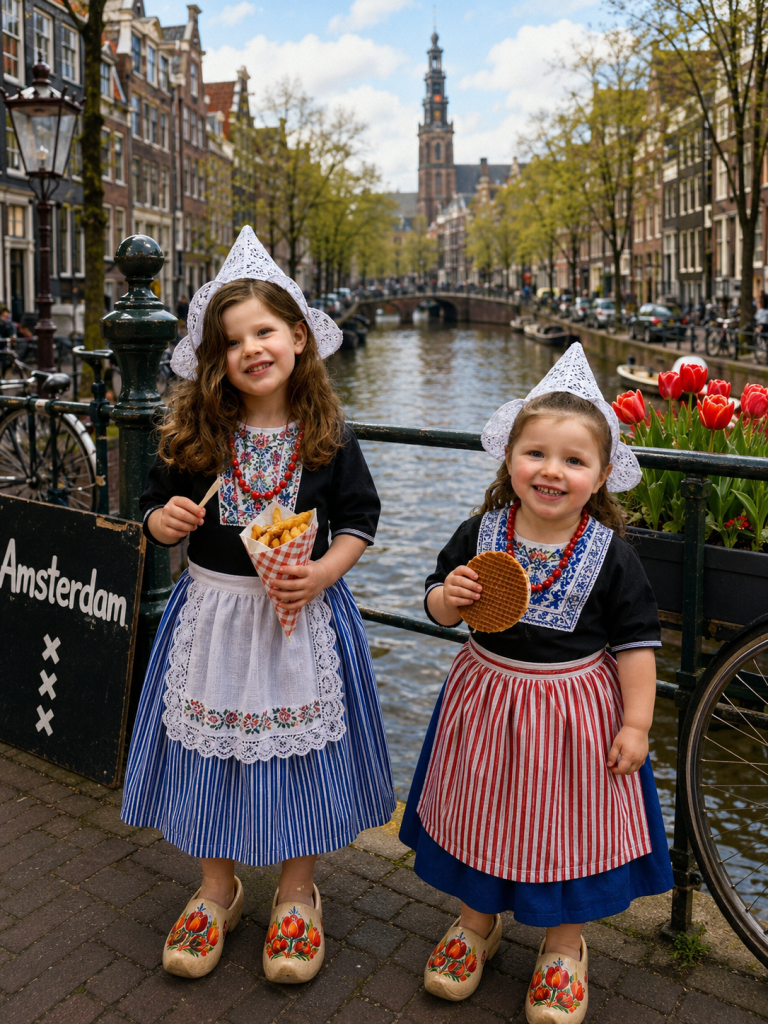
This is an AI image my daughter-in-law created when my son’s boss approached him with the idea of the family moving to Amsterdam for a. couple of years. My initial gut reaction was tears because I wouldn’t be able to see the girls as often as I do now. They live just over two hours away. Amsterdam is a bit farther than that!

But then I told myself if is their life, not mine. I told myself I would always be the kind of parent and grandparent to give my children/grandchildren wings and not be a wing-clipper. My mom, bless her, was very much a wing-clipper. She meant well, but I never had to freedom to do as I wanted because of the guilt placed upon me if I were to do so.

So, I told myself we would just have to go to Amsterdam to visit. We’d have to FaceTime. Maybe it would even be a good thing since I’ve never been to Europe and always wanted to go. With them living there, they could be our hotel and our tour guides.

I was making lemonade out of lemons.

They’re not moving to Amsterdam, but with his job, I know I can’t count on them always living two hours away. There are countless grandparents who livelong distances from their grandchildren, and they cope. I could do it too.

I never told my son my feelings. I just listened and asked questions. My role, I believe, is to support, not chain. To give advice only it is asked for. Sometimes I go the “Mom” route when a problem arises with one of my kids and I’m trying to make suggestions when all they need is someone to listen or bounce ideas off. They’re adults.

My journey to accepting I can’t control many things in life came to full fruition about 15 years ago when I realized my adult life was not the perfect one I had envisioned in my younger days. I realized I couldn’t control other people. I couldn’t control certain aspects of my health (vision). I couldn’t control my life in many ways.

So, the Serenity Prayer became a part of my routine. I said the words. I wrote the words. I thought about it. Finally, I meant it.

I really and truly meant it. I stopped telling God what he needed to do for me. I stopped wondering why certain things I had prayed about and for had not happened. I just accepted.

That doesn’t mean I don’t still pray about some of those things, but no, I don’t pray my vision will get better. It won’t. It’s getting worse all the time, but I still have functional vision to do a lot of things. Sure, maybe some technology will be invented that will help me see better someday, but I’m not banking on that. I still pray about some things I know are out of my control like my loved ones’ safety, their spiritual conditions (as well as my own), and their choices.

But I don’t worry about those things.

Several months ago, my son (the one who had been asked to go to Amsterdam) had to go to Singapore on business. He flew to California where he boarded a plane and flew 16 hours to his destination. I prayed about it and never worried a bit. Worry, I knew, wouldn’t change anything. It was out of my control.

Accepting that and practicing it has given me a peace I never had. That doesn’t mean I don’t have my moments. That doesn’t. mean I don’t shed tears about things that weigh heavily on my spirit.

The thing is, when we want to control everything, that need to control actually controls US. It can be as simple as being a “backseat driver,” or it can be as overt as telling our adult children or out spouse what moves to make and becoming…well, bossy.

If you are a regular reader of my blogs, you know I’m super independent. I have resisted bossiness all my adult life, but at the same time I’ve been compliant. I’ve given in to the person bossing me around.

My choice, so I have to accept it and not resent those people for trying to control me. I just go with the flow to keep the peace. That’s the way I’ve lived most of my life.

Here’s my sidenote about this topic: You may not be that way, and that’s okay. I’m independent but not strong-willed. I can’t be happy if what I want out of life makes someone else unhappy.

Back to my topic. What worked for me might work for you, but please know it may take a long time. Please know it doesn’t always work, but it does most of the time.

To me, accepting what I can’t control is a matter of faith.

Here’s my version of the Serenity Prayer:

God, grant me the serenity to accept what I can’t change, courage to change what I can, and wisdom to know the difference.

Living in a prison

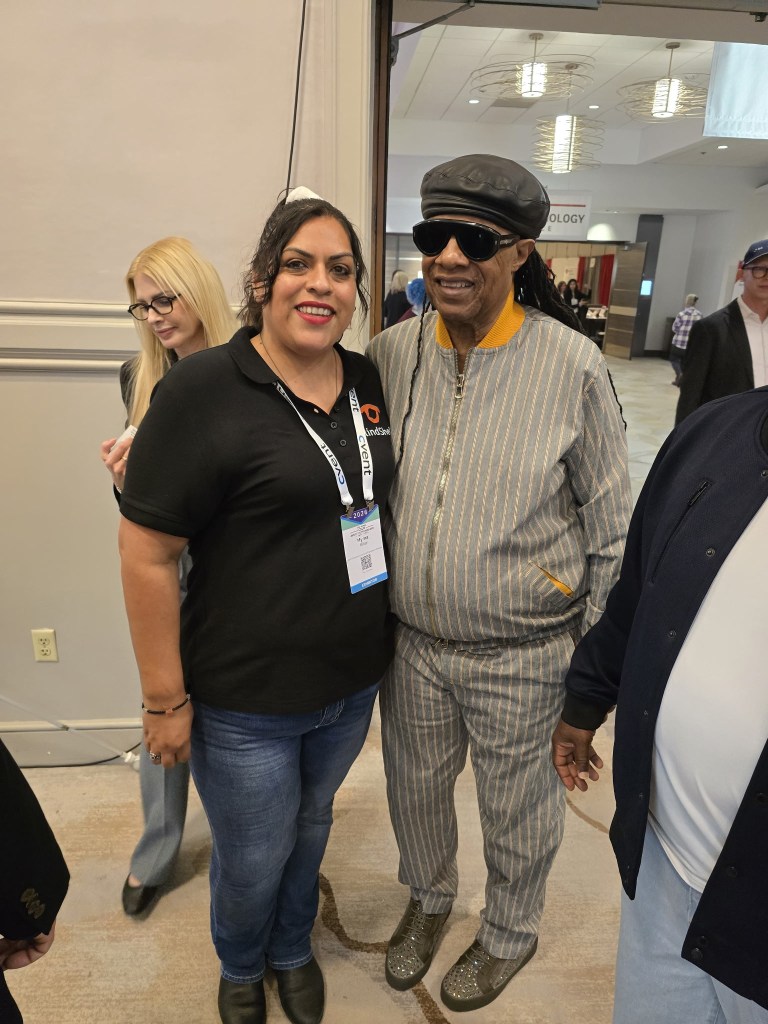
This is my friend Myrna with Stevie Wonder at a technology conference where she was representing Blind Shell, a company that makes smart phones for the visually impaired and blind. She doesn’t know I’m doing this, but I will ask forgiveness later. If she objects, I will take this post down.

The connection to the photo and the title will be at the end of my blog, as usual.

The other day Barry was watching “The Shawshank Redemption.” It’s a great movie in many ways, but some may not care for the violence and what they consider (maybe accurately) the misrepresentation of prison life. But the thought struck me about an analogy to life.

Brooks, played by James Whhitmore, is an elderly prisoner who has spent most of his life in prison. When it is time for his release, he doesn’t want to go. He has become “institutionalized” as Red (played by Morgan Freeman) puts it. He doesn’t want to go, but he must. He ends up committing suicide because he can’t handle life on the outside.

Now, the average person would watch the movie, think it’s good or bad, and then not think about it again except to express an opinion or describe a scene. But me being me…well, you know I look for deeper meaning.

I think many of us become institutionalized in our own way. We work in a job that is low-paying or even one we don’t like because we’re comfortable with it. We’re afraid of the unknown. We stay in towns with little opportunity because our family members are here when even just a short move an hour away would provide a better quality of life. We do the same routines over and over and tell ourselves that is what we enjoy when maybe the truth is we do those things because they bring a certain amount of comfort.

I live in my hometown, but we moved away when I was three. I did not come back to stay until I came here to attend college and stayed after graduation. While growing up, due to the circumstances and situations of my many aunts, uncles, cousins, and maternal grandparents, I did not want to live here. “I will never live there,” I used to tell my parents. My impression of the town was not a good one.

Attending the university, though, was a different matter. I loved the college, the campus, the professors, and the friends I made. When college was over, I found a job in the area and continued to live here. I learned that the college and the town were two separate entities, but it was okay. I didn’t love living here, but I liked it. My friends were here. I was making new friends at work. My parents moved back here, so I stayed. Then I met my future husband, eventually got married, and yes, stayed.

Yet over the years I daydreamed. I thought about places I’d rather live, jobs I’d rather have, things I’d rather be doing. Time marched on, and life moved on as it was with improvements along the way. Yet I never felt that this was to be my permanent home. I dreamed of retirement and moving somewhere else.

You could say I had a restless spirit. That would be an understatement.

Now, however, I no longer have those desires. I’m involved in community activities. My friends are here. No, my closest relatives are not here, and my parents passed away years ago. My children and grandchildren are not here, but they are only 40 minutes away or two hours away. Moving to a new place does not appeal to me because I know it would be difficult if not impossible to make new friends at my age. I have friends here I can count on more than I can count on relatives.

Maybe I’ve become institutionalized, but that’s okay. Maybe I’m just more comfortable with the familiar, and if so, I have no doubt that is due to being the age I am. The things that were so important when I was younger are not important anymore.

But I don’t need to feel too comfortable. I shouldn’t fear new experiences or change, and really, I don’t fear those things. I will admit my vision loss situation has robbed me of independence in more ways than not driving. I am fearless in my comfortable surroundings but apprehensive in other surroundings. I want to overcome those fears and learn to adapt to new settings in which I don’t have to depend on Barry or someone else to help me do things.

I want to be more like Myrna and Stevie Wonder. Myrna has Stargardt’s disease, an inherited retinal condition that made her legally blind when she was 12. She attended public schools for awhile and then a school for the blind. She, like me, relies upon peripheral vision, aids, and technology to do the things she does, including working, raising two daughters, and traveling independently. Yes, she flies to new places alone.; Did you know airlines provide help to the blind at check-in to go through security, find their gate, and give them access to early boarding to find their seat? As for Stevie Wonder, he has been blind since birth because of damage due to too much oxygen when he was born prematurely. Yet look at his success as a musician and singer!

They don’t allow their vision to lock them into a prison. Yet people with perfect health and perfect vision and hearing allow themselves to stay in a prison of their own. I’m not talking about people who are happy with their situation. I’m talking about people who are unhappy with their situation but are too afraid or lazy or intimidated to try to change it.

I’m no longer living in a “prison,” although I confess may home and neighborhood sometimes feel that way. But I would feel that way no matter where I lived unless our town decided to create a wonderful community that is walkable to stores and activities. (Side note: the perfect area, to me, to live is near the university, but there’s nothing near there except for older homes and student housing. Across the bypass doesn’t work because I can’t walk across the bypass, too much traffic, too dangerous. The condo complex behind E.W. James in Union City is perfect–any local developers have any ideas/??)

I now there are some spelling and possibly grammar mistakes in this blog today, but I fixed what I could as I listened to the screenreader. I have it enlarged as large as possible on my 55 inch television, and I can’t find all the mistakes because the words are jumping around, so forgive me. It’s not the most polished piece I’ve ever published,, but maybe you get the meaning.

Which is this. If you are unhappy in your situation, do something to fix it. You may have to fix yourself first. And don’t take this blog as a license to end a marriage. Work on it, if at all possible. Seek professional help. Seek counseling. Your job drives you crazy? Seek a life coach of talk to Chat GBT about jobs that might be a better fit. I’m not suggesting there’s a perfect job out there. I’m saying a better, higher paying, more satisfying job. Believe me, any job you do is going to get old after a while. That’s just life.

We all feel stuck at times. But if we fail to explore possibilities, it is a prison of our own choosing.

What makes someone “weird?”

The definition of “weird” involves suggesting the supernatural or uncanny. We use it that way, but we often use that word when it would be more accurate to say “odd” or “different.”

But, how do you determine what is odd?

The fact is we often see people who are different from us as being odd. Cultural norms in another country strike us as odd. Greeting someone with a bow instead of a handshake? Eating fried grasshoppers? Believing in aliens or reincarnation?

How odd. Unless you are one of those people.

“Different” often has negative connotations, but each one of us is unique. We have our mannerisms, our fears, our quirks, our likes and dislikes, and our value system. We want people to respect our differences, but sometimes we are not respectful of theirs.

I like to think I respect other people’s differences, but sometimes I’m guilty of not understanding. I’m not judging. I just don’t get it.

This morning I was kidding my husband about something and told him he was weird. But, when thinking about what we were talking about, I am more likely the weird one because my stance on that topic is less common. His is more normal. (Can you tell I’m apologizing to him?)

I admit to being different. My taste in food and music, my “never meet a stranger” attitude, and my desire to express my thoughts as I’m doing now are not the norm.

You may be wondering what the specifics are of my “not the norm” components. Well, here are just a few.

I’ve always preferred vegetables and fruit, even as a child, and hamburgers and pizza are at the bottom of my foods list. I don’t love chocolate.

I don’t mind eating in restaurants by myself. I’ve done it many times over the years.

When I could drive, I never minded driving on the interstate, even the horrendous, semi-dominated I-40 that crosses our state and puts fear into the hearts of many. In the past, I drove cross-country without a thought.

I don’t mind doing things alone. If there’s a movie I would like to see and no one would be interested in going with me, I’m the type that would go on mown.

I like change. I worked in banking for 8 years then switched to teaching. I switched to a different school after working in one high school for 18 years–a decision my husband thought was a mistake– and took a principal’s job without having served as an assistant principal to “learn the ropes.” I stepped down from that after seven years because of my aging mom needing my help more frequently and got a job in another school district before returning to my home county.

Most teachers I know stayed with the same school their entire careers.

Other quirks include hating unloading the dishwasher, wanting a perfectly made bed even if we are the only ones to see it, and a hatred for fried catfish. Let me change that. I hate catfish no matter how it’s cooked. On the other hand, I love broccoli.

My point? I need to respect other’s differences just as I want them to respect mine. We don’t have to agree. But we can accept. No, not accept everything. We shouldn’t accept what is wrong or participate in it, but accept differing viewpoints about life. We can seek to find common ground instead of focusing on how we’re different.

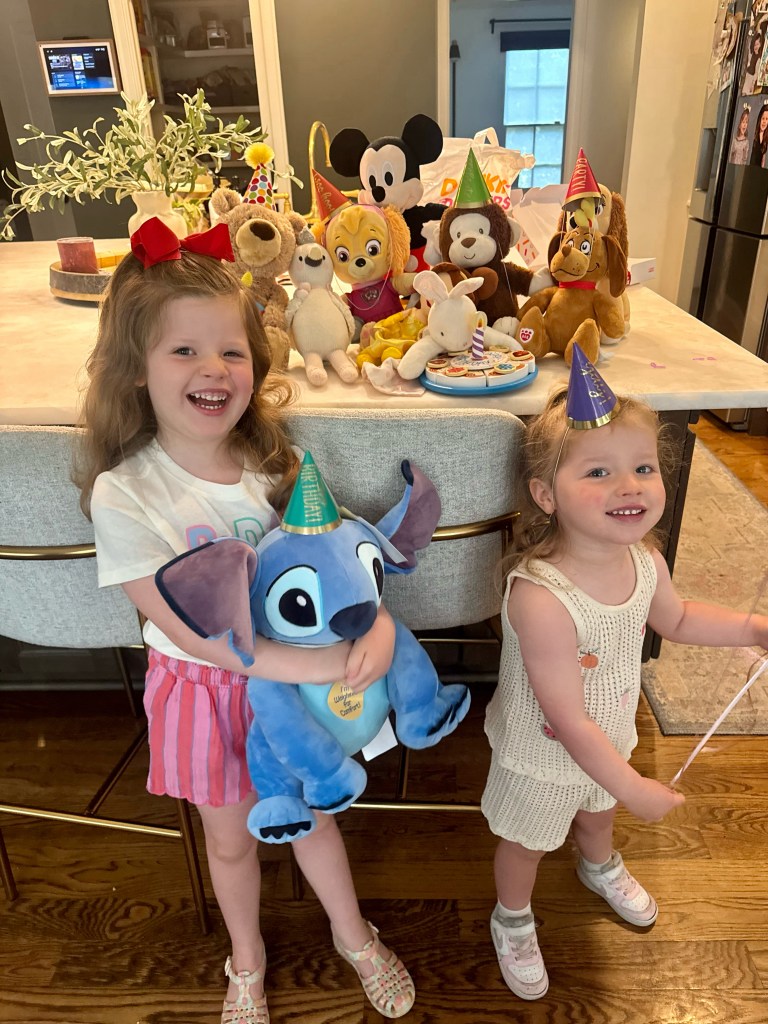
Those sweet girls in the photo are sisters, but their personalities are not similar at all, other than their hugs are extra special and sweet. One is shy and imaginative. The other is outgoing and a daredevil. Is either one odd? Of course not. They’re just different. Each one is unique.

This post is, primarily, to remind me to practice what I preach. While I may not understand why one person is an introvert or a loner and not understand why someone handles grief differently than I do, I don’t need to think of that person as odd.

My husband often says “We’re all different.” He’s right.

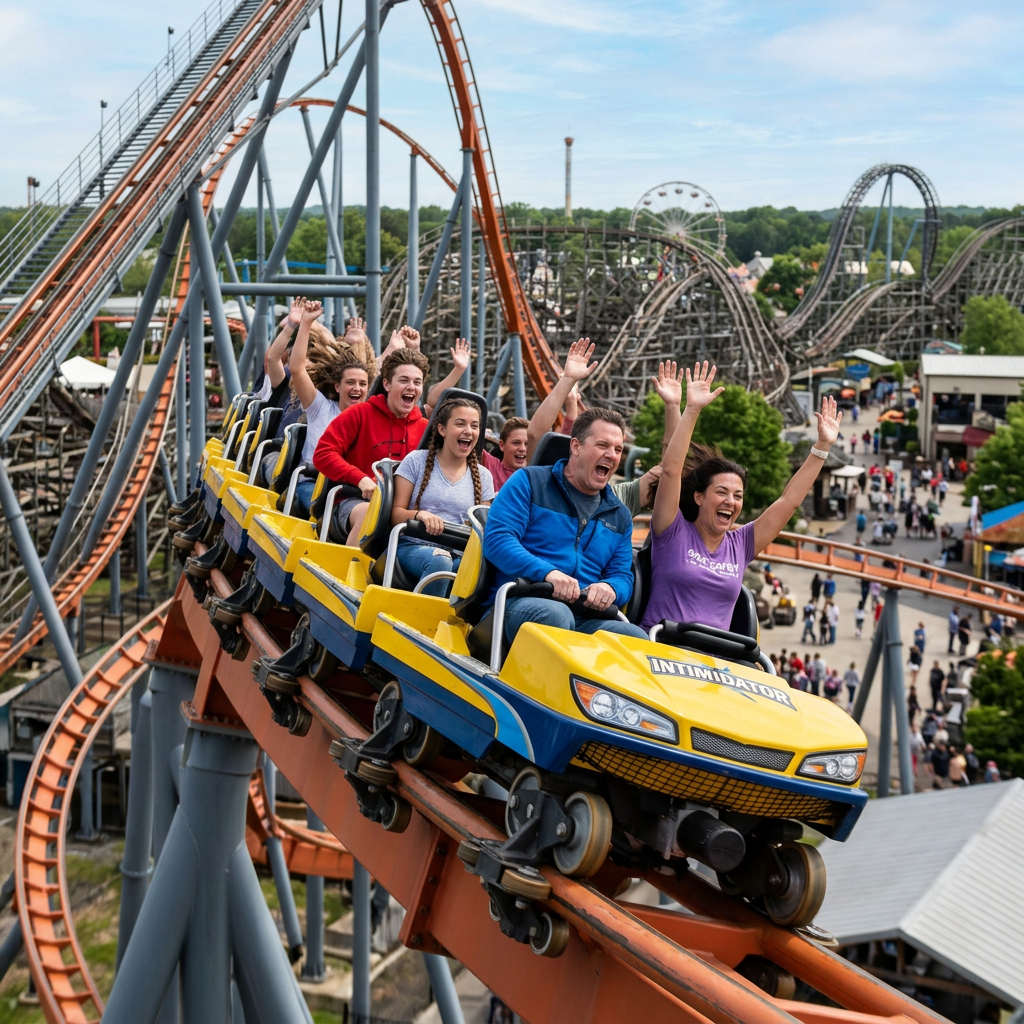
Riding the Roller Coaster of Life

People enjoying a roller coaster ride with hands raised and excited expressions
I know I just blogged on Sunday, but writing seems to be my go-to when I’m bored or restless if I have no other option. I have about an hour to kill before I go to the wellness center and to the assisted living facility where I do a program once a month, so I’m thinking about everything from grandchildren to the weather to technology.

Speaking of grandchildren…our five-year-old granddaughter did a FaceTime call to us last night, and it was so cute. She showed us some toys, demonstrated a dance from “Lilo and Stitch” (although we couldn’t see the actual dance because she was holding the phone), and reasoned with her younger sister. So, so adorable!

Okay, off the proud Gigi share and back to the topic

I think most of us experience highs and lows in life with plateaus in between, but I must confess retirement has brought more lows than highs for me.

Before you judge me, please understand I don’t want to go back to work full-time. I don’t want to be locked into a schedule, but the only reason I don’t want to be working on a schedule is because I want the flexibility to go see those grandchildren or have them here when their parents need us. If not for those girls, I would be looking for a part-time job.

But who wants to hire a (number) -old with vision loss? Nobody.

Okay, so maybe we can travel more. Hmmm…do I really want us to spend our savings that might be needed for future healthcare? Spend some, sure. Spend it all or most of it? No. We may never need it, but we want to be prepared. Besides,

Move to be closer to the grandchildren? Not an option. With my inability to drive, a new place in a new city would be tough to learn. Plus, those girls are going to get older and not need or want to be around their grandparents so much someday, so maybe we need to stay where our friends are.

It is funny how, in my situation, the smallest things can bring me the greatest joy. Like when my family comes to visit–all of them–or we go visit them at their homes/towns. I admit to being jealous of people whose families live in the same town, but I’m glad you have that perk. Maybe it’s not the perk I imagine. Maybe you wish your children and grandchildren lived at least 30 minutes away? Ha, ha!

Last week, a friend asked if I wanted to go along with her and her daughter to Sam’s in Jackson, about an hour away. I accepted immediately. We went to Walmart where her daughter did much of her grocery shopping and to Sam’s, where I bought some salmon, and came home. That was it. But we talked. We laughed. And it was the highlight of my week.

Who would have thought going to Walmart and Sam’s would be a highlight? Obviously, it wasn’t the destination. It was the company.

My husband injured his foot recently while playing pickleball, and the PA put him in an air cast for activities and prescribed a steroid pack. He has had incredible energy, and after walking the dog two miles yesterday morning and playing pickleball for 2 1/2 hours, he came home still full of energy. I think he’s going to miss that medicine.

I told him he knows now how I feel most of the time. I have the blessing (and also the curse) of having boundless energy because, as of right now, I’m in excellent health. I confess I did take a nap Sunday afternoon, something I rarely do, so maybe age is catching up with me, at least a little.

As I often write in my blogs, I’m weird. I’m not like most of you who love and thrive in retirement. I do not find this season of life to be the best season.

But, you know what? If the worst problem I have is perpetual boredom, I am very fortunate. If the worst low I have is frustration because I can’t go and do what I want to do when I want to do it, I’m fortunate. And if I don’t love this season of life, I can be grateful I’m still here and appreciate the perks it offers.

Like no alarm clocks, although I now wake up early anyway. Like no stress from a job. Like not being so busy I can’t enjoy something as simple as reading a book.

I have a feeling I’m not alone in thinking of life as a roller coaster. As someone who was never a thrill-seeker, I didn’t like roller coasters. Not because of the height or being scared, but because of that dropping sensation. I don’t like it. Thankfully, the emotional roller coaster ride doesn’t create that. It may bring tears at times (for which I’m ashamed), and it may create a state of being “blah,” but that’s okay. It could be worse.

To the few of you who read this, thank you. If no one reads it, that’s okay. It helped me sort my thoughts, and if someone else can relate or benefit from it, it’s worth my sharing. If you know me at all, you know I’m introspective and think about what makes us all tick. I don’t know why I’m like that, but it is who I am.

We have no control over the future, and if we are wise, we will just appreciate and make the most of each day. That’s what I’m going to do. I hope you can do the same.

Developing an Attitude of Gratitude

You may not be a Christian. You may not be a person of any sort of faith. But I strongly believe developing a grateful attitude is an important component of finding contentment and peace in this troubled world in which we live. No doubt there are other factors, but having a grateful attitude, no matter what the circumstances, can help.

I was privileged a couple of weeks ago to lead our ladies’ class at church in a devotional and discussion about this topic. The reason? My own journey and what I’ve learned.

Why have I finally learned to grasp the full meaning of gratitude? Call it having lived long enough to have experienced many of life’s ups and downs.. Call it having a lot of time on my hands to reflect. Call it being a deep thinker.

It’s all of that and more.

The truth is that it’s easy to be grateful for our blessings and good things in life when things are going well. Yet even when they’re goin well, we often are guilty of not appreciating what we have. For example, are we not only grateful for our food but also for the fact we get to choose what we want to eat? In the United States, people relying upon assistance to buy groceries cannot afford the healthier options, but even they have more choices than people in many third-world or developing countries. In Cuba, for instance, residents are given a ration card that allows them to have one pound of chicken per person each month. They are allowed five eggs per month per person, but that has been unstable, and they often don’t get eggs at all.

Cuba is just one example.

We’re spoiled. We have heat in the winter and air conditioning in the summer. We have enough clothes that we are concerned with fashion instead of clothes to wear for modesty and comfort. Most of us sleep on a comfortable mattress at night instead of a thin pallet on a hard floor.

You see where I’m going with this. We take things for granted until or unless we don’t have them.

Like income until we lose our job. Like health until we get the cancer or another life-threatening r diagnosis. Like walking until an accident or health issue robs us of that ability. Like family and friends until death takes them away from us.

Yet even in those times we can have gratitude. Maybe not at first. We are grieving, and there is nothing in the Bible that tells us not to grieve. It is a human emotion, and God doesn’t expect us to be a Miss Pollyanna about everything in life. It’s okay to hurt. It’s expected. It’s okay to grieve. It’s normal and part of the healing process. Even if it takes years.

Experiencing loss of a loved one? Grieve, but be grateful for the friends and family who are there to support you. Diagnosed with cancer and enduring harsh treatments? Be grateful there are medicines available now to treat the condition. Being grateful for those things doesn’t make the struggle you are enduring go away, nor does it make you feel better in the moment. The weight of your struggle far overshadows the good things we are guilty of taking for granted. But maybe, just maybe, counting your blessings and expressing gratitude for them will help.

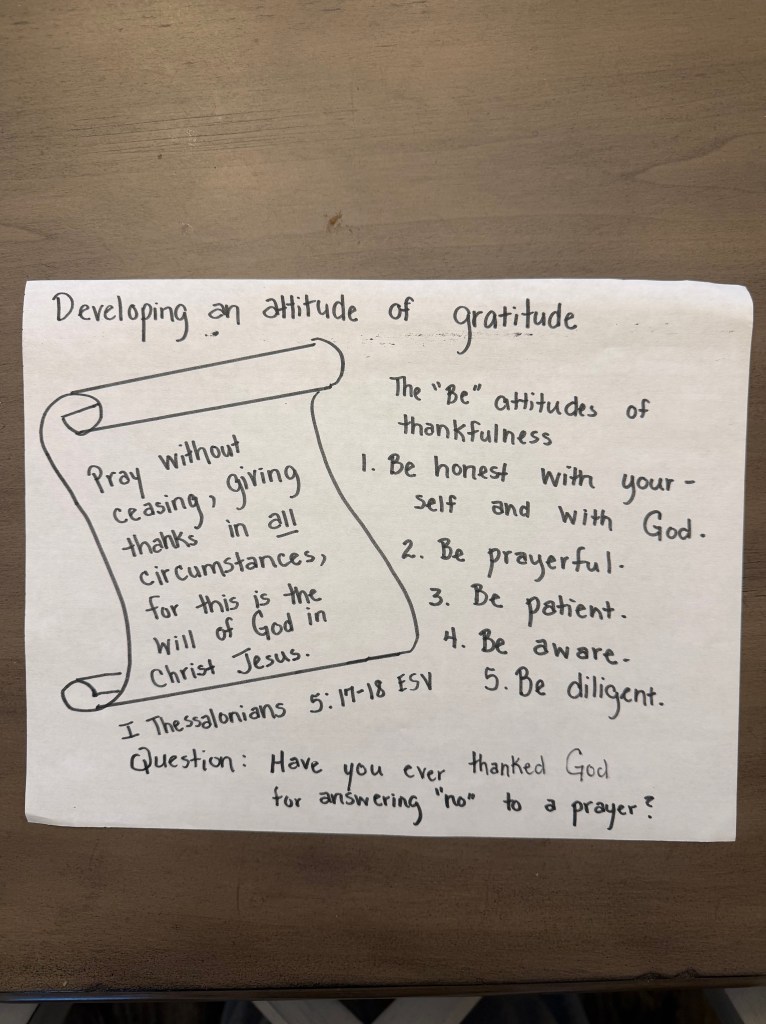
Christians know about the apostle Paul, who penned the verses I have written on the handout pictured, He endured beatings, imprisonment, rejection, public ridicule, and shipwrecks. He eventually was killed because of his Christian faith. Yet he wrote that the people of Thessalonica, and us as readers of his letters, should give thanks in all circumstances. He practiced what he preached.

You know what I’m thankful for with my vision loss? I went through two or three years of true depression. I cried. A lot. I never asked, “Why me?”, but I desperately wanted my independence back and my ability to see the world clearly. I started praying for the ability to accept and adapt, and that is what happened. I didn’t receive a treatment that would fix things. I didn’t get normal vision back. But I found a new purpose in life.

My purpose is to help others going through vision loss. I have made friends with legally blind and completely blind people from California to Arizona to Kentucky to Virginia to all parts of Tennessee. I am so grateful for those friendships. I am grateful for the opportunities to share and to help.

Please don’t tell me you admire me or that I inspire you. I’m just a person being true to who I am. It is nothing special. And my functional vision allows me to live a very normal life in most ways. The people that inspire me are the ones who have endured much worse, such as the loss of a child or spouse or health, who endure what I cannot imagine.

And the truth is, I may join that number someday if I live long enough. The vision loss has made me more empathetic to others, and I’m grateful. It’s made me more appreciative of the sounds of birds in the early morning, m ability to walk for miles at a time, of friends and family who drive me places or serve as my eyes when needed. I’m grateful for technology that allows me to do what I’m doing right now–writing–since that has been one of my greatest joys ever since I picked up a pencil and learned to spell.

I hope you no matter what you are enduring, can feel true gratitude for the other things in your life that are good. I hope you can find the peace I’ve found. I’m not always content, I’m ashamed to say, because I am restless and get bored easily, so when I can’t go and do what I want to do when I want to do it, I can get down and out.

Then I think of some friends and family going through much worse, and I’m ashamed for my feelings. How minor they are in the scheme of things.

Gratitude. True gratitude. Maybe it’s the first step toward true peace and contentment.

Do you feel blah on “gray days?”

I do. I admit it. Some people may call it SAD (seasonal affective disorder), but where I live, it’s not seasonal. It’s any season at any given time, so I just call them “gray days.”

January, however, is the worst. Anyone own a beautiful home in Arizona we can rent cheaply for the month of January…and bring our 70-pound dog who thinks it’s his duty to find every underground creature in existence, even if it means digging all the way to China?

I didn’t think so.

When I was working, gray days didn’t bother me as much. I was working in a school with artificial lighting and was very busy. Retirement, however, means I am home almost every day, and according to my research our state has 116.1 days of rain, on average, and that’s not counting those days that are just cloudy.

Some people love cloudy days. Kudos to you. Wish I did. Once every couple of weeks is okay. But I have no control over any of that, and I realize we need the rain to support life as we know it. (Like how I brought in a reference to the title of my blog? Speaking of which, I normally blog once a week but because of family being here this weekend, I was compelled to blog today.)

Back to gray days. If you are prone to that blah feeling, you have two choices. Curl up with a book or in front of the TV, drink some hot tea, and wait for sunnier weather. I can’t do that. I hate…let me repeat, I hate…inactivity during the daytime. Sure, I don’t mind taking my time getting started in the mornings, but to sit around and watch TV or listen to audiobooks all day is my idea of torture. It’s almost as bad as sitting with someone in a hospital, and while that is sometimes necessary and the kind thing to do, I don’t know of anyone who actually likes it.

So what do I do to counteract the gray days? I ask Alexa to play music from the sixties or seventies, and when I hear songs that make me want to move, I get up and move. I might do an exercise routine or simply dance around the room (thank goodness no one is watching). If it’s not raining, I take that 70-pound dog for a long walk and sometimes drop him back to the house and continue the long walk. I call shut-ins, thinking they may be experiencing the blahs more than usual on a gray day. Sometimes I reach out to a friend to go to lunch. I dig out old photos and look at them using my DaVinci CCTV or while waring my IrisVision headset, but to be honest, that is so much work with the vision issues, I can’t do it for long. I still can’t see them very well, and it can be exhausting. I do art projects. I play solitaire with large-print poker cards Barry gave me years ago.

You may not care about gray days or my suggestions, and that’s fine. We each handle things in our own way. And maybe I’m blogging about this as a form of therapy to sort out what I will do with myself today while my husband is at work and I have no transportation to go do things away from the house. Don’t tell me to call a friend and ask her to take me places. It’s not happening. I only call friends to take me places when it’s absolutely necessary not just because it’s a boring, gray day. And, you know what? Even if my husband were not working, I wouldn’t ask him to drive me around while I do…what? He is always willing, but it’s just not the same as when I was able to get in the car and just do my own thing.

Not complaining (well, not much), just explaining. It is what it is. There are people dealing with many more serious problems–physical, mental, emotional–, and this minor bump in the road is nothing compared to what they’re going through.

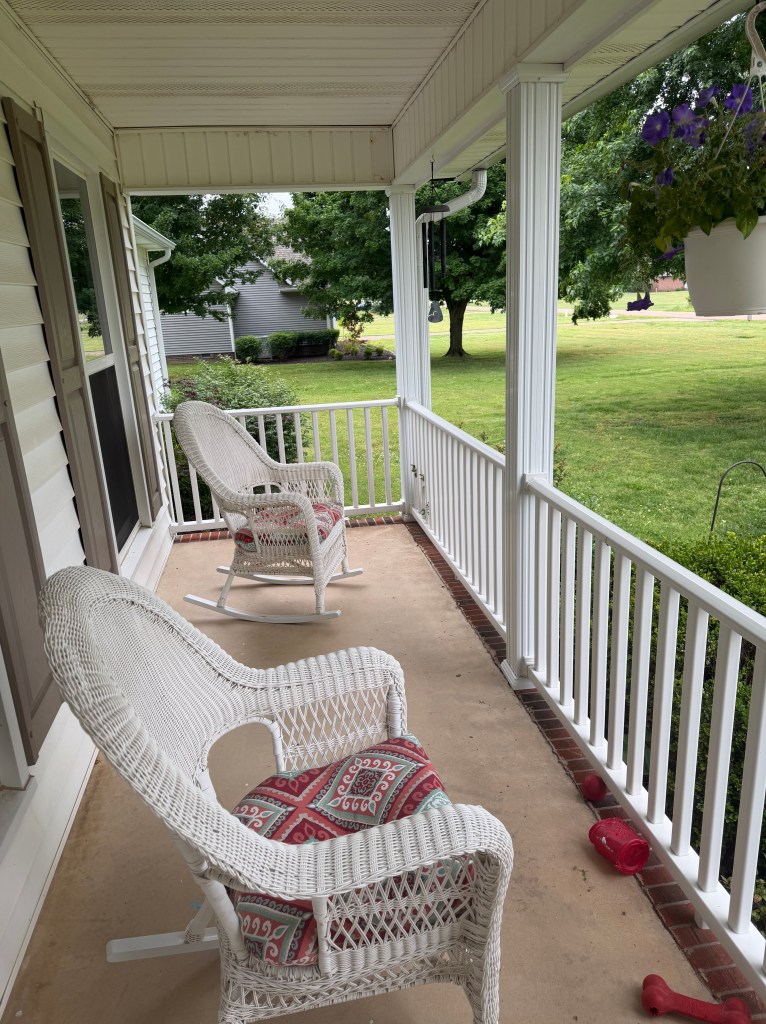
You may be wondering about the photo. I took it a few minutes ago to show the gray sky, but while I was doing so, I was reminded of how much I love sitting on my front porch. It is one of my happy places. In the early mornings, the birds make beautiful music I can hear so well because there is no traffic at 6:30 in the morning. When it’s raining and not lightning, I can enjoy the sounds of the rain. I sit out there and listen to audiobooks at times. I chat on the phone with friends. Sometimes I just sit and listen.

Everyone should have a happy place, so I hope you have one. Thanks for allowing me to write (one of my joys) and sort out my thoughts. I think it’s time to move to some music by The Beach Boys and other groups from the past then pull out the watercolors and do something abstract, then walk that dog of mine. I’ll just have to make sure no rain is on the way when I do.

Happy gray day to those of you experiencing what I am, and happy sunny day to the rest!

Accepting your limitations doesn’t mean giving up

Oh, my, I can’t believe the irony of trying to get this post done! I typed the title then encountered several tech problems, and I was so frustrated I was talking out loud to my laptop and TV to which it is attached–really! But I didn’t give up, so here I go.

First, let me clarify the title. This is not a “Michael Jordan didn’t make his high school basketball team, and look how his perseverance paid off!” type of blog. Nor is it a “you can do whatever you set your mind to do!” That is the biggest lie we tell our children and the biggest lie we tell ourselves.

Don’t get me wrong. We should aspire to achieve. Well if we are made that way. The truth is, many people don’t care about ambition or achievement or success. They are perfectly happy living their lives more simply and are satisfied with the amount of money they earn, the place they live, and the life they’re living. But even they may find themselves giving up when facing an obstacle that seems insurmountable.

What I’m talking about is giving up on yourself. Giving up on doing the things you love. Giving up because you feel you don’t have what it takes to do certain things.

Another clarification: There ARE things in life we can’t overcome. My friend who has been paralyzed for over 30 years can have all the positive thoughts she wants, but those thoughts won’t make her walk again. I can will myself to see better all I want, but those retinas aren’t going to do what I will them to do. I can’t drive anymore. I can’t read books to my granddaughters. I accept those facts.

The interesting comparison of my friend’s disability and mine? She, the paralyzed one, can drive using hand controls. She can move about in her wheelchair. I can’t drive, but I’m strong and healthy and can walk long distances. She can read to herself and to others. I rely on screen readers and audiobooks.

She and I both had choices to make. We could be afraid to learn something new and wallow in our unfortunate conditions or we could look for ways to overcome.

You don’t have to have a disability to give up on yourself. I’ve seen it far too many times. The talented singer who is afraid to sing in front of others yet wants to have a recording career. The student with average intelligence (she thinks) who is too intimidated to go to college or to train in a job that is interesting to her. The overweight adult who wants to lose weight but refuses to exercise or eat a healthy diet because it’s too hard.

They’ve all given up on themselves.

I did that a few years ago. Before I knew about the resources and technology that would help me live a more normal life, I gave away all my art supplies because I thought I’d never be able to paint or sketch again. I cancelled my WordPress subscription. I even cancelled my Microsoft Word subscription.

Bad mistake. I grew even more depressed. It was bad enough being stuck at home with limited things to do, but to deny myself the two activities in life that I love the most–writing and art–was much like you sports fans who stop watching ballgames and golf just because you can’t play them anymore.

Hmmm…I’m not too sure about that analogy. There are plenty of sports fans who never played sports or who were never super good who still love to watch them, so…oh, well, I think you get what I’m trying to say.

I missed art, and after about a year, I bought more supplies. My neighbor is a talented artist who has an art studio in which she hosts art classes. She teaches techniques, but she allows each person to work on their own projects, and she is available to help when they have a problem. I went to her classes off and on for about a year before I decided my amateur attempts with my vision loss were not worth the small amount I paid to use her expertise and facilities.

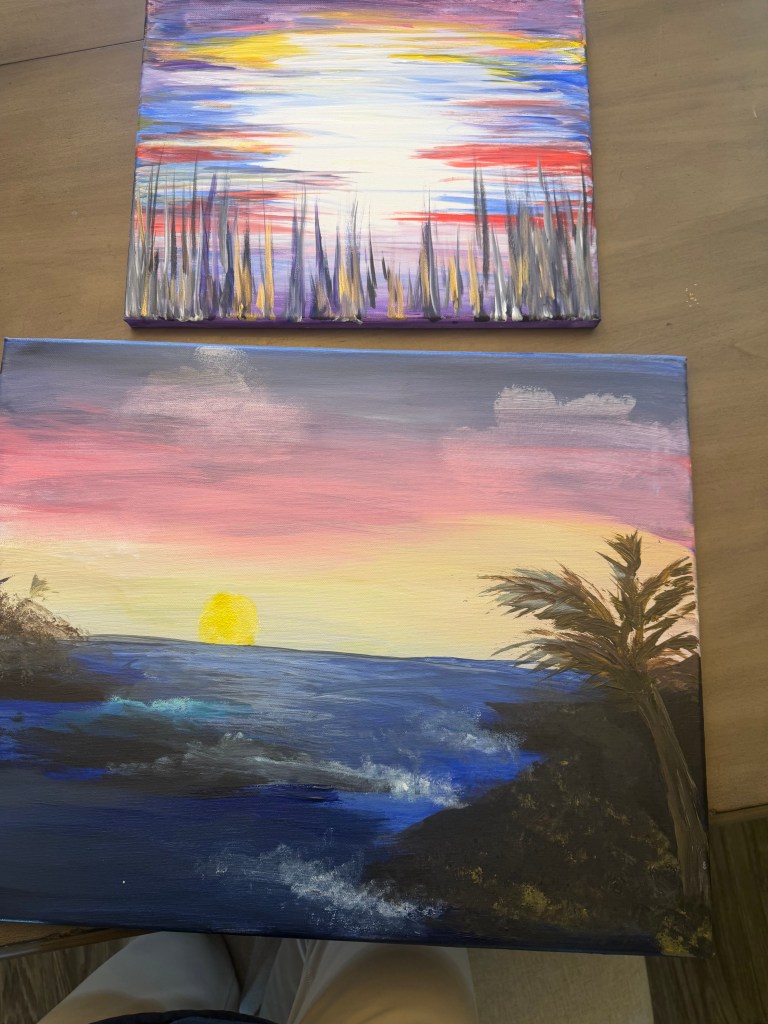
That doesn’t mean I stopped painting. I do my own thing, and even though my projects (two are in the picture) will never grace anyone’s walls but my own (or actually shoved away in a closet), that doesn’t stop me from “channeling my inner Picasso.” Would I love to be a serious student and produce good quality work? Of course. But I can’t, so I do what I can.

I renewed my subscription to WordPress and Microsoft Word, and I began to write again. It didn’t matter to me if anybody read what I wrote or not. Writing was, and is, just something I have to do.

A good thing to come of that? My book about vision loss. I’ve given away as many copies as I’ve sold, so it’s not a money-maker, but it has helped people.

I have a feeling some of you reading this have given up on yourself in some way. You’ve told yourself something is too hard to do or you don’t have enough talent or you don’t have enough ability. And I’m not saying you will achieve whatever you want in life if you work hard enough. You might. You might not.

Accept your limitations. Accept your circumstances if they can’t be changed. But don’t give up on yourself. Find joy in the journey.

Loneliness–it affects your health

Once again, the photo doesn’t seem to match the title of my blog, but bear with me. I’ll explain.

A fitness/health expert with multiple degrees and certifications recently spoke to one of the civic groups of which I am a member, and this statement shocked me. “Loneliness,” she said, “is as harmful to your health as smoking 15 cigarettes a day.” She explained the research that backed this up, but I am still amazed.

I know some people prefer being alone, and likely they are perfectly happy spending most of their hours alone. But loneliness can affect anybody at any age in any circumstance.

The wife or husband whose spouse is not the companion they hoped for, whose distant demeanor or even abusive treatment creates a sense of isolation. The elderly shut-in who has no family to come visit and no friends who seem to care or whose friends have already passed away or in the same shut-in situation they are. The young single whose friends have all married and are living their lives with jobs and raising children.

When I was working and raising my family, there were times I dreamed of just a day to myself. There were times I suffered from what I called “people pollution” and wanted nothing more than time away from the crowds. I’m sure many have felt the same.

Loneliness, though, is as much a state of mind as it is a circumstance. We’ve heard the saying that someone can be lonely in a crowd, and that’s true. And being alone doesn’t always equal loneliness.

Those of you who read my blogs regularly know I’m always advocating for people to reach out to shut-ins. If that person is content with the situation, there is no need to push him or her to get out or make phone calls. Just give them a book to read or a remote they can operate, and they may be perfectly fine. Others, however, may need visits, outings, and phone calls to alleviate the loneliness they experience each day. That’s why I advocate and remind all of us to keep those people in mind and actually DO something to help them.

But let’s say you’re lonely. Maybe you’re divorced, widowed, never married, or in a bad marriage that you remain in for personal reasons. What do you do?

First, seek groups you can join. Sign up for fitness classes, art classes, and volunteer organizations. If you’re a person of faith but have neglected attending corporate worship services, find a church and attend long enough to get to know some of the people. Participate in some of the activities available instead of being simply a pew warmer. ” Obviously, I am referring to Christian faiths, but the same idea applies to any religion.

Be the instigator of social events. Invite people into your home, but if that doesn’t work for you, invite people to join you for lunch or outings. Invite someone to participate in one of your hobbies–playing golf, pickleball, tennis, etc.

In my town, our Friends of the Library group is active and involved, and I’ve gotten to know people outside of my normal circles. I’m active in our local retired teachers association. I’m in three other civic groups (invited to join) that, at first, were foreign to me, but as time went on, I began to feel like a part of the group as I strengthened acquaintances into friends and met new people.

Side note: (you know I always have a side note) For the visually impaired, meeting new people is especially challenging because we can’t see what you look like. It takes time for us to learn your voice and body type (tall, short, etc.). That means we may know you in a specific situation–as in a group meeting–but we have no idea who you are in a restaurant or some other public place. So, we do one of two things. We pretend we know who you are until you say something that clicks with us, or we do as I usually do and ask, “Who am I looking at?” If you see us out and about, it’s very helpful to say, “Hi, Pam, it’s Jean, Jones, how are you today?” I’ll eventually recognize you. Oh, another side note: If my husband is with me and sees someone he realizes I know, he says in a low voice, “Jean Jones is coming our way,” and I’ll say, “Hi, Jean!” as she gets near us.

Okay, back to my topic. I think one reason I found this statistic to be so impactful is because I talk with, by phone, several older women with vision loss who are living in loneliness. They’re sad, depressed, and discouraged, yet they’re trying so hard to be upbeat. One lives near Nashville. Another lives in Maryville. Another lives in Virginia. They are always thrilled to get a phone call. One of them told me when I called that she hadn’t talked to anyone in several days. She has mobility issues and is completely blind in one eye with glaucoma affecting her vision badly in the other. A nearby family takes her to church services each Sunday morning, but I know she would love it if her granddaughter would bring the great-grandchild over every now and then or if some of those church members would visit or include her in activities.

If you know someone like that, please consider reaching out. If you are one of the lonely and have the means to get out and about, do it! If you have the health and ability to drive, your choices are wide open. You just have to look for the opportunities.

The cure for loneliness is to get out of your comfort zone. You can’t expect to keep living the same way and for things to change. You have to find the courage to change them.

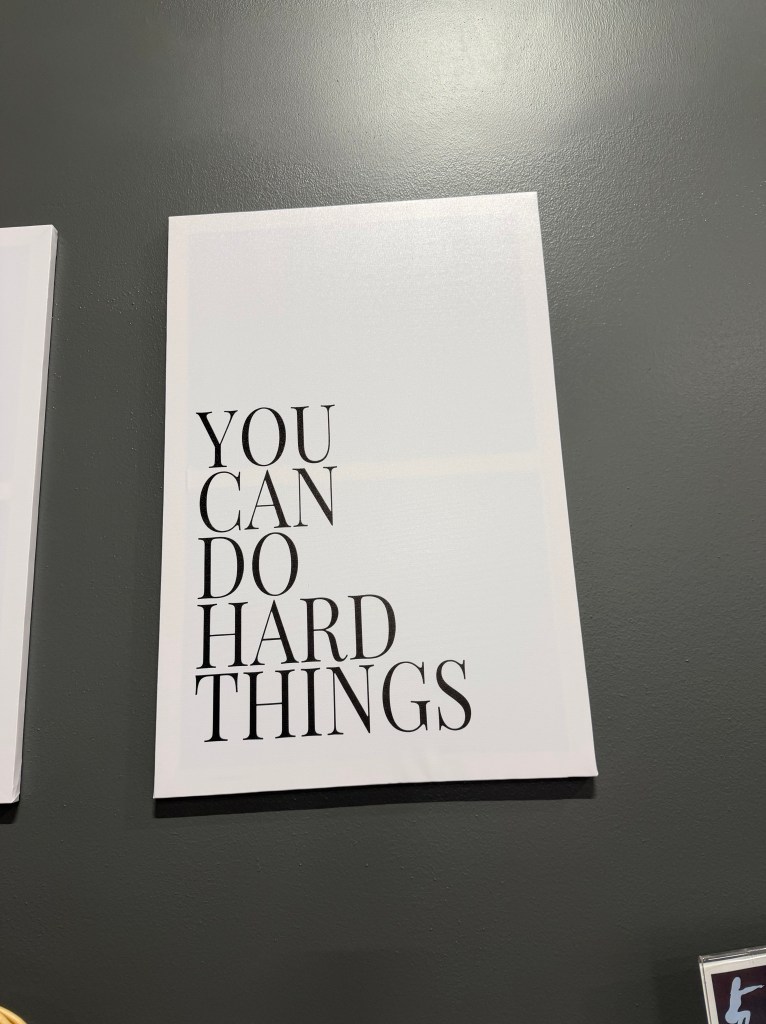
We have about 40 in our Silver Sneakers classes at the Wellness Center, ranging in ages from younger than I am into their eighties. The reason most attend? Yes, it’s for the exercise. But primarily it’s for the social interaction. “You can do hard things” a sign on the wall reminds us.

Yes, we can for as long as we can. But we have to have the mindset to do it.

Learning to let go

I’ll explain the photo later in this post.

It took me a while–years, in fact–to learn how to let go of things I can’t control. That’s not to say I don’t have momentary lapses, but for the most part, I’ve done so.

The benefits? Better sleep. A calmer spirit. An improved spiritual life. Translated: better mental health.

You may be wondering how I’ve managed to do this, but before I explain, I’ll list the things I’ve had to learn to let go.

Goals: the goals I had as a 21-year-old didn’t happen

Control: control of my family members, control of all my health concerns, control of whatever is not really in my control

Dreams: We all have had dreams, whether we realize it or not. Your dream might have been as lofty as becoming a professional athlete, singer, or other celebrity or something more normal like finding the perfect mate, but I have to admit my dreams fell somewhere in between the extremes.

Grief: If we live long enough, we all experience grief. If I continue to live, there is no doubt I will endure it again. So when I say I’ve learned to let it go, that doesn’t mean I don’t have my moments. But I don’t allow myself to stay in it.

Maybe none of the above strike a chord within you, and if so, you are either very fortunate or blind to your own issues. I’ll use my mother as an example. Bless her, she was a worrier. She worried about her children and grandchildren constantly as well as her own security issues. She worried about her health. She feared someone was going to break into their house–from her youth she was that way. She feared germs. Truly. Way before Covid. “I don’t worry,” she used to say. “I’m just cautious.” The rest of us could see the truth. She couldn’t.

It’s possible you’re like my mom in some way. It’s also possible you have been blessed with the innate ability to let things go. tMost of us, though, are either a variation of my mother.

Now for the secret to letting go of the disappointments, heartbreaks, longings, and desire to control things beyond my control: prayer.

Before you stop reading at this point because you think I’ve given a cliché religious answer, let me explainIf. I hope you’ll find something helpful.

You remember the Serenity Prayer that was popular many years ago. I pray it. And I mean it. I’ve blogged about it before. To refresh your memory, here’s my variation of it: Dear God, give me the serenity to accept the things I can’t change, the courage or strength to change the things I can, and the wisdom to know the different.”Let’s think about the “wisdom” part. That’s a rough one since most of us wonder if we have the wisdom. And, to be honest, some of you reading this are afraid of change, so you won’t even try.

But we can all agree we can’t change the past. Maybe we regret a career decision but at the age of 55, we feel stuck. Guess what, the truth is we likely are. That doesn’t mean you can’t explore possibilities, but in this youth-oriented, youth-focused culture we live in, chances of finding your dream job are slim. That doesn’t mean you shouldn’t try. Just accept it if it doesn’t happen, you can still make the best of things.

I have stopped expecting people to be a certain way. I pray about my family members, but as far as trying to change them in some way, no. I accept them for who they are, love them, and let it go. I may be disappointed in choices they make or attitudes they have, but that is on them. I can’t control them.

Years ago, I flew quite a bit then had a scary experience that kept me from flying for many years. Actually, 41 years! In 2023, I flew again and felt so stupid for depriving myself of travel experiences for so long. Since that time, we’ve flown a couple of more trips, and I just pray for safety, get on the plane, and don’t worry about it. Fear kept me from living my best life.

Which brings me to my next point. I became legally blind in 2020. That condition continues to decline. So the regret over desired trips not taken is magnified by the fact that now that my fear is gone, my vision is gone to the point I can’t see beautiful scenery or experience new places in the same ways I once did. True, I use my peripheral vision, but no one has 20/20 peripheral vision, and I’m losing peripheral vision as well so…it’s just not the same. I’ve learned not to live in that regret. I have to let it go, and just make the most of now. I have no doubt in five years I’ll be wishing I had the amount of vision I have today (it’s a lot worse now than it was in 2020), so I don’t dwell on the past, don’t worry about the future, and focus on appreciating the present.

How do you let go of grief? First, give it time. It’s not going to happen quickly. It may take years. But keep trying. A friend once told me you never get over grief, you just learn to live with it. Support groups, volunteer work, serving others–find what works for you. And pray for strength to accept it.

I said I would explain the photo and how it relates to this topic. This was taken in Yuma, Arizona, on the back patio of a relative’s house. I grew up seeing those mountains on a regular basis and crossing them multiple times when we headed back to Tennessee for trips to see the relatives here. When we left Tennessee and made the long trip back to Yuma, seeing those mountains made me happy because I knew we were almost home.

When my parents moved us back to Tennessee, it was hard for me to appreciate my new home. I missed the familiarity of my house, my neighborhood, my church family, my friends. I pleaded with my parents constantly to move back to Arizona where my brother and his family were. I spent far too many years of my adulthood longing to go back there to live.

I accept now that it was not meant to be for many reasons, and I accept that sometimes our personal wants must be sacrificed for the good of others. All too often, our personal prayers are selfish ones. We want what we want, not what our loved ones want or need. And my personality is the type that can’t push hard for what I want because I can’t be happy if the people I love aren’t happy. That’s just the way I am.

But back to letting go–it’s a wonderful feeling. It took me years to achieve it, and I haven’t reached perfection. I’m trying, though.

God, grant me the serenity to accept the things I cannot change, the strength to change what I can, and the wisdom to know the difference. Amen.

Retirement: Living the “Boring but Blessed” Life

Meet my much-loved, wonderful family. I am so blessed to have each one of them, so I want to make it clear at the beginning of this blog that I am very, very grateful for all the good things in my life.

After all, in addition to my wonderful family, I live in a comfortable home, am financially comfortable with all my needs and many of my wants met, and am in excellent health. I do not take and have never taken any meds like blood pressure medicine and other medicines common to “older” adults. My blood work at my annual physical is perfect each year. I have limitless energy (well, until around 9:00 P.M.), and it is nothing for me to log a five-to-seven mile walk on any given day.

But one factor about my basic personality is magnified in my current situation of vision loss and being unable to drive.

I’m bored. A lot.

I’ve always been the type of person who needs to be doing something. Television has not been a big thing to me since I was a teen. Sure, there were shows I enjoyed, but for me to sit for hours each evening and watchTV? No. That’s like telling someone who hates to read that they must sit and read a book for three hours each evening. Torture, right?

In my adult years while I was “watching” TV, I was also doing things like grading papers, doing macramé projects, working on cross-stitch projects, doing jigsaw puzzles, sketching, and things like that. For the first ten years of our marriage, my husband worked six days a week, so I spent much of my free time doing laundry, cleaning, running errands, and things like that. I was busy, busy, busy.

Yes, I got tired. It was a treat to have an hour to relax and look at a Southern Living magazine when the boys were young. As they got older and needed my attention less, I had time to do my craft projects (oh, I forgot about the lap quilts I made), read magazines and books, and other things I enjoyed.

I took care of my parents for years. My dad had major back problems, and I did things like mow their yard or take them places. As they aged, I ended up doing things like cleaning their house, getting groceries, and other things they found it difficult to do.

You get the picture. I lived a very “busy but blessed” life.

I know many of you would disagree with me, especially if you’re still working and just longing for retirement, but retirement is okay. Not great. Just okay.

Don’t get me wrong. It’s wonderful not to have an alarm clock controlling my life. And I’m finally starting to adjust to it after having been retired for seven years. The catch is I didn’t want to retire when I did. I had to retire because of the vision stuff.

Other than the first two years or so that I taught, I always enjoyed going to work. I enjoyed being around the people. I enjoyed having a purpose each day, a goal. I loved the feeling on Friday night (the best night of the week at that time) in knowing I didn’t have to go to work the next day and the special feeling of appreciation that brought to me.

Let me reiterate: I did get tired. And I dreamed about not having more time off and more flexibility in my schedule. Yet, looking back, I did not realize how everything that was going on in my life gave me a full life, not an empty one.

You may be thinking, “But now you’ve got all the time in the world to do those craft projects! You’ve got all the time in the world to run your errands! You can do what you want to do when you want to do it!”

No, I can’t. I’m not complaining, I’m just explaining. I can’t drive anymore, so I’m restricted to online shopping or my husband taking me somewhere or running errands for us. I can’t see well enough, even using my assistive devices, to do many of the projects I used to do. And I sure can’t enjoy magazines other than the audio versions on BARD.

Oh, my, it does sound like I’m complaining, doesn’t it? Maybe I am…a little. Not that anyone can change anything about it or make it better.

I know if I lived in the same town as children and grandchildren, I wouldn’t be as bored. I know I would be even more bored if I were not involved in several civic groups and in church activities.

And I know if boredom is the worst thing I have to handle, I am more blessed than many.

The point of this blog? Or rather, the points?

  1. If you’re failing to appreciate what you have today because you are so tired and looking forward to retirement, realize it may not be what you envision. It depends upon your personality, your financial resources, and your hobbies.
  2. Do what you can to enjoy activities now while you have the physical and mental abilities to do them. There is no guarantee you will be able to do those things when you retire.
  3. Plan for your retirement by investing in a 401K or other retirement plan. You may tell yourself that you may not live until retirement so why plan for it, but believe me, you will regret it if your financial situation is very restricted. I’ve seen too many people struggle. You may want to travel or play golf or any number of things that cost money, and if you don’t have enough money to do those things, you will be sorry you didn’t plan for the future.
  4. Take care of your health. Exercise, Eat right. All the stuff you’ve heard but possibly don’t do. You want to have the health to do activities. That is, of course, unless you’re okay with being a total couch potato and stuffing your face with food and drink and not caring about feeling well. If that’s your preferred lifestyle, you will love retirement and doing nothing, but I would predict your years to enjoy that lifestyle may be shortened considerably.
  5. Do your best to be debt-free by the time you retire. I don’t agree with Dave Ramsey about everything, but he’s right about many things He has taken his own bad experience and turned it into a resource for millions. Maybe you should start listening to his podcast or reading his books.

My husband loves retirement, and I’m sure he’s in the majority of retirees, but even he realizes if not for travel and Pickleball, he would be bored many days.

I maintain this blog because it gives me something to do. I’m learning Braille for practical reasons and because it gives me something to do. I listen to audiobooks. I do knitted cap projects using a loom. I paint occasionally. I go to the wellness center. I’m in three civic groups and two bookclubs. I walk my dog regularly. I’m involved in church programs.

But I still have way more hours to fill than hours consumed by responsibilities. So my advice to those of you who may be energetic and goal-driven as I am, make a plan for retirement. Start a second career (even when dreaming of retiring from teaching, I never wanted to retire completely–I wanted to find a fun job like move to Memphis and work at Graceland or move to Nashville and work somewhere fun or even start my own publishing company).

I realize how blessed I am, don’t get me wrong. I cherish each day of my family being healthy and me being healthy because so many are struggling with serious health issues. I don’t mean to make this sound as though I’m unhappy.

I’m not. I just get bored. And if that’s the worst thing I can say about my life, I’m very blessed indeed.

Maybe you need to count your blessings as well as you begin a new year. It always helps put things into perspective. But I’d be curious to know if there are others out there who are like I am. Am I the only weirdo who doesn’t love retirement?A part-time job would be a perfect solution. I want the flex hours to be able to go help with grandchildren when needed (they live over two hours away). I want the Flex Time to go on trips. So, are there any employers interested in a part-time “blind” Spanish teacher or copy editor or content editor? If you want me to teach, I need an assistant with the vision to keep an eye on the students’ behavior since I can’t see faces or even see if there is a body more than ten feet away from me. Interested?

Hmmm…I didn’t think so. But consider the above an application. You may think I’m kidding, but I’m serious.

As I finish this blog, I’m not sure I’ll post it. I will think about it and be sure I feel comfortable with opening myself up like this. As always, I share my personal journey in the hopes of helping others cope with their own or at least put their own lives into perspective.

I guess I’ll stop now and get started on another knitted cap. Avery gave me some new yarn that will make a beautiful one. Our “Mad Hatters” group sends the majority of them to St. Jude Children’s Research Hospital, and it gives me motivation to know one of the patients might benefit from and enjoy waring a cap that I made. One thing I’ve learned about my boredom issues is that if I take the focus off myself and put the focus on someone else in need, my boredom disappears. Serving others truly is the answer to many of life’s problems, even when we’re going through a valley ourselves.

Happy 2026, everyone. And read my blog about virtual travel this year. It may inspire you to do something similar!