Blog

A buttermilk pie recipe guaranteed to satisfy your sweet tooth.

buttermilk pie

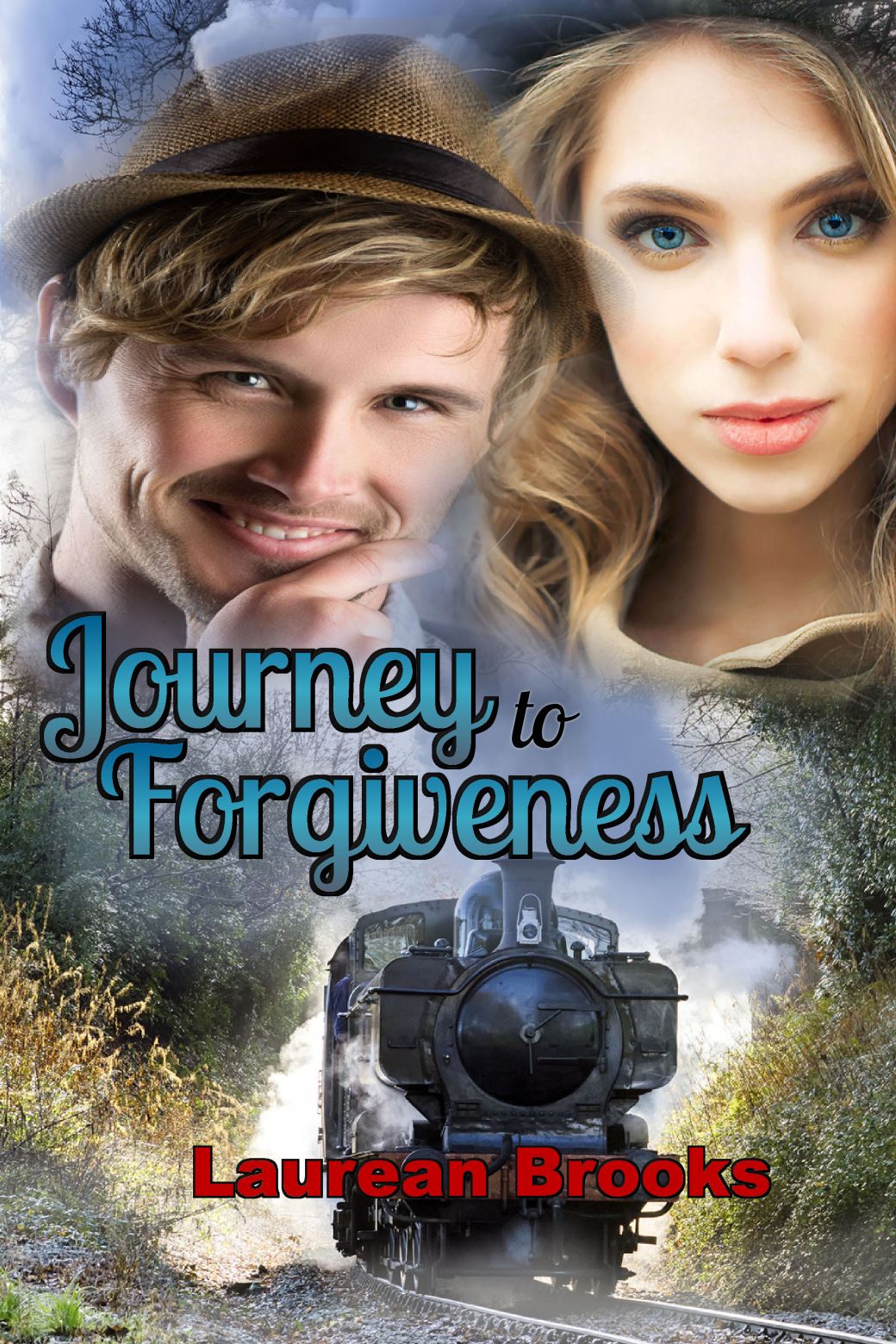
Last Thursday, Christian historical fiction writer Laurean Brooks talked about her book Journey to Forgiveness. Today she shares one of her favorite desserts, and as a fan of buttermilk pie, I am pleased to share it with you today. Not as rich tasting as chess pie, to me, but its sweet, creamy texture is perfect when served warm or cold. Thank you, Laurean!

Buttermilk Pie

One of my family’s favorites.

Ingredients:

2 large eggs beaten

1 cup sugar

2 tablespoons flour

1/2 cup buttermilk

¾ stick of butter, melted

dash of salt

1 teaspoon vanilla

Directions:

Beat eggs in mixing bowl. Add sugar, flour, salt and vanilla. Stir in buttermilk, then butter. Mix well before pouring into a half-thawed unbaked pie crust. Place pie pan on a cookie sheet, arrange in a 350-degree oven and bake 36–38 minutes until you insert a fork and it comes out clean. Do not over bake. 

Is school harder or easier these days?

You may wonder why I still have the research paper I wrote for my advanced biology class my senior year of high school. Well, look at the page number, and you’ll understand why. Thirty-six pages. Typed with a manual typewriter. On onion skin paper with pink lines for margins. Footnotes were at the bottom, above the pink line. If you messed up, you had to (dramatic effect here) Retype. The. Entire. Page.

I told my mother never to throw it away. Too much work. Six hundred notecards, if I remember correctly. And Mr. Stubblefield (one of my favorite teachers) checked every one, or at least he convinced us he did.

I wonder if teachers expect as much from students today. I remember my seventh grade social studies teacher, who had us memorize maps and capitals of countries and states. No multiple choice tests. He tested us individually. He held up an index card with the state or country name as we took turns sitting across a table from him, and individually (sweating bullets) we told him our answer. He was moved to the high school, and of the three senior English teachers, he was the one I ended up with. I can’t count how many poems we had to memorize and recite in front of the whole class, how many sentences we diagrammed, and other challenging activities. My research paper for him was a twelve-page piece about the Grand Canyon. He let us pick whatever topic we wanted, and I was homesick for Arizona. The same teacher gave an F to any student whose research paper title page was done incorrectly. He didn’t even grade the rest of it. His defense to the school board? Not everyone can write a good paper, but anyone can follow directions. So if a student didn’t take the time to follow the directions, he wouldn’t take the time to grade the work.

In my thirty-two years as a teacher and principal, I noticed the expectations dropping, and it is not necessarily the fault of the teachers. It’s because of the bureaucrats. Even college is easier than it was in “my day.” To those of you near my age, did you know that in colleges many professors give guided notes to help students get the important points? Guided notes? For those not in education, that’s fill-in-the-blank.

At the college level.

That’s incredible to me. Sorry, I’m old school, but I believe a college degree should mean something. It should mean that students had to work to achieve. And maybe my perception is skewed because I was always so grade conscious. I have no idea what other students were doing. I studied hours and hours for tests. I remember studying a minimum of ten hours for every history, geology, or biology test that I took in college. The history tests were always essay. You had to buy a blue book, and by the time you walked out fifty minutes later, that blue book was full of short answers, compare and contrast essay (compare and contrast the administrations of Thomas Jefferson and Andrew Jackson focusing on their stance of whatever), and biographical sketches of at least ten important people in history.

To my peers, I don’t know how much you studied. And some of you have turned out to be much more financially successful than I did. I always thought I had to make A’s,  but I know of several who were happy with those B’s and C’s who went on to successful careers.

As universities deal with bureaucrats who care more about the graduation rate than they do the skills and work ethic learned, the dumbing down of America continues. I know plenty of graduates who can’t find jobs, even with that degree. They’ve got the degree, but they don’t have the education.

I could go on and on about the ills of education as I see them. The parents who think teachers expect too much. The state agencies who are out of touch with what is going on in the real world. The local education agencies who are forced to jump through the hoops for the state and federal bureaucrats so they can be in good standing. Oops, I’d better stop before I get carried away.

I welcome your comments, whether you agree or not. I hope that I’m wrong. I hope we are graduating young men and women who will be outstanding practitioners in their fields. I hope we are graduating a huge number of students who will cure cancers, who will cure the ills of society, who will make this world a better place, and who will make their communities a better place.

I truly do.


Christian historical fiction writer Laurean Brooks talks about how her mother’s story inspired her first book.

Steam train puffing

Today I welcome Laurean Brooks, a Christian historical fiction writer, to my blog. 

Laurean, what has your writing journey been like?

It has been an ongoing process which, in a way, seems like half that time. My first essays were published in the local Hometown Magazine in 2002 and 2003. When the first one was published I was bitren by the writing bug. Over the next two years, I added twenty more essays relating humorous family incidents from personal experience. 

I spent months submitting these to various magazines. None were accepted. I didn’t give up because I was told to “expect nine rejections for every submission.” I quit submitting after the tenth try. But, I still have the story collection in a velcro-enclosed binder.

In January 2004, I started my first book, my mother’s story, Journey To Forgiveness. It took two years to finish due to long hours at an exhausting job plus other duties. After waiting two months, White Rose Publishing accepted my submission in August of 2007. After ten months of edits and a several more months of waiting, it was released in January 2009.

I know you live in a rural setting. How does this complicate things for a writer, if at all? 

It doesn’t complicate things for me. I take nature walks with my dogs to inspire me––through fields, down to the pond, and into the woods. Many times titles and story ideas are spurred while I’m surrounded by the sounds of nature. Sometimes I sit on a log near a creek, and take it all in. 

What are your strategies for writing a book from start to finish?

I set a mental goal to have a book written from start to finish in twelve weeks. That worked for two books, but last year it fell through. Partly because I slowed down on writing to market my current release. Besides the book marketing, my mother’s illness and eventual death, plus that of my sister-in-law, threw me for a loop. I’m now two-thirds of the way through the manuscript of my WIP (Work In Progress.)

Tell us about Journey to Forgiveness.

Here is the blurb:

It’s 1938, and times are hard. The Great Depression strikes the South, forcing many residents to sell their farms. When her abusive father deserts and boll weevils infest her family’s cotton crop, Jenny Largent must move to Chicago to find work to support her family

At the Kankakee depot, Jenny confronts Austin Brady, a handsome blond stranger, after he runs off with her vanity case. She retrieves her case but is shocked when the thief takes the pulpit in her aunt’s church to coerce the congregation to give to his so-called “worthy cause.” 

Earlier that year, tornadoes struck a small Illinois town, leaving it in ruins. Austin Brady pleads for money from the church to rebuild the town. When he asks for volunteers to join a twelve-day mission trip to the stricken area, Jenny signs up. But only to expose Austin. When she has proof, the world will know the truth.

When Austin lifts a large roll of money from the mission strongbox, Jenny has the evidence. So why doesn’t she report him? Has this charming man with the periwinkle eyes mesmerized her? 

Jenny still bears the emotional scars inflicted by her father, making it difficult to trust men. She’s vowed never to lose her heart. But is it too late? Does she have the courage to trust Austin? Will Jenny obey God’s nudging to reconcile with her estranged father?

Will she ask Austin the tough questions that will ultimately make or break their relationship? 

What inspired you to write this book?

My mother’s story. It is based on true accounts from her life. (All my stories are faith-based dealing with emotional issues the hero/heroine must overcome.)My grandfather was a violent man. He beat my mother and my grandmother time and again, to the point they were relieved when he deserted the family. My mother told us time and again how he took a razor strap to her and made bloody welts on her legs. Note: I don’t go into detail about the beatings. I wanted to keep the story realistic but added plenty of humor to keep it lighthearted. Journey to Forgiveness will make you both cry and laugh.

How do you develop your characters?

With Journey to Forgiveness, I patterned the main characters after my parents. My dad enjoyed pranks while my mother was mostly serious. I don’t think she knew how to take his sense of humor. Regarding characters for other books, I come up with opposite personalities for the hero and heroine to make for conflict and add interest to the stories. I might pair a sullen hero with an effervescent heroine. Or vice versa. Regardless, the characters soon take on a life of their own. They act in ways I had not planned.

Writers are also readers. What are some of your favorites that you could read over and over?

I don’t believe I’ve ever read the same book twice, except children’s stories. I enjoyed titles by Victoria Holt during my twenties and thirties. On The Night Of The Seventh Moon was one of my favorites. As a teen I devoured every Emilie Loring title I could find at the library. Only a couple of years ago did I discover Ms. Loring had died a decade before I began reading her books. Her sons found twenty completed manuscripts in a box after she died and submitted two per year to her publisher until all were published. 

Which author, dead or alive, would you most like to meet and have dinner with? I know, I ended a question with a preposition, but it sounded too weird to say “with whom you like to have dinner?” LOL.

I agree that putting the question another way sounds “weird.” Victoria Holt would be an interesting character to meet. I would ask her how she came up with plots, characters, and story ideas—how she managed to make her characters incredibly believable. The books I read were written in first person. I may try that someday, because it seems easier for the readers to imagine themselves as the main characters when written in first person. 

I like historicals set in the U.S. in the 1800s, and that is the era I would like to go back to in a time travel machine, although only for a short stay. Do you have a favorite time period and/or place?

I’ve always been a fan of the Alpha male cowboy—Cheyenne Bodie, The Virginian, Laramie, Bonanza, and more. I would love to travel back to the mid to late 1800s, preferably to Texas, and live on a ranch, for possibly a month. Although, I would want to be assured I could come back to the present, if or whenever I desired.

What other books have you had published, and what would you like to share about projects in the works right now?

My current work is a second mail order bride story set in Abilene, Texas, whereas my previous book, Not What He Ordered was set in Buffalo Gap, nineteen miles south of Abilene.

My current work: Forced to leave her family home by a domineering sister-in-law, my Tennessee-born heroine answers a mail order bride ad from a dentist in Abilene. When she arrives one day late, she is shocked to find her intended at the church exchanging wedding vows with another woman. 

I hope to have the first draft finished this spring. 

Please list below how we can purchase your books and stay connected.

You can find all my books at this link.

https://www.amazon.com/Laurean-Brooks/s?page=1&rh=i%3Aaps%2Ck%3ALaurean%20Brooks 

Thanks, Laurean, for being part of my Thursday blog. Best wishes with your writing,

Thank you, Pam, for being a wonderful blog host. I truly enjoyed this interview, and wish you the best with your writing.


Hating the cold? Try this homemade bread recipe to warm you up.

20190122_071120

Love homemade bread but hate making it? Hate “feeding” the starter and having to keep up with keeping it going? Years ago, I found this recipe in a local cookbook. I have no idea who contributed it, and I now make it from memory. It makes two bundt-pan loaves. I usually refrigerate half of it and make another loaf within a few days. Now that my husband and I are empty-nesters, we can’t even eat an entire loaf, so I share it with others. It’s best when fresh, of course, but it will keep in an airtight container for several days.

Homemade Monkey Bread

Ingredients:

2 cups of water, divided

1 cup shortening (I use Crisco)

¾ cup granulated sugar, divided

1 ½ teaspoon salt

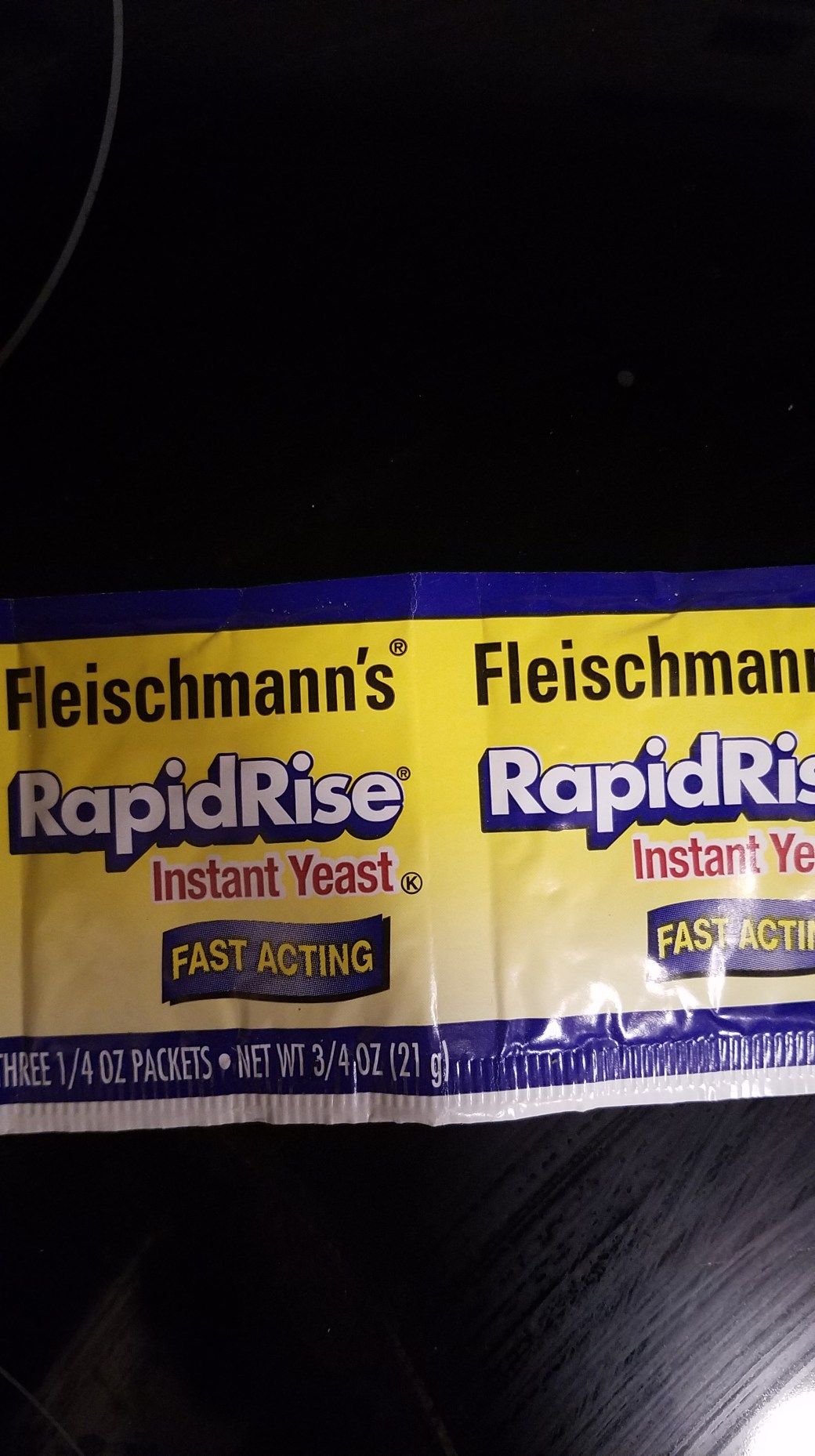
2 pkgs. active yeast (rapid rise or regular)

2 eggs

5 to 6 cups all-purpose flour

2 sticks butter, melted (one stick per bread loaf)

In a large pan or bowl (I use a large cooking pot that is abot a foot tall), dissolve 2 packages of yeast in one cup of lukewarm water to which ¼ cup of the sugar has been added. In a saucepan, mix 1 cup of water, the shortening, ½ cup of sugar, and the salt. Heat to boiling, then remove from heat and stir until shortening is melted and sugar is dissolved. Cool for about five to ten minutes then add to mixture in the large pan. Stir well with a whisk.

Whisk in two eggs, making sure they are distributed well in the mixture. Add flour, one cup at a time, mixing with a wooden spoon until mixture forms a solid ball but not too dry.

Cover and let rise until doubled, about 1 ½ hour for rapid rise yeast, 2 to 2 ½ for regular. After doubled, divide in half. If you are going to make just one loaf, put half in an air-tight container in the refrigerator.

The original recipe calls for placing the mixture on a floured wax paper, rolling it to the thickenss of biscuitsk and cutting squares with a knife. I do it the easy way, at least for me. Melt one stick of butter in the microwave. Pinch off the dough (pieces about one inch across), dip in melted butter, and drop in a bundt pan, distributing evenly around the pan.

Cover with a towel and allow to rise 1 ½ hours (rapid rise) 2 to 2 ½ hours (regular). Preheat oven to 350. Bake on center rack for 25 to 30 minutes. I always use a toothpick and insert it at 25 minutes. If it comes out without goo on it, I remove the bread at that point.

Cool bread and turn over on a serving plate.

For a sweet variation, roll the dough balls in a cinnamon sugar mixture before placing in bundt pan for the second rising. Makes a great breakfast/brunch treat!

Living rural in Tennessee

20190120_091200

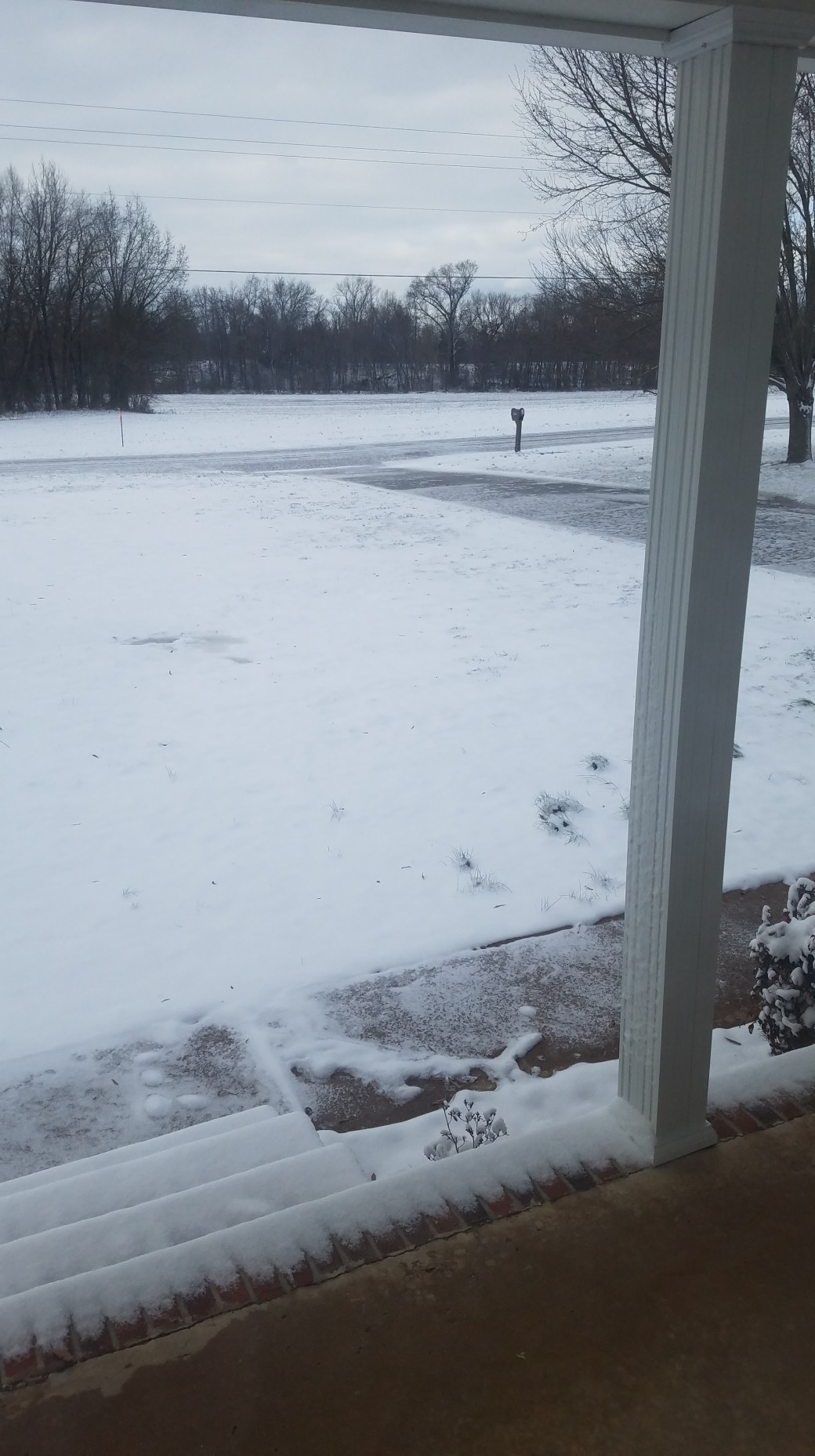
This is the scene we woke up to this morning. Not much snow, but a LOT of ice. We do get snow here from time to time, sometimes as much as six inches or more. And transplants from up north laugh at us.

Because everything shut down. Today no church services for most, but that is very understandable. It’s ice, after all. No reason to be stupid. My mother always said the good Lord gave us common sense and we should use it.

Things shut down because we’re just not equipped for it in rural areas the way cities are. We don’t have snow plows. We don’t have the salt reserves. It’s an unnecessary expense as we don’t receive that much snow. But looking at the ice gave me the idea to share my thoughts about living rural in Tennessee.

A while back, I blogged about speaking Southern, so you may want to refer to that for further understanding.

Here are some facts about middle-aged and older folks living in a rural (small town) area in Tennessee.

  1.  Everybody knows most everybody, even if they don’t actually know them. They’ve heard of them. If they don’t know them, then everyone knows that person is not really from here.
  2. 2.  Because everybody knows everybody, you have to be careful about how you dress and where you go. People will talk. Believe me.
  3. 3.  Snow is a big event. We get it, but it’s rare enough that it’s a big event. School is cancelled. Grocery stores sell out of milk and bread the day before. Why, I don’t know. I guess if you’re snowed in you can eat lots of sandwiches and drink milk.
  4. 4.  Deer, skunks, raccoons, foxes, and possums don’t know that they should stay in the woods. They will come into your yard (or they do in my neighborhood) and devour your vegetables in your garden or spray your dog or stop and stare at you. I suspect everyone here has hit a possum while driving at least once. And let’s not forget the day I went for. walk and had a stare down with a bobcat who decided (thank goodness) that I wasn’t worth the interest.
  5. 5.  Some people (I won’t mention names) actually listen to the funeral home (yes, we only have one) hotline each morning to see if someone they know has died.
  6. 6.  People are identified by which church they attend. “Oh, yes, Sally Jean? She goes to the Methodist church, right?” or “Tommy? Isn’t he a deacon at First Baptist?”
  7. .  Some people have ADT security, but most rely on dogs and guns. Really.
  8. High school sports are a big deal. The smaller the town, the bigger the following. Packed stadiums and gyms are the norm on game nights. Not so much in our town, but we’re the biggest in the county. We actually have just over 10,000 residents. Big city, huh?
  9. Walmart is more than a shopping destination. This is where you see everybody. And they stop in the middle of the aisles and talk. You can learn a lot at Walmart. Who’s going on vacation. Who’s getting a divorce. When the next church potluck is. Just act like you’re getting something off a shelf. You’ll hear it all.
  10. There are no Ubers, no taxis. That’s what friends and families are for if your own vehicle is not an option.
  11. We have the only movie theater within a 30-mile radius,, and the nearest mall is y0 miles away.
  12. 12. The cost of living is cheaper here. You wouldn’t believe the house you could buy for a fraction of the cost of a Memphis or Nashville. Property taxes are cheaper. HGTV should check small towns out. They’d be amazed.
  13. It’s okay if the neighbor kids cut across your yard. We don’t have sidewalks in my neighborhood. So, yes, it’s okay. I mean, the deer, skunks, raccoons, and other critters cross it at night or even in the daytime, so why not?

Just a few of the things that make rural or small town living what it is. I don’t live “out in the country,” so I can’t attest to what it’s like to deal with wells, septic tanks, and other things, but you know you’re in a rural area when you’re traveling down a four-lane highway, and you’re the only car traveling it for a stretch.

So if you’re thinking of moving to a small town in Tennessee, be prepared. This is likely what you’ll find!

Best-selling author David Johnson shares his personal journey in writing.

david_johnson6

Today I am happy to welcome best-selling author, David Johnson, to my blog. David, please tell us a little about yourself.

I began my career as a high school teacher (music and English), but after nine years I decided to become a full time Youth and Family Minister. Now, for the last 25+ years I have been a Licensed Marriage and Family Therapist. I have also directed a community chorus for the past twenty years. 

I’ve been married 46 years, have two daughters, six grandchildren, and one great-grandchild.

I mentioned above that you are a best-selling author. I was referring to your status with Amazon. Can you elaborate about what that means?

Amazon gives constant updates to the author rankings and book rankings. I’ve had several books that have reached #1. 

It’s interesting to look more closely at how all the different groups that rank books and authors (c.f. New York Times) calculate their listings. 

I know some of your books are self-published. How does the self-publishing experience differ from traditional publishing?

The advantage of self-publishing is that you have complete control over every aspect of the process. That is also the disadvantage because you have to pay for all the services you use (developmental edit, line edit, book cover production, and advertising).

Traditional publishing can be frustrating because they dictate how often they will publish one of your books, and the length of time appears to be increasing. Several authors I know are now only allowed to publish a book every eighteen months.

I started out self-publishing, then had some titles published by Amazon, and now am doing self-publishing again. 

What was your first book, and what inspired you to write it?

My first book was Tucker’s Way and was inspired by a character I created when I took an online writing course. I began asking myself what kind of life experiences would create such a person. 

As I began writing the book, I saw that it could really help people see the value of not judging someone until you know their story.

I seem to recall that you once said that before you publish your first book, you should already have a second completed. Am I remembering correctly? If so, why do you believe that is important?

That is correct. If you publish your first book and people really like it, they are going to want to immediately read another of your books. So, what if you don’t have another one? People will forget you—that’s the cold hard truth. 

Your books are full of characters dealing with the darker side of life, people with very difficult circumstances. What draws you to write those stories?

One reason is because I am inspired by them. Someone who was raised as I was with loving parents and no significant trauma have no excuse for not turning out to be a decent human being. But people who had every disadvantage imaginable while growing up and yet find a way to “rise above their raising” are just like looking at a miracle.

Another reason I write about these kinds of characters is because there is a part in all of us that can relate to them. We might not have the same struggles as they, but we’ve had struggles and we want to cheer for the underdog to make it (because we hope we make it, too).

How many books have you written so far?

9

Which book do you want us to know about today?

My latest book is Ransom’s Law and takes place in The Great Depression.

Roscoe Ransom returned home from World War I, broken both in body and spirit, drowning his pain daily in a bottle of whiskey. But even alcohol can’t numb the agony of losing his wife or the fear of trying to raise his son, Junior, alone. However, the mind-numbing predictability of Roscoe’s life as a sharecropper and his role of town sheriff—a job given to him out of pity when he returned from the war—is suddenly upended when a black man in their tiny community is murdered and castrated.

At eleven years old, Junior longs for his father’s love and attention to fill the void left by the death of his mother, but the person who has grown to fill that role is Willow Muscadine, a Cherokee Indian woman, who lives next door. When she sees him trying to locate the killer that his drunken father can’t—or won’t—find, she decides to become Junior’s self-assigned protector. Junior overhears enough in town to realize this was no random murder of a black man. But the more questions he asks, the more dangerous the situation becomes for him, Roscoe, and Willow.

When the threats turn deadly, will it be enough to shake Roscoe from his misery in time to save them and find redemption? Or will his personal demons once again win until he’s lost everything and everyone who cares about him?

It is a tale that will have you rooting for the underdogs and hoping that good will triumph over evil.

You began writing while still working full-time. How did you manage your time? Do you have a set routine?

Quite unexpectedly I discovered that I could write in spurts—15 minutes here, an hour there, 20 minutes over there. I could stop in the middle of a sentence and come back to it later (even a day later) and pick up right where I left off. So, I might write on my lunch break, or before going to work, or when I got home at the end of the day. But I did try to write something every day.

When I read your first book, the first thing that struck me was that it was written in the present tense. Was that intentional, or was it just the way you naturally wrote?

My instructor in the writing course I took was Sylvie Kurtz, herself a bestselling author. She showed me how present tense makes everything seem more immediate and fast moving. It was quite a struggle to do it at first, but I finally got the hang of it. What’s hard now, though, is that I’ve written a couple of historical novels that needed to be written in past tense. You can’t imagine how many times I kept switching back and forth between present and past!

Some writers are very deliberate with the words they use and spend a great deal of time using a thesaurus and analyzing sentence structure. How important are those things to you in your writing?

Not very important at all. Sure, I use a thesaurus and I’m aware of sentence structure (because if it’s not structured correctly, you won’t say what you’re meaning to say), but my main focus is on the characters and having them doing and saying things that are true to their personality. That’s why I say that my books are character-driven, not plot-driven.

What are your thoughts about marketing?

That would take a whole blog post to answer that one. The most important thing for aspiring writers to know is that writing a good book is just small piece of the puzzle. You have to be a self-promoter and advertiser, even if a major publisher is releasing your book.

I advertise on Facebook and BookBub. BookBub especially has some great blog posts to explain to you how to go about advertising with them, and I actually think advertising with them is more effective than with Facebook because only readers see BookBub. Whereas, Facebook is casting a much wider net. I think Facebook is good for building name recognition.

Do you have a favorite author that influenced you in your writing?

I love Charles Dickens (talk about complicated, misfit characters!), but I don’t come close to comparison to his literary style. I guess maybe every book we read influences our writing in some way, at least subconsciously. 

Do you read book about the craft of writing? Books by James Scott Bell and others?

I’ve never read any books or gone to any workshops on how to write or the craft of writing, that is, other than that online course I took a number of years ago.

I think I’m a good story teller and I trust my instincts.

Of all the books you’ve written, do you have a favorite?

Surprisingly, I don’t.

Any books in the works right now?

Oh, I’m always writing a book. Before I finish a book I’ve already got an idea sketched out for another one. At one time I was actually writing two books at the same time. Currently I’m writing a sequel to Ransom’s Law called Ransom Lost.

Please list below how we can connect with you  and purchase your books. (e.g.

My blog: https://thefrontwindow.blog

My Amazon author page: amazon.com/author/david_johnson

My Facebook author page: https://www.facebook.com/DavidJohnsonbookpage/

Twitter:  https://twitter.com/DavidJohnson_

You can also follow me on BookBub.

Contact me via email: davidjohnsonbooks@gmail.com

Is there anything you’d like to add?

If you aspire to write, then write! Don’t think about being a writer or dream about being a writer; be a writer.

Thanks, David, for taking the time to answer my questions. Best wishes for continued success!
Author Cynthia Roemer shares an oven barbecue chicken recipe that is perfect for a winter meal.


100_5335

Last Thursday, I featured Christian historical fiction writer, Cynthia Roemer, on my blog. If you did’t read it, be sure to go back and check it out! Today she shares one of her favorite recipes. It looks and sounds delicious as well as a perfect remedy for grilling during the cold winter months.. Thank you, Cynthia!

Cooking oil
3-4 lbs chicken
1/3 cup chopped onion
3 T. butter
3/4 cup ketchup
1/3 cup vinegar
3 T. brown sugar
1/2 cup water
2 teas. mustard
1 T. Worcestershire sauce
salt & pepper to taste
Heat oil in large skillet. Fry chicken until browned. Drain. Place in 13 x 9 in baking dish. In saucepan, sauté onion in butter until tender. stir in remaining ingredients. Simmer uncovered for 15 minutes. Pour over chicken. Bake at 350 degrees for 1 hour or until chicken is done, basting occasionally.
Cynthia Roemer
Sowing Seeds of Hope
Under This Same Sky ~ April, 2017
Under Prairie Skies ~ April, 2018

The Outer Banks (OBX) inspired my most recent book.

20180606_132328

In June, we visited the Outer Banks of North Carolina for our vacation. We’d never been there, most of our beach trips being the beaches along the northern shores of the Gulf of Mexico. The water you see in this photo is not the ocean. It is the sound side, on the western side of the island, north of Duck, in an area Called Currituck. A lighthouse is nearby, and for $10, you can climb to the top. But be warned––the walkway at the top is very small, and it is extremely windy up that high!

20180608_114326

No, we didn’t stay in this house. I wish. We stayed in Southern Shores, and houses like this one lined the beach. Our house was 500 yards from the beach and nothing like this. We did go to the open house for this one. I told the realtors we weren’t serious buyers (they could probably tell by looking), but they said to come on in and look anyway. The house was gorgeous, asking price $1.9 million. One of the realtors told me it rented for $14,000 a week peak season. Seven bedrooms, so seven couples would split the cost, right? It had a gazebo out back, a private pool, and entire back was a wall of windows with amazing views of the Atlantic. I fell in love with it.

20180602_175236

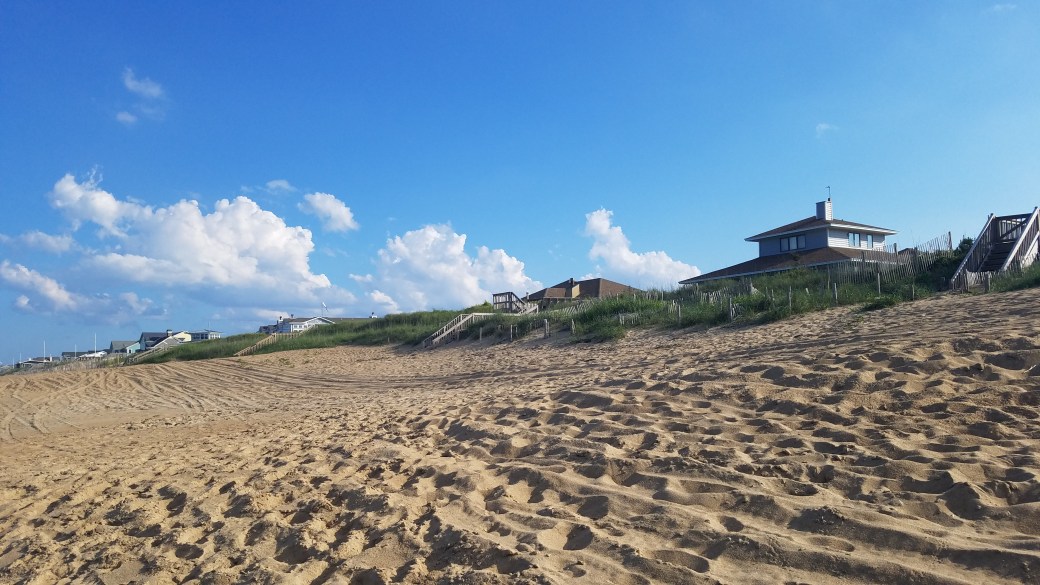
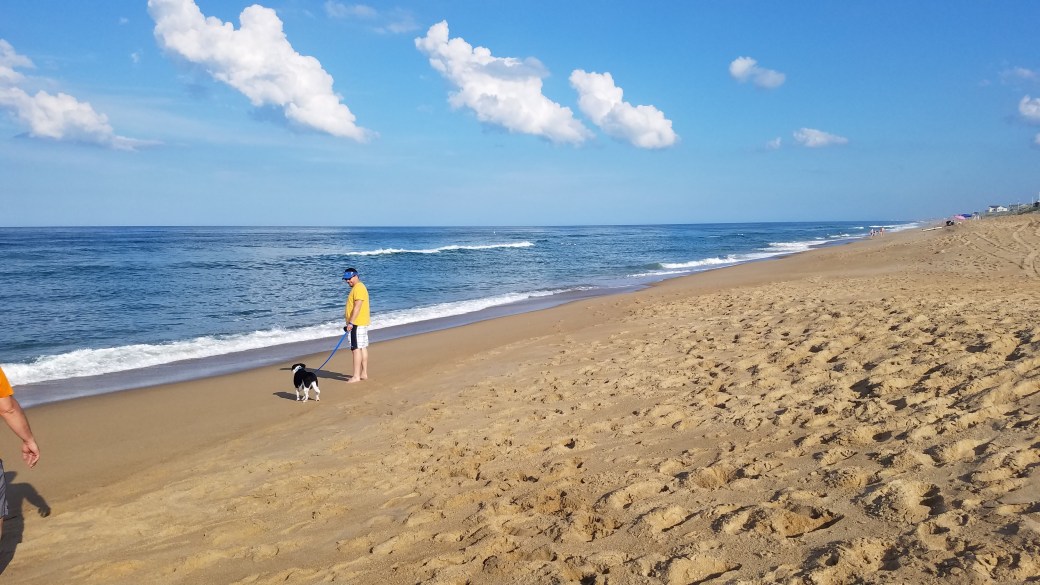
This is the beach described in my  recent book that I submitted to a publisher for consideration just yesterday. Notice how deserted it is. The sand is soft, and the beach was never crowded. We went for long walks there every day. There are no high-rise condos, only private homes and vacation rentals. We loved it so much more than the crowded beaches of Florida andAlabama. And guess what? We were only three miles from a Walmart, grocery stores, and other places you need. One evening my son and I drove to Duck, just a few miles the opposite direction of Walmart. The strip of land is so narrow there, you have a clear view of the Atlantic on one side and the sound on the other. We strolled the shops, bought ice cream, enjoyed some music coming from a band performing outdoors at a restaurant, and just enjoyed the vibe.

20180602_175240

You can take your dogs to the beach, as long as they’re on a leash, before 9:00 a.m. and after 6:00 p.m. I used that info in my book along with my other experiences there. You have likely heard of Kitty Hawk, which is just south of Southern Shores. You likely know that the Wright Brothers accomplished their first flight there (you can go to the actual spot and see exhibits, etc. at Kill Devil Hills). Maybe you even knew that the lost colony (remember Virginia Dare?) was at what is now Manteo. And maybe you knew that Manteo was the site of Andy Griffith’s home in his adult years.

So if you’re like me and your beach experiences have been along the gulf, you might be interested in traveling to the OBX. I think you’ll like it.

Historical Christian fiction writer Cynthia Roemer talks about research and her love of writing.

newspaper photo book 2 - copy (2)

Today I welcome Christian historical fiction writer Cynthia Roemer to my blog. Cynthia, tell us a little about yourself. 

I’m a farm wife of almost twenty-five years and mom to two college-aged sons. I work part-time as an elementary librarian. Much of the rest of the time, you’ll find me at my computer, tapping out stories. 

What books have you had published, and what are they about?

My Prairie Sky Series is set on the Illinois prairie in the mid-eighteen hundreds. Book One: Under This Same Sky is the story of Becky Hollister and how God uses tragedy and loss to woo her back to Him. It’s a story of friendship, overcoming loss, and unexpected love. 

Under Prairie Skies is Charlotte Stanton’s story. She’s Becky’s spoiled, headstrong cousin who meets her match in cattleman Chad Avery. Together, the Lord uses them to sharpen each other and bring healing and love to their hurting hearts.

Historical fiction is challenging to write because of the amount of research involved. What resources do you use?

I love research! Anyone who follows my blog will quickly see that. I completed a wealth of research while writing my first novel, Under This Same Sky, reading books about the time period and keeping notecards. I continue to research on an as-need basis, utilizing online information and library resources. 

Recently, my husband and I took a research trip for my third novel, Under Moonlit Skies. I wrote about our trip on my recent blog posts, “Discovering the First National Road,” https://cynthiaroemer.com/discovering-the-first-national-road/ and “The Old Statehouse ~ Novel Research Part 2,” https://cynthiaroemer.com/the-old-state-house-novel-research-part-2/.

I am assuming you enjoy reading historical fiction as well as writing it. What time period appeals to you the most?

It’s almost all I read. LOL! Of course, I love prairie fiction and Civil War novels but also enjoy novels which extend into the WWII era. I also enjoy Biblical fiction and split-time novels.

When did you first begin to write, and what has surprised you about the reality of writing and publishing as opposed to the idea of it, if anything?

I started writing short-stories while in high school. When one of my stories took First Place in a writing competition at a local college, I knew the Lord was calling me to write. I majored in English in college and actually wrote a rough draft of my first novel before I graduated. Then life happened. I got a job, married, and had my sons, and so set aside my dream of being a published novelist for quite a few years, though I continued to write Christian articles and short-stories for publication. 

Then in 2012, someone told me about the American Christian Fiction Writers’ group. That association changed how I wrote. I gained critique partners, took online courses, read numerous books on writing, and entered contests. 

What surprised me most about the reality of publication is how all-encompassing it can be. There is so much beyond just writing a good story. There’s editing, marketing, launch teams, interacting with readers through newsletters and blogs, etc. It is wonderful and exhausting at the same time! LOL!

Some writers listen to music while writing or have a designated work space. What about you? Do you have a particular routine that sets the creativity in motion?

I need quiet when I write—which can be a challenge since the computer I generally use to write with is in our living room. Thankfully, my boys are all but grown and have college and work to occupy them during the day. I also like to start my day in the Word and praying the Lord will allow the words to flow and be the guiding force behind them. I find early afternoon is my best time to write.

Are you a member of a local writers group? If so, how does it benefit you?

Unfortunately, I live out in rural America where there aren’t many other Christian writers. The closest Christian writing group is several hours away, but I have connected with some wonderful writers online who are a great support and encouragement to me.

What are your thoughts about conferences?

Conferenced are also a challenge to attend, since there are none close to home. But I have attended the ACFW Conference twice and hope to again in the future. They are a great way to meet others in the writing industry and increase your chances of gaining interest from an agent or publisher.

This may sound crazy, but sometimes my characters become almost real to me, and I catch myself thinking of them as people I know, if only for a moment. Do you ever experience that feeling?

Yes. They can be very real and often take me places in my writing I never dreamed of going. LOL!

What motivates you to write on those days that you would rather be doing something else?

Usually I have the opposite problem. I’m generally wishing I had the time to write instead of other obligations. But on days when words just won’t flow, I have to step away and pray or let my mind re-engage with the story.

Looking back on your writing journey, do you see something that you would do differently if you could do it over?

Not really. I’m actually thankful my boys were mostly grown before I became so deeply involved in writing. I wouldn’t trade that time with them for anything. Now though, as the empty nest approaches, I’m thankful the Lord has blessed me with something I thoroughly enjoy to occupy my time.

What are your hobbies and special interests?

When I’m not writing, I enjoy gardening, hiking, riding side-saddle with my husband in the combine, and riding motorcycles with my husband and sons. In the winter, I enjoy baking, reading, and watching movies with my family.

Please share any links we can access to be connected to you and your books.

Cynthia Roemer can be contacted at:

Website:  http://cynthiaroemer.com/

Author Newsletter: https://cynthiaroemer.us14.list-manage.com/subscribe?u=f265b224a5a776500a8fd3d17&id=f647853a44

Twitter:  https://twitter.com@cynthiaroemer  

Facebook: https://www.facebook.com/AuthorCynthiaRoemer/

Goodreads: https://www.goodreads.com/author/show/16785237.Cynthia_Roemer

Bookbub:  https://www.bookbub.com/profile/cynthia-roemer

Thank you, Cynthia, for answering my questions. I look forward to reading more of your books in the future!

Thanks so much, Pam. It was my pleasure!

Author Heather Greer shares a recipe with the taste of lemon.

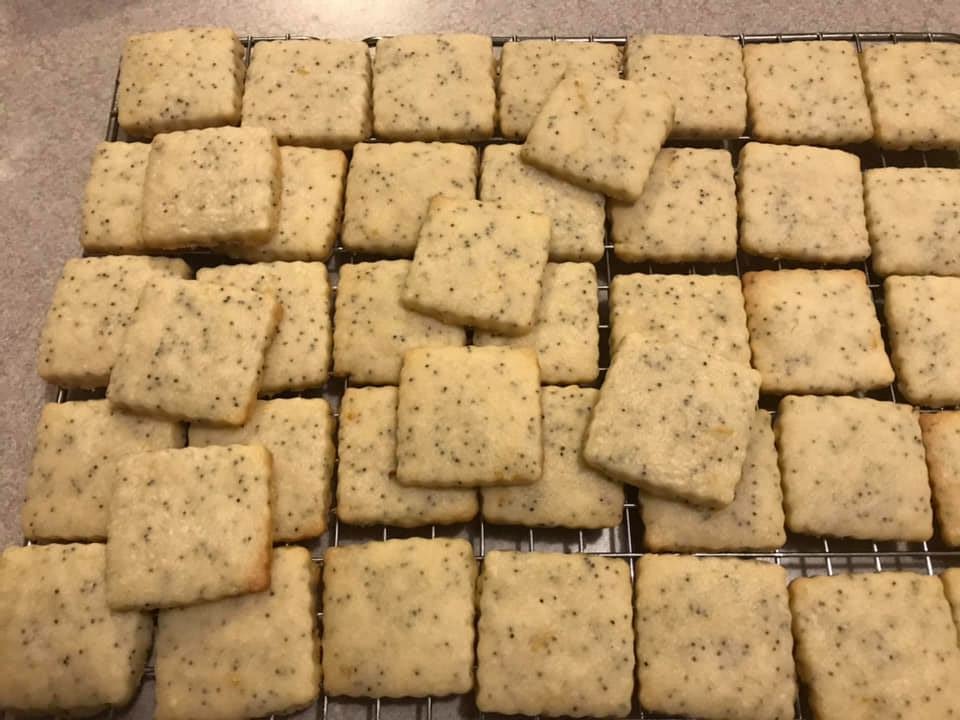
img_5103

Last Thursday, I featured Christian fiction writer Heather Greer on my blog. I normally share recipes on Tuesdays, but because of an interview that needed to post yesterday, I delayed sharing this until today. It looks and sounds delicious. Thanks, Heather, for sharing!

Lemon Poppy Seed Cutouts

Ingredients:

1 cup unsalted butter, softened

½ cup confectioner’s sugar

1 Tbsp. sugar

1 Tbsp. grated lemon zest

4 tsp. lemon juice

½ tsp. vanilla extract

2 cups all-purpose flour

1 Tbsp. poppy seeds

¼ tsp. salt

Cream butter and sugars until light and fluffy. Beat in lemon zest, lemon juice, and vanilla. In another bowl, whisk flour, poppy seeds, and salt.  Gradually beat this into the creamed mixture. Shape into a disk and cover tightly. Refrigerate for 4 hours or until firm enough to roll. 

Preheat oven to 350. Roll the dough between two sheets of waxed paper to ¼ inch thickness. Cut with a floured 1 ½ inch cookie cutter. Reroll scraps. Place 1 inch apart on parchment paper-lined baking sheets. Bake until edges begin to brown, 10-12 minutes. Remove from pans to wire racks to cool. 

Recipe makes about 3 dozen. 

Every year I try to add one new recipe to my list of Christmas cookies. This year everyone was less than enthusiastic when I said I was adding this one. Imagine my surprise when it turned out to be one of the most requested cookies on the Christmas cookie tray. Everyone loved it, and it’s not a recipe that’s good just for Christmas. This recipe was originally printed in the Taste of Home Cookies book from 2018, and the recipe came from Ilana Pulda.