
Blog

Multi-published author Susan Page Davis talks about writing and her newest venture.

Susan Page Davis cropped

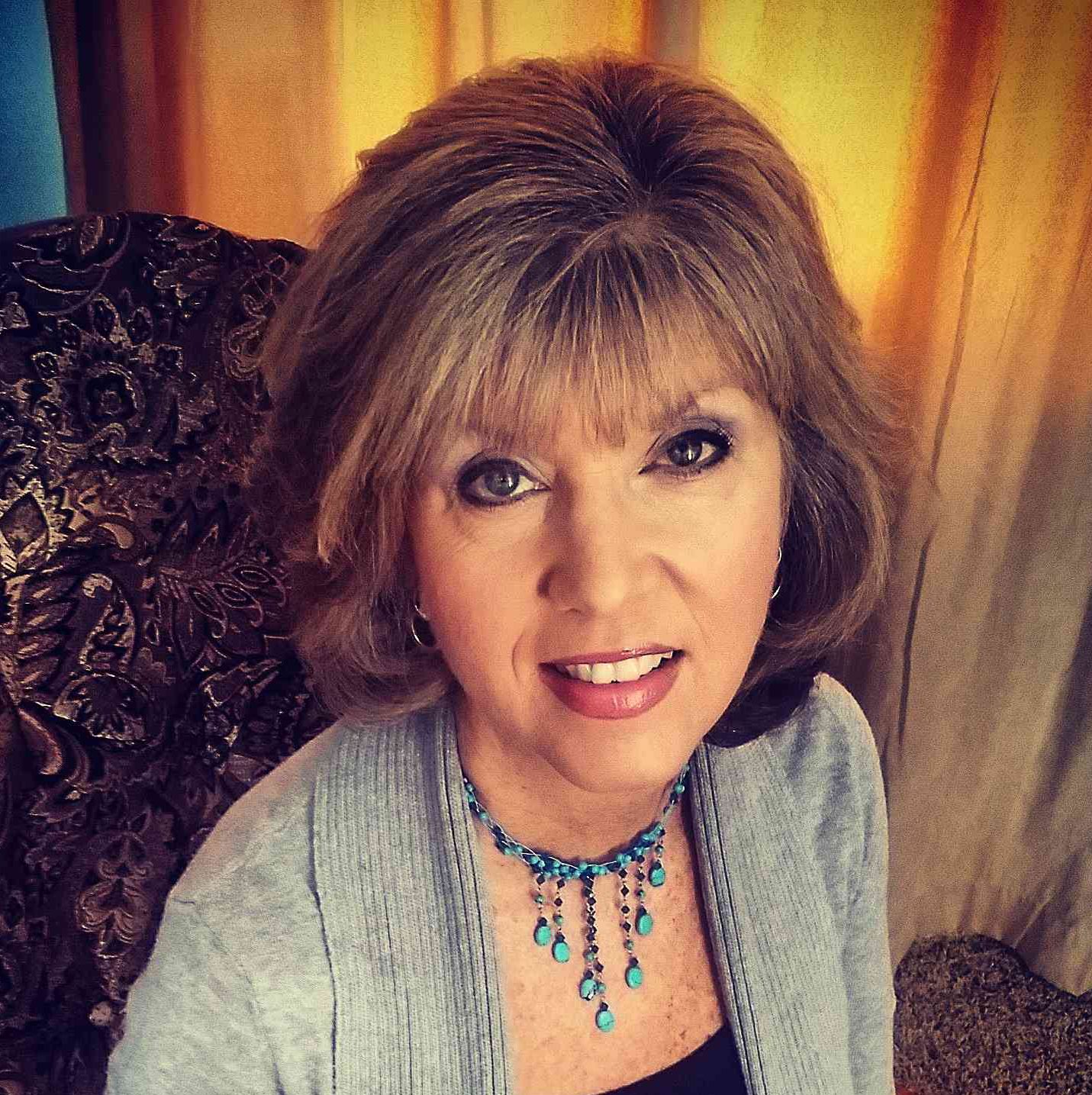
I welcome multi-published author, Susan Page Davis, to my blog. Susan, tell us a little about yourself.

I’m a native of the state of Maine, but when my husband retired we moved to western Kentucky. We have six grown children and ten grandchildren. My hobbies include needlework, reading, and family history.

How did your writing career begin?

I used to work as a newspaper correspondent. Then I started branching out into magazine articles. After I wrote my first novel, but before it was published, I sold quite a few short stories to magazines like Woman’s World and Alfred Hitchcock’s Mystery Magazine.

What was your first “big break” in having your fiction published?

One evening I watched a television program I enjoyed, but I wasn’t happy with the way it ended. I kept thinking, “They should have done this.” I kept returning to it in my mind, and after a while I was plotting out a story. It had nothing to do with the television program that sparked it, but I invented my own characters and had them working on a totally different mystery and ended it in a way I found satisfying. After a week or so, I said to my husband, Jim, “I have a story in my head. It’s complicated, and I think it may be a book.” His reply: “You have to write it down.” That summer he took over the grocery shopping and shuttling the kids to karate and other activities, so I would have more writing time. This was during the time I worked for the newspaper out of our home. To my surprise, by the end of summer I had a complete 100,000-word novel. That one (The Priority Unit) didn’t get published for a long time, but after realizing I could write novels, I never looked back. Four years later, my first book (a historical romance, Protecting Amy) was accepted by a publisher.

What genres have you written, and how many books have you had published?

I now have more than 80 books published. They run the gamut from romantic suspense to a couple of children’s books. I have the most titles in historical romance, cozy mystery, and romantic suspense.

The book we’re talking about today is a new venture for you, I believe. Tell us about it. What inspired it, and what is it about?

The Purple Plague is a fairy tale without fairies or magic—a medieval-style “once upon a time” type story. It’s fun to read with kids. I know, because I tested it on my own grandchildren. I started writing it about 12 years or so ago, at a writers’ group in Maine. We were all given a few items to include in a short story for the next meeting. One was the color purple, I remember that. Also a boat, and maybe a ladder. Beyond that, my memory fails me. Anyway, I started writing this story, but I didn’t finish it at the time. 

     Alaric, a cook’s helper in the palace, is the only one who doesn’t get sick with the Purple Plague. The king’s evil brother chooses this time to oust the king and take over the throne. He throws the king in the dungeon. Alaric wants to rescue the king, but he’s too short to reach the key to the dungeon. He has to get creative to help his sovereign.

      The group loved my premise, and I tucked what turned out to be about half a story into a folder. Years passed. We moved to Kentucky. Many, many books were published. 

      Then a few months ago, I was looking online at a calendar of special days. I noticed that February 26 was National Tell a Fairy Tale day. That struck a chord with me, and I remembered The Purple Plague. I found the folder in my file cabinet, and I decided to finish the story and publish it on Feb. 26. Over Christmas, seven of my ten grandchildren visited, and I read it to them. They liked it a lot, and they were able to give me a few suggestions for making it better. On February 26, I published my story. I hope you and the children in your life love it!

Purple Plague Final

I often ask writers about their routines. Do you use an outline approach, a “pantser” approach, or a combination of both?

I started out as a pantser, but my first publishers required a detailed synopsis before they would even look at a book, so I was trained to do that first. Now I find it very helpful to start with careful planning. I also realized that even in my “pantser” stage, I was doing a lot of mental planning. I just wasn’t writing a formal synopsis, so I told myself I was working seat-of-the-pants. But I was actually doing my outlining in my head. Not planning well enough got me into literary trouble a couple of times, so now I don’t launch a new book without a synopsis.

I have heard that established writers are often able to query without having completed the entire novel before a company agrees to publish it. Has this been the case for you?

Yes, that’s true with companies I’ve worked with previously. If I haven’t worked with them before, I still need a complete manuscript.

Which resources for the craft of writing are your most helpful? Books, conferences, writers’ groups, anything else?

I have a lot of books that I use, and I turn to them often. I also do a lot of online research. Websites like timeanddate.com save me a lot of time and headaches. I can print out calendars there for any year or month, and it can tell me what the phase of the moon was on a particular date.

 Two of my favorite books are English Through the Ages and The Timetables of History. The first, ETTA, tells me when a particular word came into common usage, which is a big help with my historical novels. TTOH helps me if I want to quickly look up something like important happenings in a particular year or decade. For example, I can look in the Literature and Art column and see what books came out recently, so I don’t have a character in the 1880s reading something that didn’t come out until 1895. And it helps me rough out my story against a background of historical events.

One of the hardest things for writers to accept is a developmental edit that takes out a favorite part. Describe how the author-editor relationship works with a large publishing house.

It’s different at each house. Sometimes the editors are quite cut-and-dried in their editing methods. They take what’s submitted and shape it to best fit their standard. At other publishing houses, the editors work with the authors more in developing a story before the author begins writing, but that’s usually when you’ve worked with a house quite a bit and they know what they’d like to see you produce next. If you stick with one house for a while, you will develop a closer relationship with the editors there.

Do you have any works in progress right now?

Always! I just finished the first book in a historical series that my agent is marketing, and I’ve started a new mystery. I also just re-launched a novella that was reverted to me, Love Comes to the Castle. 

https://www.amazon.com/dp/B07NJ7891C/ref=sr_1_1?keywords=love+comes+to+the+castle+davis&qid=1549669031&s=Kindle+Store&sr=1-1-catcorr


Please share below how we can stay connected with you.

Visit my website at: https://susanpagedavis.com

You can sign up for my occasional newsletter there, enter my monthly drawing for free books, and read a short on my “Freebies” tab.

Find The Purple Plague at: https://amzn.to/2Gl1zpL 

My Facebook author page: https://www.facebook.com/pg/susanpagedavisauthor 

Thanks, Susan, for answering my questions. I’m looking forward to reading your newest book!

“Between you and I”––if you don’t know what is wrong with that phrase, maybe you should read this.

20190221_070227

As a licensed high school English teacher and editor for a publishing company, I often joke about being part of the grammar police. My English teacher son is even more so, which is why I had to buy this coffee mug for him.

I’m not saying my grammar is perfect. As an editor, I am constantly double checking and researching. I make mistakes. But I am hearing public speakers, news anchors, and others in the media making some common mistakes, and it makes me cringe. They’re professionals. They are supposed to know better.

The following list is to help writers and others interested in using correct grammar. My motivation for sharing is to help, not condemn.

  1.  The phrase “between you and I”  is wrong. It should be “between you and me.” People use “I” because they think it sounds correct, but “between” is a preposition. Here is a list of pronouns used after a preposition: me, you, him, her, it, us, and them. You wouldn’t say “between we.” You would say “between us,” right? The other night I heard someone say “with (name) and I” on television. Yikes! “With (name) and me” is correct. One trick to help you decide is to eliminate the other noun or pronoun. For example, when trying to decide whether to say “to you and me” or “to you and I,” eliminate the “you.” Does it sound right to say “to I?” No, it doesn’t. So don’t use it in the compound object. The correct phrase is “to you and me.” There are too many prepositions to list, but you can go online and search for a list. Keep it handy for reference.
  2. It is correct to use “I” as part of a compound subject. For example, “Johnny and I went to the game.” Subject pronouns, whether used as single subjects or with other nouns or pronouns, are: I, you, he, she, it, we, and they. Some of you may wonder why I am including such a simple rule. Well, I taught high school. You’d be surprised how many seniors said things like “Johnny and me went to the game.”
  3.  Fiction writers, journalists, and bloggers have the freedom to use incomplete sentences for effect, so the rules for writing essays don’t always apply. When I am editing a book, if a writer has written something like “No reason to go there,” I leave it alone. It is just an effective way of writing the story. But if a writer has written a complete sentence, I want it punctuated correctly. The most common mistake I see is comma placement with sentences containing “and” or “but.” Read point four to continue this thought.
  4. Incorrect: Maggie walked into the kitchen, and went straight to the refrigerator. Correct: Maggie walked into the kitchen and went straight to the refrigerator.” Why is the first one incorrect? The subject is still “Maggie.” There is no new subject after “and.” The way to determine if the comma is needed is to determine if the phrase after “and” can stand alone. If it can, it needs a comma. If it can’t, it doesn’t. So in the first example, can “went straight to the refrigerator” stand alone? Of course not. Let’s change the sentence with a subject. “Maggie walked into the kitchen, and she went straight to the refrigerator.” “She went straight to the refrigerator” can stand alone, so the comma is needed.
  5. What if there are more parts to the sentence than two? Correct: Maggie walked into the kitchen, went straight to the refrigerator, and pulled out a bottled water.” In this case, the commas are needed because of a series.

Grammar rules and style manuals evolve as our culture evolves. Some of the rules we were taught in school no longer apply. For now, however, the issues I addressed hold true, so I hope it helps!


My mother-in-law’s easy cheesy crescent chicken recipe is quick and tasty.


20190218_180020My mother-in-law passed away in 2017. There are so many wonderful things I can say about her. She was the perfect mother-in-law. She wasn’t bossy, didn’t interfere, was always available to help, always soft-spoken and kind. I am sure she had her opinions about things, but she either kept them to herself or expressed them diplomatically. And, to top all of that, she was a phenomenal cook.

She was constantly searching for new recipes. Magazines, cookbooks, the internet, friends. She loved to experiment. Some things flopped (due to the recipe, not her), but most things she tried out were a hit.

I have no idea where she found this recipe, so I am unable to give credit where credit is due. But if you need a quick, tasty meat dish for dinner, you might want to try this one out. It is sure to be a hit with cheese lovers.

Ingredients:

one small package of chicken tenders (eight tenders)

one can of crescent rolls (Pillsbury is the best, the off-brand ones fall apart)

one can cream of chicken soup

8 ounces of sour cream

one cup of grated cheese

Directions:

Boil chicken tenders on medium high heat for ten minutes. Drain and cool. Preheat oven to 375. While oven is preheating, mix soup, sour cream, and cheese in a bowl. Coat a casserole dish with cooking spray. Separate crescent rolls and roll each chicken tender in one roll. Place in casserole dish and top with soup mixture, spreading over the top with wooden spoon or spatula.

Bake for 25 to 30 minutes, until crescent rolls are slightly browned (the part showing above the soup mixture).


So much to see! So much to do! One lifetime is not enough!

20160625_093554

Do you ever feel that one lifetime is not enough to see and do all the things you’d like to see and do? A couple of years ago, I finally got to see The Biltmore in Asheville, North Carolina. It is an amazing place, especially when you consider when and how it was built. And yes, it is beautiful.

In 2014, we finally made it to Washington, D.C. I loved the trip. Too much to see and not enough time to see it all, but we hit the main spots. Our family loves history. What better place to explore our past than D.C.?

I am curious about our world and the people in it. My blog subtitle lets you know that I’m a dreamer. Maybe it’s because of all those books I read while growing up. I traveled the world, went back in time, had one career after another. All through books.

Reality, though, is nothing like those books. I never was a detective like Nancy Drew nor a nurse like Cherry Ames or a vet like the guy who wrote All Creatures Great and Small. I didn’t go around the world in 80 days, and I was never marooned on a Pacific Island like Swiss Family Robinson (thank goodness).

Instead, my life has been quite ordinary. I’ve had two careers. Banking and education. I liked banking better, but I met the most amazing people and made lifelong friendships through education. Not to mention that I really like young people.

But I also wanted to work in a big city in international business. I entertained the idea of being a missionary or working in the Peace Corps when I was young (got no support from either of those from my mother who feared for my safety). I wanted to be a cartoonist for Disney (the kind that drew by hand). I always wanted to have a house and five acres with a couple of dogs, some cats, and even a horse.

But I didn’t push hard enough for those things. I gave in too easily, made excuses for why I didn’t pursue them harder. You might think I didn’t want them that badly, but I think it is just my personality. I give in to others and what they want for me, like I did with my parents. Maybe I didn’t need to go off on my own as a missionary or work in the Peace Corps for safety reasons. Maybe I wouldn’t have liked being tied down to five acres and dogs, cats, and a horse nor would I have liked the expenses that went along with it. And obviously, I would have been replaced at Disney long ago, if I were even able to get a job there, by graphic artists.

But dreams are what keep some of us going. Sometimes we have to downsize the dreams, make them more achievable. Like competing the St. Jude half-marathon, which I did in December. Like getting new furniture for the living room. Like going to the lake instead of Florida for vacation or going to Florida instead of Europe.

I don’t want you to think all of my dreams are selfish ones. I, too, dream of a world that is a good, safe place for everyone. I dream of a political environment in which our leaders can work together. I dream of a world in which we can all get along. I give money to causes, try to do what I can for my community and church, and try to be the best wife, mother, and daughter I can be.

Yet that restless spirit is always within me. That spirit that wants to see so much more, experience so much more. That spirit that still loves the adventures found in reading and writing books, the spirit that longs to see new places and experience new things, and the spirit that still dreams, however unattainable those dreams may be.

There’s so much yet to see.


A buttermilk pie recipe guaranteed to satisfy your sweet tooth.

buttermilk pie

Last Thursday, Christian historical fiction writer Laurean Brooks talked about her book Journey to Forgiveness. Today she shares one of her favorite desserts, and as a fan of buttermilk pie, I am pleased to share it with you today. Not as rich tasting as chess pie, to me, but its sweet, creamy texture is perfect when served warm or cold. Thank you, Laurean!

Buttermilk Pie

One of my family’s favorites.

Ingredients:

2 large eggs beaten

1 cup sugar

2 tablespoons flour

1/2 cup buttermilk

¾ stick of butter, melted

dash of salt

1 teaspoon vanilla

Directions:

Beat eggs in mixing bowl. Add sugar, flour, salt and vanilla. Stir in buttermilk, then butter. Mix well before pouring into a half-thawed unbaked pie crust. Place pie pan on a cookie sheet, arrange in a 350-degree oven and bake 36–38 minutes until you insert a fork and it comes out clean. Do not over bake. 

Is school harder or easier these days?

You may wonder why I still have the research paper I wrote for my advanced biology class my senior year of high school. Well, look at the page number, and you’ll understand why. Thirty-six pages. Typed with a manual typewriter. On onion skin paper with pink lines for margins. Footnotes were at the bottom, above the pink line. If you messed up, you had to (dramatic effect here) Retype. The. Entire. Page.

I told my mother never to throw it away. Too much work. Six hundred notecards, if I remember correctly. And Mr. Stubblefield (one of my favorite teachers) checked every one, or at least he convinced us he did.

I wonder if teachers expect as much from students today. I remember my seventh grade social studies teacher, who had us memorize maps and capitals of countries and states. No multiple choice tests. He tested us individually. He held up an index card with the state or country name as we took turns sitting across a table from him, and individually (sweating bullets) we told him our answer. He was moved to the high school, and of the three senior English teachers, he was the one I ended up with. I can’t count how many poems we had to memorize and recite in front of the whole class, how many sentences we diagrammed, and other challenging activities. My research paper for him was a twelve-page piece about the Grand Canyon. He let us pick whatever topic we wanted, and I was homesick for Arizona. The same teacher gave an F to any student whose research paper title page was done incorrectly. He didn’t even grade the rest of it. His defense to the school board? Not everyone can write a good paper, but anyone can follow directions. So if a student didn’t take the time to follow the directions, he wouldn’t take the time to grade the work.

In my thirty-two years as a teacher and principal, I noticed the expectations dropping, and it is not necessarily the fault of the teachers. It’s because of the bureaucrats. Even college is easier than it was in “my day.” To those of you near my age, did you know that in colleges many professors give guided notes to help students get the important points? Guided notes? For those not in education, that’s fill-in-the-blank.

At the college level.

That’s incredible to me. Sorry, I’m old school, but I believe a college degree should mean something. It should mean that students had to work to achieve. And maybe my perception is skewed because I was always so grade conscious. I have no idea what other students were doing. I studied hours and hours for tests. I remember studying a minimum of ten hours for every history, geology, or biology test that I took in college. The history tests were always essay. You had to buy a blue book, and by the time you walked out fifty minutes later, that blue book was full of short answers, compare and contrast essay (compare and contrast the administrations of Thomas Jefferson and Andrew Jackson focusing on their stance of whatever), and biographical sketches of at least ten important people in history.

To my peers, I don’t know how much you studied. And some of you have turned out to be much more financially successful than I did. I always thought I had to make A’s,  but I know of several who were happy with those B’s and C’s who went on to successful careers.

As universities deal with bureaucrats who care more about the graduation rate than they do the skills and work ethic learned, the dumbing down of America continues. I know plenty of graduates who can’t find jobs, even with that degree. They’ve got the degree, but they don’t have the education.

I could go on and on about the ills of education as I see them. The parents who think teachers expect too much. The state agencies who are out of touch with what is going on in the real world. The local education agencies who are forced to jump through the hoops for the state and federal bureaucrats so they can be in good standing. Oops, I’d better stop before I get carried away.

I welcome your comments, whether you agree or not. I hope that I’m wrong. I hope we are graduating young men and women who will be outstanding practitioners in their fields. I hope we are graduating a huge number of students who will cure cancers, who will cure the ills of society, who will make this world a better place, and who will make their communities a better place.

I truly do.


Christian historical fiction writer Laurean Brooks talks about how her mother’s story inspired her first book.

Steam train puffing

Today I welcome Laurean Brooks, a Christian historical fiction writer, to my blog. 

Laurean, what has your writing journey been like?

It has been an ongoing process which, in a way, seems like half that time. My first essays were published in the local Hometown Magazine in 2002 and 2003. When the first one was published I was bitren by the writing bug. Over the next two years, I added twenty more essays relating humorous family incidents from personal experience. 

I spent months submitting these to various magazines. None were accepted. I didn’t give up because I was told to “expect nine rejections for every submission.” I quit submitting after the tenth try. But, I still have the story collection in a velcro-enclosed binder.

In January 2004, I started my first book, my mother’s story, Journey To Forgiveness. It took two years to finish due to long hours at an exhausting job plus other duties. After waiting two months, White Rose Publishing accepted my submission in August of 2007. After ten months of edits and a several more months of waiting, it was released in January 2009.

I know you live in a rural setting. How does this complicate things for a writer, if at all? 

It doesn’t complicate things for me. I take nature walks with my dogs to inspire me––through fields, down to the pond, and into the woods. Many times titles and story ideas are spurred while I’m surrounded by the sounds of nature. Sometimes I sit on a log near a creek, and take it all in. 

What are your strategies for writing a book from start to finish?

I set a mental goal to have a book written from start to finish in twelve weeks. That worked for two books, but last year it fell through. Partly because I slowed down on writing to market my current release. Besides the book marketing, my mother’s illness and eventual death, plus that of my sister-in-law, threw me for a loop. I’m now two-thirds of the way through the manuscript of my WIP (Work In Progress.)

Tell us about Journey to Forgiveness.

Here is the blurb:

It’s 1938, and times are hard. The Great Depression strikes the South, forcing many residents to sell their farms. When her abusive father deserts and boll weevils infest her family’s cotton crop, Jenny Largent must move to Chicago to find work to support her family

At the Kankakee depot, Jenny confronts Austin Brady, a handsome blond stranger, after he runs off with her vanity case. She retrieves her case but is shocked when the thief takes the pulpit in her aunt’s church to coerce the congregation to give to his so-called “worthy cause.” 

Earlier that year, tornadoes struck a small Illinois town, leaving it in ruins. Austin Brady pleads for money from the church to rebuild the town. When he asks for volunteers to join a twelve-day mission trip to the stricken area, Jenny signs up. But only to expose Austin. When she has proof, the world will know the truth.

When Austin lifts a large roll of money from the mission strongbox, Jenny has the evidence. So why doesn’t she report him? Has this charming man with the periwinkle eyes mesmerized her? 

Jenny still bears the emotional scars inflicted by her father, making it difficult to trust men. She’s vowed never to lose her heart. But is it too late? Does she have the courage to trust Austin? Will Jenny obey God’s nudging to reconcile with her estranged father?

Will she ask Austin the tough questions that will ultimately make or break their relationship? 

What inspired you to write this book?

My mother’s story. It is based on true accounts from her life. (All my stories are faith-based dealing with emotional issues the hero/heroine must overcome.)My grandfather was a violent man. He beat my mother and my grandmother time and again, to the point they were relieved when he deserted the family. My mother told us time and again how he took a razor strap to her and made bloody welts on her legs. Note: I don’t go into detail about the beatings. I wanted to keep the story realistic but added plenty of humor to keep it lighthearted. Journey to Forgiveness will make you both cry and laugh.

How do you develop your characters?

With Journey to Forgiveness, I patterned the main characters after my parents. My dad enjoyed pranks while my mother was mostly serious. I don’t think she knew how to take his sense of humor. Regarding characters for other books, I come up with opposite personalities for the hero and heroine to make for conflict and add interest to the stories. I might pair a sullen hero with an effervescent heroine. Or vice versa. Regardless, the characters soon take on a life of their own. They act in ways I had not planned.

Writers are also readers. What are some of your favorites that you could read over and over?

I don’t believe I’ve ever read the same book twice, except children’s stories. I enjoyed titles by Victoria Holt during my twenties and thirties. On The Night Of The Seventh Moon was one of my favorites. As a teen I devoured every Emilie Loring title I could find at the library. Only a couple of years ago did I discover Ms. Loring had died a decade before I began reading her books. Her sons found twenty completed manuscripts in a box after she died and submitted two per year to her publisher until all were published. 

Which author, dead or alive, would you most like to meet and have dinner with? I know, I ended a question with a preposition, but it sounded too weird to say “with whom you like to have dinner?” LOL.

I agree that putting the question another way sounds “weird.” Victoria Holt would be an interesting character to meet. I would ask her how she came up with plots, characters, and story ideas—how she managed to make her characters incredibly believable. The books I read were written in first person. I may try that someday, because it seems easier for the readers to imagine themselves as the main characters when written in first person. 

I like historicals set in the U.S. in the 1800s, and that is the era I would like to go back to in a time travel machine, although only for a short stay. Do you have a favorite time period and/or place?

I’ve always been a fan of the Alpha male cowboy—Cheyenne Bodie, The Virginian, Laramie, Bonanza, and more. I would love to travel back to the mid to late 1800s, preferably to Texas, and live on a ranch, for possibly a month. Although, I would want to be assured I could come back to the present, if or whenever I desired.

What other books have you had published, and what would you like to share about projects in the works right now?

My current work is a second mail order bride story set in Abilene, Texas, whereas my previous book, Not What He Ordered was set in Buffalo Gap, nineteen miles south of Abilene.

My current work: Forced to leave her family home by a domineering sister-in-law, my Tennessee-born heroine answers a mail order bride ad from a dentist in Abilene. When she arrives one day late, she is shocked to find her intended at the church exchanging wedding vows with another woman. 

I hope to have the first draft finished this spring. 

Please list below how we can purchase your books and stay connected.

You can find all my books at this link.

https://www.amazon.com/Laurean-Brooks/s?page=1&rh=i%3Aaps%2Ck%3ALaurean%20Brooks 

Thanks, Laurean, for being part of my Thursday blog. Best wishes with your writing,

Thank you, Pam, for being a wonderful blog host. I truly enjoyed this interview, and wish you the best with your writing.


Hating the cold? Try this homemade bread recipe to warm you up.

20190122_071120

Love homemade bread but hate making it? Hate “feeding” the starter and having to keep up with keeping it going? Years ago, I found this recipe in a local cookbook. I have no idea who contributed it, and I now make it from memory. It makes two bundt-pan loaves. I usually refrigerate half of it and make another loaf within a few days. Now that my husband and I are empty-nesters, we can’t even eat an entire loaf, so I share it with others. It’s best when fresh, of course, but it will keep in an airtight container for several days.

Homemade Monkey Bread

Ingredients:

2 cups of water, divided

1 cup shortening (I use Crisco)

¾ cup granulated sugar, divided

1 ½ teaspoon salt

2 pkgs. active yeast (rapid rise or regular)

2 eggs

5 to 6 cups all-purpose flour

2 sticks butter, melted (one stick per bread loaf)

In a large pan or bowl (I use a large cooking pot that is abot a foot tall), dissolve 2 packages of yeast in one cup of lukewarm water to which ¼ cup of the sugar has been added. In a saucepan, mix 1 cup of water, the shortening, ½ cup of sugar, and the salt. Heat to boiling, then remove from heat and stir until shortening is melted and sugar is dissolved. Cool for about five to ten minutes then add to mixture in the large pan. Stir well with a whisk.

Whisk in two eggs, making sure they are distributed well in the mixture. Add flour, one cup at a time, mixing with a wooden spoon until mixture forms a solid ball but not too dry.

Cover and let rise until doubled, about 1 ½ hour for rapid rise yeast, 2 to 2 ½ for regular. After doubled, divide in half. If you are going to make just one loaf, put half in an air-tight container in the refrigerator.

The original recipe calls for placing the mixture on a floured wax paper, rolling it to the thickenss of biscuitsk and cutting squares with a knife. I do it the easy way, at least for me. Melt one stick of butter in the microwave. Pinch off the dough (pieces about one inch across), dip in melted butter, and drop in a bundt pan, distributing evenly around the pan.

Cover with a towel and allow to rise 1 ½ hours (rapid rise) 2 to 2 ½ hours (regular). Preheat oven to 350. Bake on center rack for 25 to 30 minutes. I always use a toothpick and insert it at 25 minutes. If it comes out without goo on it, I remove the bread at that point.

Cool bread and turn over on a serving plate.

For a sweet variation, roll the dough balls in a cinnamon sugar mixture before placing in bundt pan for the second rising. Makes a great breakfast/brunch treat!

Living rural in Tennessee

20190120_091200

This is the scene we woke up to this morning. Not much snow, but a LOT of ice. We do get snow here from time to time, sometimes as much as six inches or more. And transplants from up north laugh at us.

Because everything shut down. Today no church services for most, but that is very understandable. It’s ice, after all. No reason to be stupid. My mother always said the good Lord gave us common sense and we should use it.

Things shut down because we’re just not equipped for it in rural areas the way cities are. We don’t have snow plows. We don’t have the salt reserves. It’s an unnecessary expense as we don’t receive that much snow. But looking at the ice gave me the idea to share my thoughts about living rural in Tennessee.

A while back, I blogged about speaking Southern, so you may want to refer to that for further understanding.

Here are some facts about middle-aged and older folks living in a rural (small town) area in Tennessee.

  1.  Everybody knows most everybody, even if they don’t actually know them. They’ve heard of them. If they don’t know them, then everyone knows that person is not really from here.
  2. 2.  Because everybody knows everybody, you have to be careful about how you dress and where you go. People will talk. Believe me.
  3. 3.  Snow is a big event. We get it, but it’s rare enough that it’s a big event. School is cancelled. Grocery stores sell out of milk and bread the day before. Why, I don’t know. I guess if you’re snowed in you can eat lots of sandwiches and drink milk.
  4. 4.  Deer, skunks, raccoons, foxes, and possums don’t know that they should stay in the woods. They will come into your yard (or they do in my neighborhood) and devour your vegetables in your garden or spray your dog or stop and stare at you. I suspect everyone here has hit a possum while driving at least once. And let’s not forget the day I went for. walk and had a stare down with a bobcat who decided (thank goodness) that I wasn’t worth the interest.
  5. 5.  Some people (I won’t mention names) actually listen to the funeral home (yes, we only have one) hotline each morning to see if someone they know has died.
  6. 6.  People are identified by which church they attend. “Oh, yes, Sally Jean? She goes to the Methodist church, right?” or “Tommy? Isn’t he a deacon at First Baptist?”
  7. .  Some people have ADT security, but most rely on dogs and guns. Really.
  8. High school sports are a big deal. The smaller the town, the bigger the following. Packed stadiums and gyms are the norm on game nights. Not so much in our town, but we’re the biggest in the county. We actually have just over 10,000 residents. Big city, huh?
  9. Walmart is more than a shopping destination. This is where you see everybody. And they stop in the middle of the aisles and talk. You can learn a lot at Walmart. Who’s going on vacation. Who’s getting a divorce. When the next church potluck is. Just act like you’re getting something off a shelf. You’ll hear it all.
  10. There are no Ubers, no taxis. That’s what friends and families are for if your own vehicle is not an option.
  11. We have the only movie theater within a 30-mile radius,, and the nearest mall is y0 miles away.
  12. 12. The cost of living is cheaper here. You wouldn’t believe the house you could buy for a fraction of the cost of a Memphis or Nashville. Property taxes are cheaper. HGTV should check small towns out. They’d be amazed.
  13. It’s okay if the neighbor kids cut across your yard. We don’t have sidewalks in my neighborhood. So, yes, it’s okay. I mean, the deer, skunks, raccoons, and other critters cross it at night or even in the daytime, so why not?

Just a few of the things that make rural or small town living what it is. I don’t live “out in the country,” so I can’t attest to what it’s like to deal with wells, septic tanks, and other things, but you know you’re in a rural area when you’re traveling down a four-lane highway, and you’re the only car traveling it for a stretch.

So if you’re thinking of moving to a small town in Tennessee, be prepared. This is likely what you’ll find!

Best-selling author David Johnson shares his personal journey in writing.

david_johnson6

Today I am happy to welcome best-selling author, David Johnson, to my blog. David, please tell us a little about yourself.

I began my career as a high school teacher (music and English), but after nine years I decided to become a full time Youth and Family Minister. Now, for the last 25+ years I have been a Licensed Marriage and Family Therapist. I have also directed a community chorus for the past twenty years. 

I’ve been married 46 years, have two daughters, six grandchildren, and one great-grandchild.

I mentioned above that you are a best-selling author. I was referring to your status with Amazon. Can you elaborate about what that means?

Amazon gives constant updates to the author rankings and book rankings. I’ve had several books that have reached #1. 

It’s interesting to look more closely at how all the different groups that rank books and authors (c.f. New York Times) calculate their listings. 

I know some of your books are self-published. How does the self-publishing experience differ from traditional publishing?

The advantage of self-publishing is that you have complete control over every aspect of the process. That is also the disadvantage because you have to pay for all the services you use (developmental edit, line edit, book cover production, and advertising).

Traditional publishing can be frustrating because they dictate how often they will publish one of your books, and the length of time appears to be increasing. Several authors I know are now only allowed to publish a book every eighteen months.

I started out self-publishing, then had some titles published by Amazon, and now am doing self-publishing again. 

What was your first book, and what inspired you to write it?

My first book was Tucker’s Way and was inspired by a character I created when I took an online writing course. I began asking myself what kind of life experiences would create such a person. 

As I began writing the book, I saw that it could really help people see the value of not judging someone until you know their story.

I seem to recall that you once said that before you publish your first book, you should already have a second completed. Am I remembering correctly? If so, why do you believe that is important?

That is correct. If you publish your first book and people really like it, they are going to want to immediately read another of your books. So, what if you don’t have another one? People will forget you—that’s the cold hard truth. 

Your books are full of characters dealing with the darker side of life, people with very difficult circumstances. What draws you to write those stories?

One reason is because I am inspired by them. Someone who was raised as I was with loving parents and no significant trauma have no excuse for not turning out to be a decent human being. But people who had every disadvantage imaginable while growing up and yet find a way to “rise above their raising” are just like looking at a miracle.

Another reason I write about these kinds of characters is because there is a part in all of us that can relate to them. We might not have the same struggles as they, but we’ve had struggles and we want to cheer for the underdog to make it (because we hope we make it, too).

How many books have you written so far?

9

Which book do you want us to know about today?

My latest book is Ransom’s Law and takes place in The Great Depression.

Roscoe Ransom returned home from World War I, broken both in body and spirit, drowning his pain daily in a bottle of whiskey. But even alcohol can’t numb the agony of losing his wife or the fear of trying to raise his son, Junior, alone. However, the mind-numbing predictability of Roscoe’s life as a sharecropper and his role of town sheriff—a job given to him out of pity when he returned from the war—is suddenly upended when a black man in their tiny community is murdered and castrated.

At eleven years old, Junior longs for his father’s love and attention to fill the void left by the death of his mother, but the person who has grown to fill that role is Willow Muscadine, a Cherokee Indian woman, who lives next door. When she sees him trying to locate the killer that his drunken father can’t—or won’t—find, she decides to become Junior’s self-assigned protector. Junior overhears enough in town to realize this was no random murder of a black man. But the more questions he asks, the more dangerous the situation becomes for him, Roscoe, and Willow.

When the threats turn deadly, will it be enough to shake Roscoe from his misery in time to save them and find redemption? Or will his personal demons once again win until he’s lost everything and everyone who cares about him?

It is a tale that will have you rooting for the underdogs and hoping that good will triumph over evil.

You began writing while still working full-time. How did you manage your time? Do you have a set routine?

Quite unexpectedly I discovered that I could write in spurts—15 minutes here, an hour there, 20 minutes over there. I could stop in the middle of a sentence and come back to it later (even a day later) and pick up right where I left off. So, I might write on my lunch break, or before going to work, or when I got home at the end of the day. But I did try to write something every day.

When I read your first book, the first thing that struck me was that it was written in the present tense. Was that intentional, or was it just the way you naturally wrote?

My instructor in the writing course I took was Sylvie Kurtz, herself a bestselling author. She showed me how present tense makes everything seem more immediate and fast moving. It was quite a struggle to do it at first, but I finally got the hang of it. What’s hard now, though, is that I’ve written a couple of historical novels that needed to be written in past tense. You can’t imagine how many times I kept switching back and forth between present and past!

Some writers are very deliberate with the words they use and spend a great deal of time using a thesaurus and analyzing sentence structure. How important are those things to you in your writing?

Not very important at all. Sure, I use a thesaurus and I’m aware of sentence structure (because if it’s not structured correctly, you won’t say what you’re meaning to say), but my main focus is on the characters and having them doing and saying things that are true to their personality. That’s why I say that my books are character-driven, not plot-driven.

What are your thoughts about marketing?

That would take a whole blog post to answer that one. The most important thing for aspiring writers to know is that writing a good book is just small piece of the puzzle. You have to be a self-promoter and advertiser, even if a major publisher is releasing your book.

I advertise on Facebook and BookBub. BookBub especially has some great blog posts to explain to you how to go about advertising with them, and I actually think advertising with them is more effective than with Facebook because only readers see BookBub. Whereas, Facebook is casting a much wider net. I think Facebook is good for building name recognition.

Do you have a favorite author that influenced you in your writing?

I love Charles Dickens (talk about complicated, misfit characters!), but I don’t come close to comparison to his literary style. I guess maybe every book we read influences our writing in some way, at least subconsciously. 

Do you read book about the craft of writing? Books by James Scott Bell and others?

I’ve never read any books or gone to any workshops on how to write or the craft of writing, that is, other than that online course I took a number of years ago.

I think I’m a good story teller and I trust my instincts.

Of all the books you’ve written, do you have a favorite?

Surprisingly, I don’t.

Any books in the works right now?

Oh, I’m always writing a book. Before I finish a book I’ve already got an idea sketched out for another one. At one time I was actually writing two books at the same time. Currently I’m writing a sequel to Ransom’s Law called Ransom Lost.

Please list below how we can connect with you  and purchase your books. (e.g.

My blog: https://thefrontwindow.blog

My Amazon author page: amazon.com/author/david_johnson

My Facebook author page: https://www.facebook.com/DavidJohnsonbookpage/

Twitter:  https://twitter.com/DavidJohnson_

You can also follow me on BookBub.

Contact me via email: davidjohnsonbooks@gmail.com

Is there anything you’d like to add?

If you aspire to write, then write! Don’t think about being a writer or dream about being a writer; be a writer.

Thanks, David, for taking the time to answer my questions. Best wishes for continued success!