Blog

Elvis Week Blog #2: Re-posting my interview with Elvis’s nurse, Mrs. Marian Cocke

11800309_1183775174972400_1818217566677298549_n

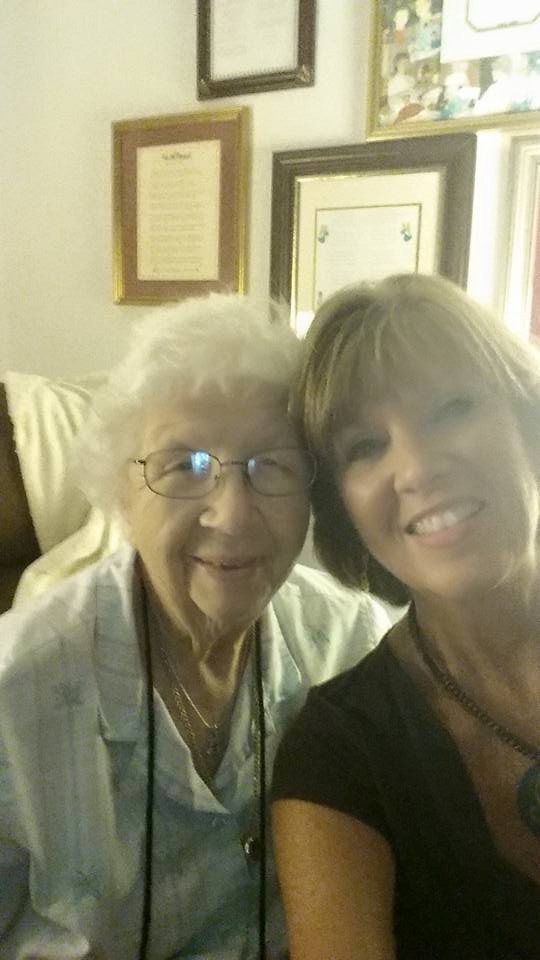
Meet my sweet friend I met through purchasing her book for my son at Christmas six years ago. Because I’m blogging about Elvis this week, I thought I’d share an earlier interview with her. Hope you enjoy it, whether you’re reading it for the first time or the second!

The photo is a very bad selfie I took in 2015. Wish I had taken another one when visiting with her a few months ago!

I’m thrilled to welcome my special friend, Mrs. Marian Cocke, to my blog today. Mrs. Marian, as I call her (refer to my earlier blog about speaking Southern to understand this), and I became acquainted four years ago when I heard her being interviewed on Sirius XM Elvis radio promoting her book, I Called Him Babe, an account of her time serving as Elvis’s personal nurse and friend. I decided to purchase the book and accompanying CD as a gift, a purchase that led to several phone calls and eventually meeting this incredible lady.

With January 8 being Elvis’s birthday and Birthday Week being celebrated at Graceland, I thought it would be fun to “chat” with her and talk about some of the events described in her book.

Mrs. Marian, thanks so much for agreeing to share your time with me and my readers. Please tell us a little about yourself.

I was born on July 1926 in Fort Benning, Georgia, to Howard and Nocal Justice and lived in Benning the first eight years of my life when my dad transferred to Scofield Barrack, Honolulu, Hawaii.  I grew up on four different Army posts: there (Hawaii), Ft. McClellan, Alabama, Fort Davis, Panama Canal Zone, then on to Ft. Jackson, South Carolina, and four days later, the Japanese stormed Pearl Harbor and Daddy was transferred to the Army Depot in Memphis as the Adjutant then later as the Executive Officer.  From the age of five, I had wanted to be a nurse, but when I graduated from Whitehaven High School I was only 16 and too young, so when I became 19, I entered The Holy Name of Jesus Hospital in Gadsden, Alabama.  After graduation I worked at that hospital before moving back to Memphis to be with my family and worked at the VA.  On 9-13-52, I married Robert Cocke and on 10-12-53, our daughter, Katey, was born.  We lived in Memphis through the remaining years. I worked for a thoracic surgeon for 12 years before joining the staff of nursing at Baptist Hospital as an IV nurse, two years later becoming a unit supervisor and two years later becoming an administrative supervisor which gave me the responsibility of several nursing units.  I retired from Baptist in 1984 and a year later the VP of nursing called me and asked me to come back, which I did as I had missed it. I returned as an Administrative Supervisor and worked another 16 years when my doctor made me retire due to health reasons.  Do I miss it? Yes, I still miss being a nurse.

How and when did you first meet Elvis?  I met Elvis in January of 1975 when Dr. Nick came to me at my nursing unit and told me that Elvis needed to come in, and he wanted him on my unit. I wasn’t overly pleased because I was afraid it might cause a disruption to my unit. But he came a couple of days later. I had been holding the suite for him, and I must confess that when I walked in and met him, he totally walked into my heart.

We spent the day together as it was actually my day off, and he asked me what I wanted him to do about private duty nurses, and I told him whatever he wanted to do. He said that he would have them, but he wanted me to take care of him. I told him that I would, but he needed to know that I ran the floor, saw 51 other patients twice a day, and ran the unit. We would but the 3:00 to 11:00 nurse and 11:00 to 7:00 nurse in the same position. This was done and worked out fine. Elvis was in the hospital three weeks, and on Valentine’s, he gave me a beautiful diamond cross on a gold chain. He gave the 3:00 to 11:00 nurse a diamond ring, and the 11:00 to 7:00 nurse a very delicate gold chain with a small diamond cross on it.

He was discharged a few days later, and I didn’t hear from him until August of that year, sayig he needed to come back in but it had to be my floor. We had a patient in the suite, and I called Maurice Elliot, one of the VPs, to see if I could ask him if he would transfer to another unit as Elvis wanted to come back to our floor. He immediately agreed. The room was readied, and when Elvis called me back an hour later, I told him the suite was ready.I got a call about 9:00 that night. He was back, and would I please come in?

  When I walked in, he hugged me, told me he had lost weight, and up his shirt so I could see a flatter belly. I rubbed his belly and “yes, yes, you sure have” and the next thing he said was that he had a new car coming for me the next day. I told him I didn’t need a car as I had one and couldn’t drive but one at a time. He said that if I didn’t want it, I could give it away, but it was coming, and it did.

The next day it came, white with white leather upholstery and beautiful. When he left the hospital that time, Dr. Nick said that he needed a nurse for a couple of weeks to monitor his BP at home, and Elvis told him he wanted me to go home with him. I told him that I had a job with Baptist, and he asked if I could just come for a couple of weeks, so I talked it over with Bob and Katey that night. He said, “Okay, two weeks.”

When I went to work the next day, the first thing he asked me was if I could come. I told him, “Yes, for two weeks,” and he told me to bring my SS card. I asked why, and he said so I could be paid. I told him I would come but wouldn’t take his money, and he asked me why I wouldn’t take his money, everyone else did. I told him I thought it was time somebody did something for him for a change. When I told Kathy (the other nurse who was going to go from 10:00 a.m. until 2:00 p.m. every day), she said she wouldn’t take any money either.

She stayed until the latter part of November. Her husband was in the Navy and was transferred, so she left, and I continued on, still not accepting a salary. For Christmas that year, he gave me a 21 karat aquamarine ring cut in four tiers and with two karats of diamonds around the ring. I stayed until the end of January until my mother became terminally ill with cancer, so I had to leave, took a leave of absence from the hospital, and stayed with my mother until she died the latter part of February.

Elvis sent beautiful flowers. He went to Hawaii and was back on the road doing shows, but any time he called me and asked me to come out to Graceland and see him, have a cup of coffee, rub his back, I always went. The last time he called, it was just a few days before he died. It was 2:00 a.m. I got up, went, sat on the side of his bed, and he spoke very little. He said that he just needed me to come out and be with him. Ginger was there, though she left the room and came back later, around 6:30. He told me he was okay and I should go home and get some sleep.

He hugged me goodbye, and when I got to the door to leave his room, he called to me and said, “Miss Cocke, the doors of this house will always be open to you.” Had I known that his passing would be so soon, I would never have left.

I love it that you told Elvis you didn’t care for his music. What was his reaction, and did you eventually change your mind? We were sitting in Lisa’s room where we always sat. He asked me if I had been to any of his shows , and I told him no, that I wasn’t into his kind of music. He said, “Well, are you a fan now?” And I told him yes, but I knew him now.

In your book, or maybe on your CD or both, you talk about the relationship you and Elvis developed. How would you describe that relation? When I had spent that first day with him, we talked a lot, watched Brian’s Song, and we cried together. We spent the entire day talking other than for the movie, and the chemistry between us clicked. We were comfortable with each other and had respect for each other. He wouldn’t call me “Marian” because I was older, though only by nine years. He shared many stories as he shared feelings about some of the people who worked with him or for him. He told me about some of the things that some those who worked for him had asked for. How they came to work for him. He also told me many times of his respect and admiration for George Klein and Jerry Schilling and how these two men were always there for him. And how much they meant to him. He had the utmost faith and trust in the two of them.

I can remember it making the news when Elvis bought cars for people. Tell us a little more about what happened when he gave you yours. The day the car was delivered, I was making his bed (in the hospital) and he was in the sitting room. He called me and asked me if I would come over to where he was. He was standing at the window. I went over and asked him what he needed. He told me to look across the street. I did, and there it was, this beautiful white Grand Prix. I looked back at him, and he was dangling the keys. I snatched those keys, ran out the door, told my secretary I would be back in a little bit, and left the floor. I went to the nursing office, got the VP of Nursing, and when we got across the street, the man who had delivered the car was standing by the door with the door open. He told me, “She’s all yours.” I got in as did the other two, and as I pulled away, I ran over the curb. I looked up at his window, and he was standing there with his hand over his eyes. When I left that day, I had gone and thanked him for my beautiful car, and he hugged me and told me that I was very welcome and I deserved a pretty, new car. When I got off duty, I had called my mother and told her to come downstairs and I would take her for a ride in my new car that Elvis had bought me, but when I left my unit, there were three TV stations there, so I went back.

You also became close with his family, and I love your Aunt Delta stories. Would you care to share one of them with us and explain to my readers who she was? Delta and I became very close, and after Elvis died, I continued to go to Graceland every week to see her and Dodger (Elvis’s paternal grandmother). Sometimes we would have lunch at home, but most of the time we went out to eat and shop, especially after Dodger died. One afternoon, she called and said that Dodger was sick and would I come out and spend the night? I did that several times, and she always wanted me to sleep with Dodger, which I did, so I would be there if she awakened and needed anything. I loved both of these two ladies, and there wasn’t anything I wouldn’t do to help either of them or Vernon. He was a very nice man, and I wanted to be there for him when he wanted me to help with anything.

What was the most extraordinary or memorable experience you had as a friend of Elvis?

That’s really easy. It was the night we were visiting in Lisa’s room where we always sat (as I shared her bedroom with her), and he reached his hand over and placed it on my knee and said to me, “Miss Cocke, you’re one of the few people that I know who has never asked anything from me but friendship.” There is no way to top that.

We don’t have enough  time or space here to talk about everything that happened during your time as his nurse and confidante. Is your book still available for purchase? If so, how?

I have the books myself and sell them from my home or from Marlowe’s. The books are $25.00 which includes shipping and handling in the United States. Outside the country, the price varies, depending on where it is.

(If any of my readers would like to know how to contact Mrs. Marian about purchasing a book, email me at authorpamharris@gmail.com, and I will get word to her.)

Some people may not be aware of how generous Elvis was with local charities, and you have helped keep that legacy alive. What can you tell us about the Elvis Presley Charitable Foundation?  The only thing I know about the Elvis Presley Charitable Foundation is that is 100% charitable only, and our (annual)) dinner, the Elvis Presley Memorial Dinner, gives 1/3 of what we make to the foundation.

(Note from Pam: I may blog more about the Elvis Presley Memorial Dinner in August, and with my limited knowledge, it is my undertanding that the proceeds help people with severe health challenges and organizations that help them. I need to learn more about it.)

At the beginning of our chat, I joked about how you didn’t care for Elvis’s music before you met him. I know that you changed your mind. Do you have a favorite song?

I actually have three, in this order: “I’ll Remember You,” “The Wonder of You,” and “Memories.”

Is there anything else you’d like to say about your book, the Foundation, or Elvis himself?

He was a very special young man, more like my child to me despite the fact that there were only nine years’ difference in our ages. I loved him then and love him still. There is never a day that goes by that he isn’t in my thoughts and prayers. Our daughter, our only child, went to Jesus eighteen years ago this July. I miss him like I miss our Katey who was our pride and joy. She died at the age of 47, and her husband, who had been a city engineer, had been killed in an auto accident many years before she left us.

Mrs. Marian, you have led an interesting life and have experienced much loss, but I always admire your positive spirit and strength. You are an example for all of us. Thank you again for taking the time to answer my questions. I’m looking forward to seeing you soon!

Thanks, Pam, I look forward to that too!
Elvis Week blogs: the people I’ve met and friends I’ve made through Elvis. Today I

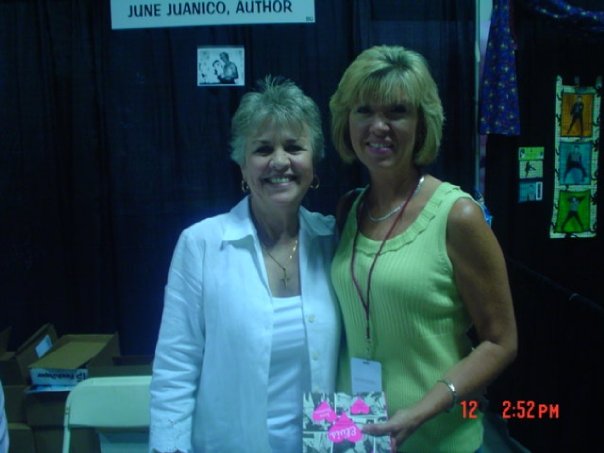
Pam and June Juanico

Elvis Week is held each August in Memphis, ending on August 16, the anniversary of his death. The photo above is of me and June Juanico, his girlfriend around the mid-fifties. Although I have never attended the multiple events of Elvis Week, I did attend an expo one afternoon at the convention center in Memphis in 2007, and that is when I bought June’s book and had a chance to chat with her.

Elvis Week is a big deal. In 2017, David Beckwith, a spokesperson for Graceland, said that 30,000 to 50,000 plus people come from all over the world each year to participate in the festivities. Activities include tours, ETA (Elvis Tribute Artist) competitions, interviews with people who knew Elvis, including his close friends and some of his co-stars, a 5K to raise money for charity, art contests, and much more.

This year, however, Elvis Week is all virtual because of the pandemic. I thought it might be enjoyable for my Elvis-fan followers to read about the guy that means and meant so many different things to so many. Elvis fans are a unique group. From kids to teens to grandmothers in their eighties, his following is unparalleled by any other entertainer.

I often say I’m an Elvis fan but not a fanatic. I was born the year he reached national prominence with “Heartbreak Hotel” and his first movie Love Me Tender, meaning I was too young to be part of the hysteria. My older brother, nine years my senior, owned several Elvis records, so I listened to them. He and his girlfriend took me to see movies like Blue Hawaii. As I grew up, I continued to enjoy his movies and music, and that devotion continues to this day.

Beyond that, the Elvis story fascinates me. The rags-to-riches, the unnoticed to the famous. As a Southerner, I understand the culture in which he grew up because my parents lived in that same culture. It was a culture that embraced family connections and God above all else. It was a culture of poorly educated people who knew what hard times and low-paying work meant. Because of my parents’ accounts of their growing up during the Depression and the way my own parents valued their brothers and sisters, nieces and nephews, and parents to the point of almost excluding outside friendships, I could identify with Elvis and his background. It was familiar turf.

I’ve made some great friends in the U.S., the U.K., and France. One particular group formed in 2004, when a school nurse from New Hampshire posted a challenge in a chat room for anyone interested in walking for fitness. If you know me at all, you know I’m all about that! Priscilla, Anna, Gail, Evie, Heather and I posted our walking totals for the day. Then it developed into learning about each other’s families. We talked about our dogs. Anna, Priscilla, and I talked about schools and Anna’s adventures in Alaska with her teacher/hunter/fisherman husband. Gail and her husband came to Memphis from England for Elvis Week. My husband and I picked them up at the hotel and showed them around Memphis, including a tour of a model home in Germantown and a meal at Cracker Barrel, which was a novelty for them. Evie, another Brit, and I have talked on the phone a few times. We’ve watched Heather’s children grow up, celebrated the marriages of other children, consoled each other in times of loss, rejoiced with the births of children (our group ranges in age!), and connected because of our common thread.

That group expanded to include Joan and Barbara, and one year several of us met for breakfast in Memphis. They were here for Elvis Week. We were in Memphis to visit our son. We now keep in contact with each other through FB. How great is that?

Yes, I’ve met some great people, not the least of which was Gordon Stoker of The Jordanaires, the back-up group for Elvis in his movies and many of his records. Well, I met him by phone. He was from my county, and his niece helped set up the interview that was published in our local newspaper then a neighboring city’s newspaper then picked up by Australia’s Elvis Information Network. I found it online last night and decided to share it with you here. For some reason, there is a blank space I can’t delete, so keep scrolling to find the article!

Gordon Stoker

EIN shines a spotlight on Gordon Stoker of The Jordanaires

by EIN contributor Pam Harris


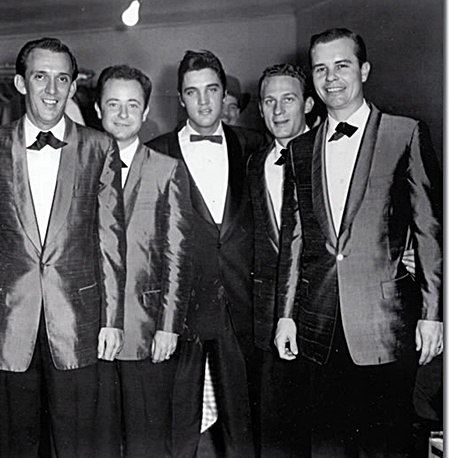
Back in 1955 a young Elvis approached The Jordanaires at a Eddy Arnold show in Memphis. Elvis said, “If I ever get a recording contract with a major company, I want you guys to back me up”. The Jordanaires’ first tenor Gordon Stoker remembers that, “We never expected to hear from him again as people were always coming up and saying that”. However Elvis kept his word and from 1956 Elvis used the Jordanaires on nearly all of his recording sessions for the next 14 years. Elvis also made sure that The Jordanaires were credited on his record labels when surprisngly no other producer or musician was mentioned.

For the past 53 years, from 1953, Gordon Stoker has always been the first tenor of The Jordanaires and still works with them today. The influence of the Jordanaires’ voices blending with Elvis’ rich baritone has been such an influence on music culture that even The Beatles Paul McCartney informed Gordon Stoker that, “When Elvis’s records came out, we listened to the vocal backing harmonies. They encouraged us to sing harmony.”


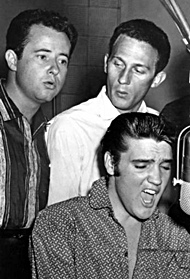
(Above photo: Gordon Stoker & Elvis, May 28th 1966 at the ‘How Great Thou Art’ session)


Gordon Stoker Passed Away aged 88. Very sadly Jordanaire Gordon Stoker died, after a lengthy illness, at his home on March 27th 2013.
The Jordanaires originated in Missouri but came to Nashville, where they backed Red Foley on a segment of the Grand Ol Opry called the “Prince Albert Show”.
Gordon Stoker joined the Jordanaires as their piano player, but soon became their tenor vocalist.
The quartet then developed a national audience after performing on the Opry and the nationally syndicated show, “Eddy Arnold Time.”
Stoker has noted, “Elvis was attracted to the Jordanaires sound as he he’d heard us sing those spirituals. We were working with Eddy Arnold and we went to the Ellis Auditorium in Memphis to do a show. Elvis came back behind the stage to meet us, not to meet Eddy. Elvis said, ‘Man, let’s sing some of those spirituals.’ So, we got to singing with him in the room. That’s when he said, ‘If I ever get a major recording contract, I want you guys to work with me.’ He was on the Sun label at that time. We didn’t think anything about it, we had been told that by a lot of people. It didn’t mean anything at all. But, when RCA signed him in January of 1956 he asked for us.”
The Jordanaires’ impact on Presley’s recordings should not be underestimated. Their smooth yet effervescent backgrounds made Elvis’ raw-boned rock’n’roll palatable to mainstream radio programmers. Elvis’ major hits such as ‘Don’t Be Cruel’, ‘Teddy Bear’, ‘Too Much’ and ‘Don’t’exhibited the type of vocal interplay that Presley could not have achieved on his earlier recordings.
At Presley’s request, the Jordanaires received billing on all his vinyl releases, a sign of respect that he didn’t accord his band members.
On tour The King’s delirious, screaming fans made it difficult for the group to hear the singer. As a result, Presley had the Jordanaires stand very close to him on stage. “We could also tell by the movement of his head or the movement of his body where he was in the song,” explained Stoker. “But, we would be as close to him as we could possibly be. Elvis even wanted it that way in the studio. He always wanted us standing right behind him on those TV shows we did with him. Many times he’d step back on my toes. But you couldn’t hear anything because of the screaming and hollering.”
As a member of the Jordanaires, Stoker also performed with Patsy Cline on “Crazy”, “I Fall to Pieces” and “Sweet Dreams,” and with Ricky Nelson on “Traveling Man” and “Hello Mary Lou.” The group provided backing vocals for Sissy Spacek in the 1980 bio-pic of Loretta Lynn, “Coal Miner’s Daughter.”
“He could play by ear,” said John Rumble, historian at Country Music Hall of Fame and Museum in Nashville. “Anything he could hear on the radio, he could play it.”
The Jordanaires, who recorded many gospel albums on their own, were elected to the Country Music Hall of Fame in 2001.
Gordon Stoker August 3, 1924 – March 27, 2013, R.I.P.

The following is an excerpt of an article that first appeared in The Weakley County Press (Martin, Tennessee, USA) on May 11, 2004.


Gordon Stoker could be a name-dropper, if he wanted to be. After all, he has recorded with the likes of Patsy Cline, Jim Reeves, Loretta Lynn and Elvis, just to name a few. His list of co-artists includes more than 2,000 pop and country stars of the ‘50s, ‘60s and ‘70s, and he has known the joy and sorrow of friendships that ended all too soon such as those with Reeves, Cline and Ricky Nelson, who all died tragically in plane crashes.

He could be a snob, if he wanted to be. His awards are too numerous to mention, but the 2003 Grammy for the Best Southern Country Gospel Album definitely stands out as do inductions into several halls of fame, including the Country Music Hall of Fame in 2001. He has traveled the nation and the globe, appeared in movies and on television, and been a regular on WSM’s “The Grand Ole Opry” in Nashville. To someone outside of entertainment circles, his accomplishments are impressive if not overwhelming.

But Gleason (Tenn.) native Gordon Stoker is neither a name-dropper nor a snob. He is instead a sincerely nice gentleman who loves his hometown and home county, loves his family and loves what he does—singing and performing with The Jordanaires quartet. He is a humble man and has been content to lend his talents as a background vocalist and musician to singers of all genres.

Stoker reflected on his successful career and remembered that a record producer “told us not to worry about making the Hit Parade. He said, ‘The background field will be good to you.’” The producer was right. While other entertainers have come and gone, The Jordanaires are still recording and performing for audiences. “Back-up work is steady,” Stoker said. “You’re not here today and gone tomorrow.”

Steady, indeed. He’s been at it for 54 years, and his 2004 schedule is full. The group just cut a Christmas CD and is preparing to record a bluegrass collection. Stoker recently returned from a performance in Canada and he and the group leave for Ireland at the end of May this year. They’ll be in Tupelo, Mississippi, on June 4 to do an Elvis tribute and in Tunica in August.

Stoker’s musical career began early. Everyone in his family—his parents, two brothers, a sister and Stoker—sang and played musical instruments. His mother and brother Wayne played the guitar. Gordon’s specialties were the piano, organ and accordion. They sang and played at singing conventions—a term used in the south for gospel singing get-togethers—that were common on the weekends in the 1930s. They sang locally but occasionally traveled to Jackson and Memphis. “As far as we could go in those days, we went,” Stoker said.

Stoker recalled winning his first award at a convention in Weakley County when he was 7- or 8-years-old. He still has it proudly displayed among his other, more prestigious honors. “I sang ‘Have you ever been lonely, have you ever been boo,’” he said, chuckling over his youthful mispronunciation of the word “blue.” He also won medals at various competitions for being the best pianist. His real break came, however, when at age 12 or 13 he impressed John Daniel of The Daniel Quartet, regulars on the Grand Ole Opry.

Stoker was at the annual Snead Grove picnic, which drew thousands of spectators to McKenzie to see the showcased talents of local and Opry stars, when Daniel heard him perform with the Clement Trio of McKenzie. Stoker was the regular piano player for the group, which had garnered quite a bit of local recognition.

When Daniel heard the young pianist, he was impressed. He asked Stoker his age and told him that he’d give him a call after Stoker graduated from high school. He would, he said, make the young man a star.
“I never dreamed he’d do it,” Stoker said, knowing that graduation was still five or six years away. However, Daniel kept up with the young musician and kept his promise. He called Stoker the week he graduated, and Stoker headed 150 miles east to Nashville, where he performed with The Daniel Quartet. Stoker didn’t know it, but he had left his hometown for good.

In 1943, the United States was embroiled in a brutal world war and Stoker was drafted into the Air Force. The same nimble fingers that danced gracefully on a piano keyboard also flew across typewriter keys and enabled him to serve his country as a teletype operator in Australia. There he monitored air traffic and was discharged from the service three years later. Upon returning to the states, he attended college for a while in Oklahoma and then Peabody College in Nashville, planning on becoming a teacher. There he rejoined The Daniel Quartet.

Little did he know that his future was being determined by a group of four men—brothers Bill and Monty Matthews, Bob Hubbard and Culley Holt—in Springfield, Missouri, who began in 1948 as a barbershop, gospel and country quartet. They called themselves The Jordanaires. By 1949, they had secured a regular Saturday night spot on the Grand Ole Opry and had also gone through some personnel changes. Bob Money, their pianist at the time, was drafted and Stoker auditioned to be his replacement. He got the job.
“I was not the best musician by any means,” Stoker said modestly. They told him that his playing style was not fancy but just the style they wanted. After establishing himself as a pianist, he had the opportunity to become the first tenor in the group and his position was secured.

The Jordanaires continued to be regulars on the Opry. On a Sunday afternoon in 1955, they played a show with Eddy Arnold in Memphis. Afterwards, a blonde, courteous young man, wearing a pink shirt and black pants, approached them and told them that if he ever got a recording contract, he wanted them to sing back-up for him. Stoker said he didn’t think much about it at the time; people often did that and continue to do so today.

On Jan. 11, 1956, Chet Atkins called Stoker to do a session with a new singer that Atkins said probably wouldn’t be around very long. It was the same young man that had approached them that day in Memphis—Elvis. RCA had just signed The Speer Family and Stoker, along with Ben and Brock Speer, sang back-up for “I Was the One,” the first recording session Elvis had ever done with vocal background. In April, they were called upon again to sing back-up for Elvis in Nashville.

Elvis, who had heard The Jordanaires regularly on the Opry, didn’t know that Stoker was the only actual member of the group that had recorded with him. He called Stoker aside and told him that he wanted the group to sing back-up for all of his songs. So began a relationship that lasted for 14 years.

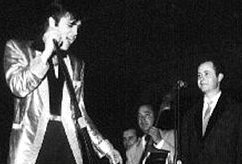
(Right: Elvis & Gordon Stoker, live in Canada 1957)

“The greatest thing that ever happened was when Elvis asked us to work,” Stoker said. Elvis insisted that The Jordanaires’ name be placed on the record labels, and the recognition they received opened doors to other opportunities. “Elvis opened the door for everybody,” Stoker said. “You could hardly find a guitar picker anywhere in those days. Now there is one on every corner. Elvis has inspired the world to sing and play.”

The Jordanaires ended their recording relationship with Elvis when he began to perform in Las Vegas. Stoker said that two shows a night were too hard for anyone to do. Elvis replaced The Jordanaires with The Imperials, who were later replaced by J. D. Sumner and The Stamps Quartet. According to Stoker, Sumner and The Stamps were about to quit when Elvis died.

“I’ve always felt that two shows a night is what killed him,” Stoker said. He believes the rigid schedule prompted Elvis to become more dependent upon prescription drugs.

Stoker’s loyalty to Elvis is obvious. He has refused numerous offers to have his biography written, believing that writers are more interested in digging up the negative about Elvis Presley more than the positive. He has only good things to say about Elvis and insists that Elvis did much more good during his lifetime than what most people realize.

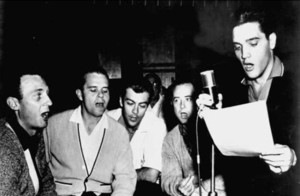
(Right: Elvis & The Jordanaires, with Gordon Stoker right beside, him at the ‘GI Blues’ session)

Those who know Stoker are quick to smile and speak kindly of this humble, gracious man. Perhaps Todd Morgan, the director of media and creative development at Elvis Presley Enterprises, describes him best. “Anyone who thinks Dick Clark is the eternal teenager of show business has never met Gordon Stoker,” he wrote. “His energy and passion for life and work and family and friends is boundless. He’s always got something going on. The only thing he has at the ready more often than music is humor. Any conversation with Gordon always involves a good laugh.”

Not a name-dropper nor a snob, just a kindhearted gentleman blessed with enormous talent. Weakley Countians can be proud to call him their own.

EIN thanks Pam Harris for her contribution.

You can also check out the The Jordanaires website at www.jordanaires.net

Copyright Elvis Information Network 2006. Do not re-publish this interview without permission.

Click to comment on this interview


Did You Miss These Popular EIN Features
Interview: Scotty Moore
DVD: Jukebox Rock ‘N’ Roll Vol. 1
Elvis guide to Memphis
James Brown/Elvis NOT a racist
CD Releases in 2006 – final update
Book Review: The Louisiana Hayride Years
Sale of EPE Archives
Interview: Kevan Budd
Reviews
DVD: Jukebox Rock ‘n’ Roll Vol. 1
Book: E.P in Concert
Book: Elvis The Louisiana Hayride Years 1954-56
CD: The Complete Million Dollar Quartet
CD: Elvis movies
Book: The “Love Me Tender” Years Diary
Book: Elvis at 21 (Wertheimer)
Book: Inside G.I. Blues
Articles / Spotlights
EP In Concert “downunder” 2006
Elvis in the “gossip” mags – a pictorial review
Visiting Graceland
Elvis In Concert (1977) – should it be released?
The Geraldo Rivera (“20/20”) investigations into Elvis’ death
The real failure of Elvis’ movie career
Is Elvis a religion?
Latest Interviews
Kevan Budd (Dec 2006)
Ken Sharp (author: Writing For The King)
James Forsher (Love Me Tender Years Diary)
Wayne Jackson (Memphis Horns)
Billy Miller
Ernst Jorgensen (Record Collector)
Betty Harper (world famous sketch artist)
Audio-Visual
Graceland cam
Charmaine’s Elvis Graphics
EPE’s Multimedia Elvis Gallery
Sirius Elvis Satellite Radio
Elvis Radio (ETA’s)
Elvis Express Radio
Elvis Only Radio
“Images in Concert” PhotoDatabase
Sanja’s Elvis Week 2006 Photo Gallery


I’ll be sharing more about people I’ve had the privilege to meet this week, so I hope you’ll check back againl, and feel free to leave your own comments!

Why didn’t I think of this before???

IMG_0263

I have a confession to make. I’ve been discouraged, and that discouragement has made me a bit lazy. Well, maybe not lazy. But exhausted. Discouraged. Frustrated.

If you know me or follow my blog, you know I am visually impaired due to the rods and cones in my retina dying. The vision continues to worsen almost daily, it seems, and while I was and am extremely thankful for Iris Vision, it was not the fix-all I had hoped. Don’t get me wrong. I use it for watching television and before today, for using the computer. I have to use it to use my phone (for the stuff Siri can’t help with). I use it for reading short things and for writing. Speaking of writing…my deepest apologies to those of you I have sent cards to. I still want to do that, but I know my writing is horrendous and sloping and all that, but maybe it is legible.

Anyway, back to my confession. As wonderful as Iris Vision (we call it Ivy from IV, get it?), I can only use the device for an hour or at most an hour and a half while working on the computer. I can wear it several hours while watching television, but something about that computer use is a little more challenging.

So I basically gave up. I didn’t blog. I didn’t work on new writing projects. I avoided computer use, only checking Facebook once or twice a week for notifications. I never scrolled through it, so if I missed an important announcement from you, I apologize.

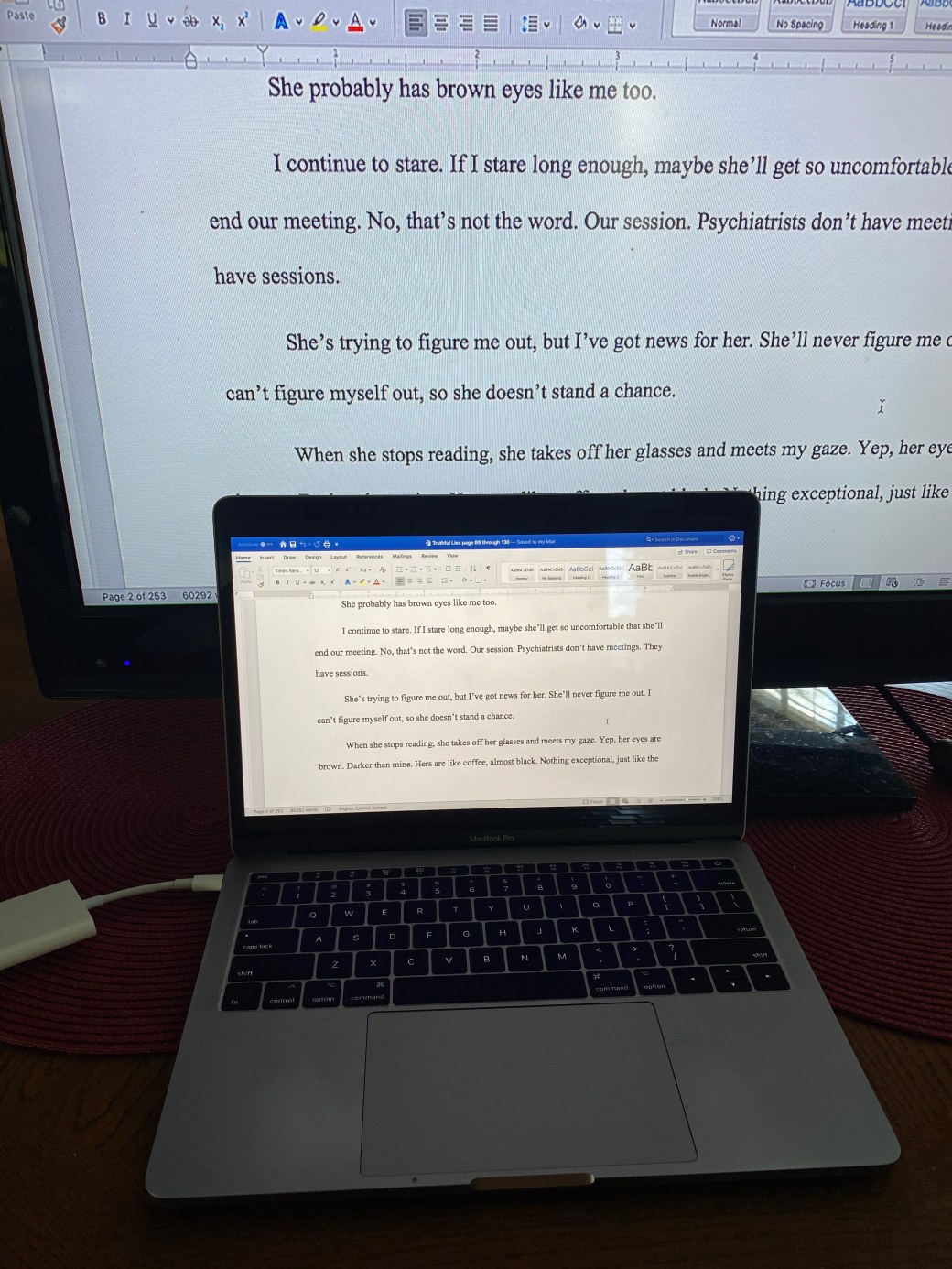
Then, two days ago, it hit me. I’d seen both of my sons hook up their laptops to large monitors and/or a television, so I thought, “Maybe I can do that and be able to see better.” I called my tech guru and former co-worker, and he explained what I needed to do. The end result is what you see in the picture. A simple adaptor and an HDMI cord did the trick.

Of course, I did have to call my oldest son for instructions on how to hook it up. Hey, don’t judge me, I think I do better with technology than most people of a certain age!

So, I’m back to blogging. I’m back to writing (you can see an excerpt from “Truthful Lies” in the photo). I am inspired once more and looking for people to interview. I want to interview writers, artists, athletes, musicians, actors, radio/television personalities, humanitarians, and ordinary people who have accomplished extra-ordinary things. I do not want to interview politicians or blog about current hot topics.

Leave suggestions in the comment section or post on Pam Harris, author on Facebook. I will do what I can to cover what interests you.


The best dog ever

sable

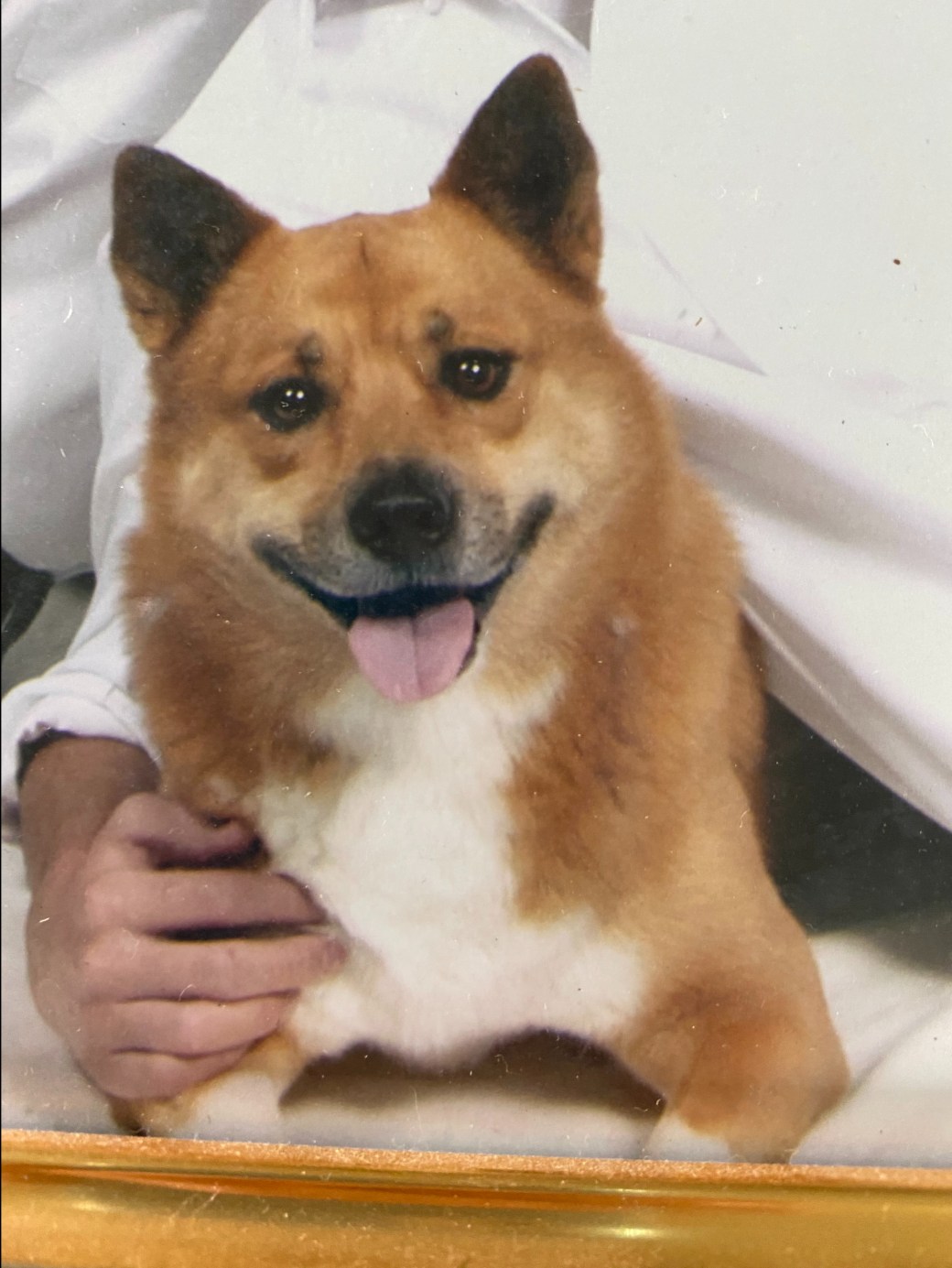
Meet Sable, a mixed-breed dog who had the coloring of a Corgi, the body of a husky, and the demeanor of whatever breed is the calmest. We lost her ten years ago this past March, but I still think about her at times, and those memories bring laughter, smiles, and still tears.

How she came to be ours is not an exceptional story. Our youngest son wanted a dog for his tenth birthday, and we heard about a family that had puppies to give away. If I remember correctly, there were five puppies in the litter. My two sons and I went to pick out a pup, and when we saw the runt of the litter sitting back while the bigger pups got all the food, we were unanimous in our decision. It had to be the lighter-colored, sweet-faced gal instead of the larger, mostly black brothers.

She was so tiny, and she was shaking as Kevin held her on the ride home. Cautious in nature, she didn’t run around in the house an explore, and I didn’t want to put her outside in the pen with the dog house that first night, so we barricaded off a corner in the dining room with chairs and lined the floor with puppy pads. I just knew she would escape the chairs and pee and poop all over the house that night, but when we got up the next morning, there she was, still curled up in the corner, with no sign of night-time explorations.

I knew then we had a special dog.

As she grew up, she was an outdoor dog by day and slept inside at night. I never–I repeat, never–had to do anything to house train her. She trained herself. She stayed in her pen while we were gone and played outside with the boys when they were home. We never allowed her on our furniture (our sons allowed her on their beds and even encouraged it, but that was behind my back), so she never tried.

You could set a plate full of food on the floor, and she wouldn’t touch it. We even tried to see if she’d eat food off the plate if we weren’t in the room. We’d peek around the corner, and she wouldn’t go near it. Sometimes we’d push the plate at her, and she’d back away from it. Put that same food in her dog bowl or outside on the concrete, and she’d eat it. Maybe she was afraid of the plate, but I like to think she knew we wouldn’t like it if she ate off of our plates or out of our bowls.

I’m a faithful walker, so she became my walking companion. At first, I used a leash, but at certain spots, I’d take her off the leash. I soon learned there was no need of a leash. If a car was coming, I’d simply say, “Sable, over,” and she’d get over on the grass until the car passed. She stayed right with me, never straying more than ten feet from me, never chasing cars, never bothering people who passed by us. Dogs running loose in our neighborhood would run at us, barking, and she’d either ignore them or stare them down until they left us alone. She never fought with them. She just had this…attitude that asserted her dominion over them. Our neighbor called her the queen of the neighborhood.

We didn’t have any part of our yard fenced in when she was alive, but we eventually allowed her to stay outside of her pen. She stayed in the yard, usually on our back deck or our front porch. She never left, and the only thing she ever barked at were the occasional horses that went by. Yes, we live in a rural area and some neighbors not far away used to ride by fairly often. As time went on and she got older, we even left her out in the yard instead of in the house or in her pen while we were gone. I guess, looking back, it was a chance we took and were lucky she was not hit by a car, but the thing is she never went to the road. Our house sits 100 feet back from the road, but still, most dogs would be off exploring, right?

When she waned to come inside, she never scratched at the door or barked. Instead, she stood outside and made a huffing sound.

Time marched on. Before we knew it, she was a permanent inside-the-house dog, or an-out-in-the-yard dog instead of a penned-up dog. She wandered occasionally to the next door neighbor’s yard, but for the most part, she stayed close. The most dog-like things she ever did were digging holes under the deck or under her doghouse and lying in the cool dirt and digging holes to bury things.

She did so many funny things. Like the time she got under my mother’s bed at her house and the hardwood floor was so slick, it was like she was on ice trying to get out. She loved to ride in the car. One morning Kevin was leaving for school and realized he forgot something. He came back in the house to get it and when he got to his car, she was sitting in it and refused to get out. She weighed about fifty pounds, and he didn’t want to pick her up and get dog hair all over him before school, so he drove her around the block, brought her back, and let her out. She got what she wanted.

My sons grew up, went to college, did their thing, and Sable remained. I talked to her, cried to her, shared front-porch sitting time with her, walked with her. She went from being our son’s dog to being our family’s dog. She filled the empty spaces in our home with our sons being gone, and her attachment to us was as strong as our attachment to her.

I can honestly say that losing her was heartbreaking. It wasn’t a matter of being sad a few days and moving on. When we lost her to acute pancreatitis just one day shy of our youngest son’s twenty-first birthday, we grieved as though we’d lost a family member, which to us we had. We had her for eleven years, and so many memories of those years are tied up with her.

Those of you who are dog-lovers can relate to this, I am sure. And I’m sure that, to you, your have or have had the best dog ever. My sons have their own dogs now, and I love them in a special way, but of course, they’re not mine like Sable was. Well, I mean, she was ours. She belonged to all of us, and we all belonged to her.

Yesterday afternoon, I sat on the rocker on my front porch and flashed back to the countless hours I did that with her. I fantasized about getting another dog, maybe a German shepherd or a mixed-breed that looks like one, and I wondered if that dog would be like her, one I could trust to stay by me on the porch and not run into the road, one that never chewed up anything, not even as a puppy, and one that would listen to me talk about what was on my mind.

Maybe someday I’ll get another dog, and I’m sure that, in time, I will love her (I only want a female) just as I loved Sable. Not in the same way, of course, but love nevertheless. And if I do get that dog, she will have unique traits that I will appreciate, behaviors that will make me smile, and her own personality that will make her special.

But whether I do or not, there is one thing of which I am sure. There will never be another Sable. She was truly special.

How teachers are immortal.

woman writing on dry erase board
Photo by Christina Morillo on Pexels.com

Teachers immortal? Strange idea, I guess, but it didn’t originate with me. It originated with early 20th century teacher and author, Jesse Stuart, who once wrote that he was convinced that teachers were immortal because they lived on in the lives of their students.

This is Teacher Appreciation Week., and while we as a nation are focused on COVD-19 and healthcare providers and first responders (as well we should recognize and appreciate), let’s pause for a moment to recognize those people who trained the nurses, doctors, paramedics, and others who protect us.

I, like you, had a variety of teachers. Kind ones, strict ones, lenient ones, hard teachers, easy teachers, even mean-spirited ones. Not all teachers deserve to be appreciated, but most of them do. Most are hard-working and truly care about their students. They become discouraged when parents are too critical, when students are disrespectful, when administrators are harsh and condemning and even threatening their jobs. Some teachers do not need to be in the profession, no doubt. But most do, so it is appropriate to recognize them at least once a year during this time.

I learned valuable life lessons from my teachers, lessons that weren’t always pleasant. In second grade, for example, a boy in my class asked what letter came after another letter. I asked, “Don’t you know your ABCs?” Mrs. MacEntire at O.C. Johnson in Yuma, Arizona, took me outside, kneeled in front of me, took my hands, and explained Kindly but firmly that not all students learned as quickly as I did, and if I said things like that, I’d hurt someone’s feelings. That made a lifelong impression on me. That same teacher allowed me to read aloud the short stories to my class and show them the pictures I drew to go along with them. She never held that incident against me.

Mrs. Haney, at McGraw School in Yuma, introduced me to books like “Heidi,” “Swiss Family Robinson,” and other classics that she read aloud to us after lunch/recess every day. We were allowed to put our heads on our desk while she read to us, and I have no doubt several fell asleep, but I listened to every word.

I can’t leave out my third grade teacher, Mrs. Straub,, at McGraw. When I approached her with the idea of our class doing a play using the album “Alice in Wonderland,” she turned the whole thing over to me. I cast the actors, and we rehearsed a few times before doing the play, including costumes, for our parents. I cannot fathom how terrible it probably was, but she didn’t tell me it couldn’t be done and she didn’t take over. Thank you, Mrs. Straub, for building up my confidence.

Junior high is kind of a blur to me. In seventh grade, we had a social studies teacher who was so strict, we were all scared to death of him. But I learned the capitals of every state and country. He tested us one at a time. He held up an index card with the state name and we told him (individually, not as a group) the answer. I was terrified. I guess the good thing that came out of that was that I learned to study, study, study. I was too scared of his glare to give the wrong answer.

In high school, I was more concerned with social activities than my teachers. Oh, I studied and made good grades, but each class was just something to get through until we changed classes when I could connect with my friends. We had good class discussions in Mrs. Mason’s junior English class at Warren County Senior High in McMinnville, Tennessee, and the yearbook advisor I worked under for two years, Mrs. Chambers, was always kind and patient with us, her smile quick, always treating us like young adults instead of teen-agers. Mr. Stubblefield, my Advanced Biology teacher, taught me the value of research (with that 35 plus page research paper we had to do in one six weeks!) and what it meant to have a sense of humor as a teacher. I don’t remember much about what I learned in that class (after all, it’s been forty-six years), but I do remember his voice, his smile, some of his sayings.

College came next, the University of Tennessee at Martin. I started out as an English major, switched to history, and ended up majoring in Spanish and minoring in French while taking business courses like accounting, business law, and other courses to prepare me for a career in international business.

Well, that didn’t happen.

But those teachers in the foreign language department were my favorites, the ones who impacted me the most. Dr. Robaina, the Cuban attorney who escaped Cuba during Castro’s takeover and ended up teaching Spanish here. His English was heavily accented, so you might as well learn the Spanish. Maria Maloan, the teacher who influenced me to take French as well (she spoke five languages and was a native of Brazil), instilled in me a love of foreign cultures and language and piqued my interest in world travel. Dr. Mohler, my advisor, whose calm demeanor and methodical approach to teaching helped me learn everything I needed to learn.

Maybe I didn’t go on to bigger and better things by working in international business for a large bank or corporation, and maybe I didn’t achieve those college dreams of being a world traveler, and maybe I didn’t become a successful author (remember those second-grade short stories) or actress/director (third grade play), and maybe I didn’t accomplish anything noteworthy, but my teachers helped to mold me into the person I am today. Just someone who worked hard, did the responsible things in life, tried to help my family, friends, community, and church.

I shared my personal memoirs to honor those who affected me and to spark an interest in each one of you to remember your own teachers and what the good ones meant to you. I shared them also so current teachers can see what type of teacher influenced me. And I shared them so parents who have never worked in education and maybe have a negative attitude about school can understand or begin to see that teaching is more than just standards and objectives and grades. The best teachers, in my opinion, are the teachers who have heart.

To all teachers who are often over-worked, under-paid, and taken for granted or even under-appreciated, this is your week. Thanks for all you do, and may God give you wisdom, patience, and confidence as you continue in a career that makes a difference in the lives of so many.

After all, Jesse Stuart said you were immortal. Who is to say that he’s not right?

Catching up with my former student, NBA’s Popeye Jones

Popeye photo
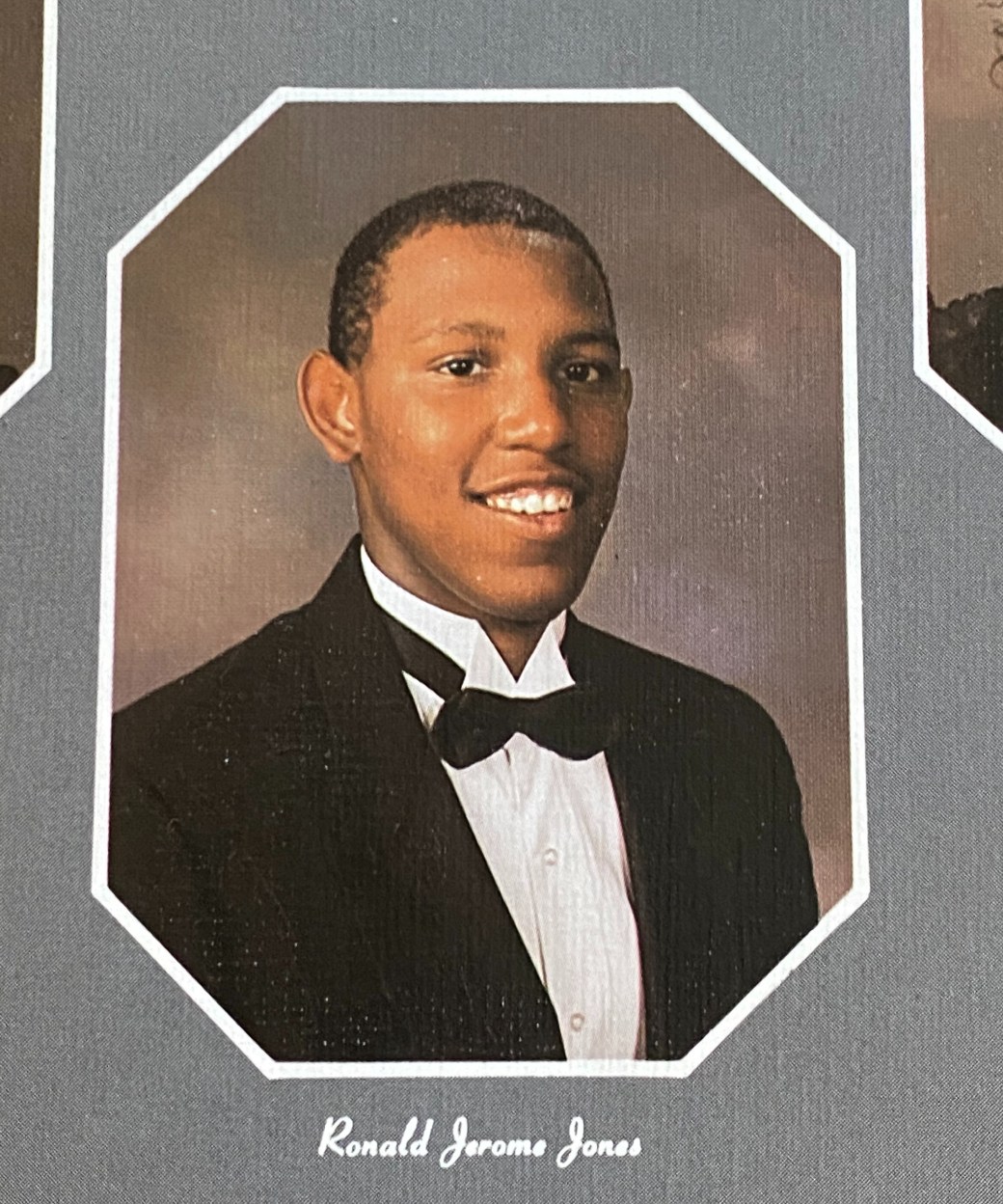
Photo from the Dresden High School yearbook, 1988


I am more than a little excited to welcome NBA’s Popeye Jones to my blog today. Popeye (given name “Ronald”) was a student of mine many years ago, and one of my fondest memories of him was how he was competitive in the classroom just as he was on the basketball court. I can still recall him stopping by my classroom on test days to see if I’d graded the tests yet, his main objective being making a better grade than his good friend who was in the same class!

Popeye, please tell us a little about your personal life. I was born in Martin, Tennessee, and grew up in Dresden, Tennessee.  I was the youngest of five kids (three brothers and a sister).  I got into sports because my brothers and sister played growing up.  I attended high school in Dresden and received a scholarship to play basketball at Murray State University.  My wife and I divorced in 2010 and have three wonderful boys, Justin, Seth, and Caleb.  The two youngest play in the NHL.  I remarried in 2017 (Kelsey), and we have a seven-month-old boy (Camden).  He keeps me young and full of energy.  He is a real joy! I spend all my time working to be a better basketball coach or hanging out with them.

When I was teaching, many of the student athletes in the high school aspired to go to the next level. What differences did you notice between playing basketball at those two levels? The difference in high school and college athletics is learning how to manage your time.  You have to study extremely hard and spend a lot time becoming a better player.  Everybody in college was good in high school, so the level of competition goes up.  It’ s extremely tough as a freshman because you are playing against grown men.  They have been in college for three or four years and have developed their bodies and skills.  You can’t lose your confidence during the process.  You must understand that it’s going to be hard days and extremely hard days.   Just keep pushing forward! J

I remember how excited we all were when you were drafted by the NBA. I actually watched the draft that year, just because of you! Tell us about your experiences. Yes.  I was drafted in 1992 by the Houston Rockets with the forty-first pick of the second round.  Second-round picks don’t get guaranteed contracts, so my agent worked out a deal with an Italian club for a guaranteed contract.  Looking back on it, it was the best decision ever.  I lived in a small Italian town about twenty minutes outside Milan.  I feel in love with their culture and, of course, the food. LOL.  It got me out of my comfort zone and helped me to grow up as a man.  I played extremely well.

How did your playing career evolve after you came back to the states? I played in the NBA for eleven years for seven different teams (Dallas, Toronto, Boston, Denver, Washington, Golden State).  I was considered a journeyman.  My first three years with the Dallas Mavs were my best in the NBA.  I was able to establish myself as one of the best rebounders in the NBA.  I tore my left ACL during my fourth year.  I was never the same player for the next seven years as I had three more surgeries on the same knee.  I continued to try and push through the problem, but it finally forced me to retire.  Injuries are a big part of being an athlete, but it can really take the wind out of your sails.   I really enjoyed living in so many different cities. After moving the family from Dallas, Toronto, Boston and Denver, we finally decided to settle down in Denver.  Denver was my fav city out of all the cities that I lived in during my career.  I love the beauty of the mountains and all the outdoor activities the city has to offer.  I lived in an apartment in Washington and Oakland.  I would always go back to Denver in the summer.  I continued to live in Denver for six years., the rest of my playing career and additional two years after retiring.

Popeye, thanks again for answering my questions. Even though I have seen you from time to time over the years and knew some of this, it was great to have you fill in the gaps of the story of your life. Best wishes to you and your family!


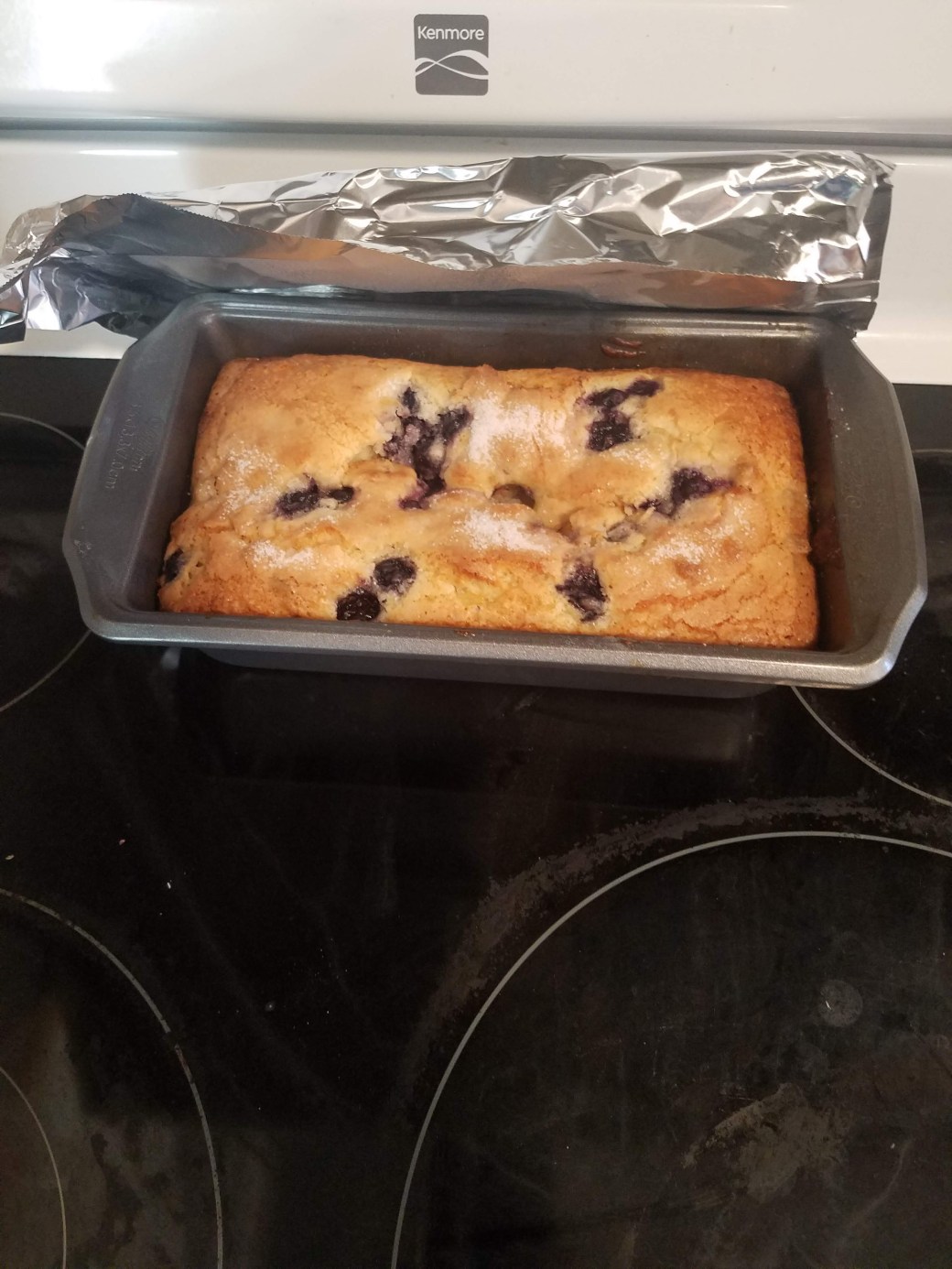
It’s a BB (boredom baking) kind of day–easy, delicious, blueberry nut bread!

20191113_131448

I may have shared this recipe before, but it is well worth sharing again. I got it from Mrs. Hannah at church (my fellow church members know who she is) and tweaked it to make it a little easier. Her recipe calls for all-purpose flour, soda, and baking powder, and it also calls for some orange zest. I believe one tablespoon.

Either way, it is absolutely delicious, and anyone can make it. A chilly day like today, when we can’t be outside and out and about, makes for a perfect baking day. The kids can even help you with this one. Enjoy!

Blueberry Nut Bread

Ingredients:

1 cup chopped pecans, toasted

1 slightly heaping cup of sugar

2 cups self-rising flour

1 cup frozen blueberries

1 cup orange juice

¼ cup oil

1 teaspoon soft butter

1 egg

Toast nuts in glass baking dish for ten minutes at 350. Spray loaf pan. In one bowl, stir together flour and sugar. In another bowl, add small amount of sugar/flour mixture to blueberries and coat. Set aside. Mix orange juice, oil, and butter and add to sugar/flour mixture. Beat one egg and stir all into the sugar/flour mixture until evenly distributed. Sift flour out of blueberries and add the residue to the batter until smooth. Stir pecans into batter. Pour half of batter into baking pan. Drop half of the coated blueberries onto mixture. Spoon remaining batter over blueberries and drop remaining blueberries over the top. Place pan in 350 oven (325 if glass) and bake 50 to 60 minutes. Check with toothpick.


WPSD’s Pauline Fitzgerald talks about her career, her passions, and…Italy!

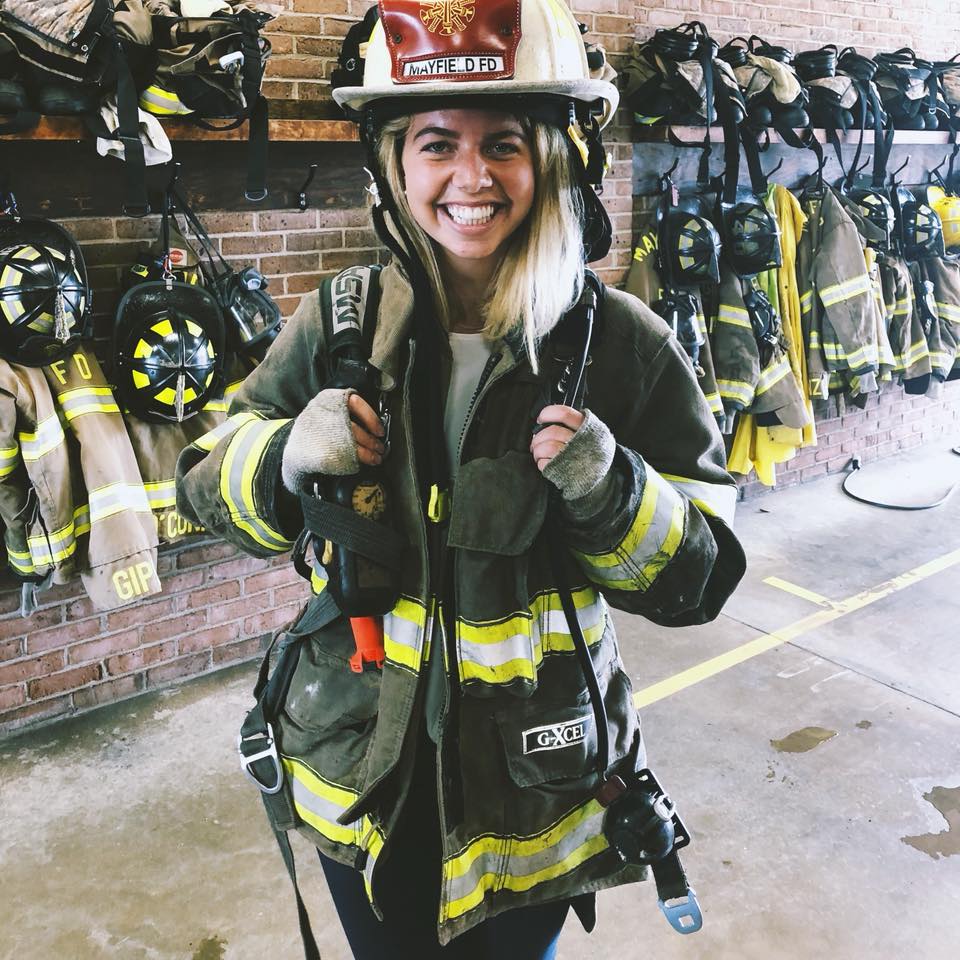
Pauline fire fighterSeveral weeks ago, I was privileged to be interviewed by WPSD reporter, Pauline Fitzgerald, as the subject of a human-interest feature concerning macular degeneration. To say that it was an interesting experience is an understatement! Pauline and Jason, the cameraman, were easy and fun to work with, and although I’ve never been the shy type, I did feel out of my comfort zone being on camera. The two of them, however, made me feel comfortable, and before I knew it, I forgot about the cameras and was able to focus on why I was doing the interview, to share my experiences in the hope of helping others. As I type this now, I am using IrisVision, a device that can change the lives of the legally blind or anyone with low vision.. I could not see to type this without it, so I continue to promote it. Spread the word!

However, that is not the focus of my blog today. Watching Pauline do her job and viewing her in the mornings on WPSD Local 6 each day made me curious about her and others in her profession. She graciously agreed to answer my questions, and I hope you enjoy learning more about her and what it’s like to work in the news media as much as I did.

Pauline, I know your schedule is very busy, so your willingness to do this earns you major points and a lifetime fan! First, tell us a little about yourself. Where did you grow up? Attend college? What about your connection to Italy?Pam, we’re so glad that we made you feel comfortable, but more importantly – we’re honored to be able to tell your story to help others in our community.

My schedule is pretty busy – you got that right! I was born in Belgium, moved to Italy for a short amount of time, and moved to Connecticut where I spent most of my childhood. My mother is 100% Italian, and my father, from Chicago, is 100% American (of Irish and English descent.) I got the best of both worlds. As for my connection to Italy, I would spend every summer there growing up. Half of my family is still over there, and I have a lot of friends over there that I grew up with. I’m still close to a lot of them. I attended college at the University of Alabama, majoring in Journalism and Italian Literature with a minor in Political Science. Growing up in New England, I wanted to venture out. The south was the perfect place to start.

 When did you first become interested in a career in broadcasting? Growing up in a mixed household has opened the door for a lot of different opportunities to travel to different places, meet different people, and spark a curiosity for a lot of different things. That’s mainly why I wanted to become a journalist. I’m just so curious about everything. I’m honored to be a platform to inform people on a multitude of different subjects. I love it.

 I am assuming you had to do one or more internships and possibly had a paid position with another station. Where have you worked besides in Paducah, and how were those experiences different? I’ve done several internships throughout my college career. Some included working as a public relations and communications intern for the Italian Parliament, writing press releases on an hourly deadline in both Italian and English. I was a public speaker and translator at the Parliament in both Italian and English for multiple discussions. I also was a photography intern for a German-Italian magazine. I also interned and volunteered throughout my time at Alabama. I volunteered to teach Italian for a year at a local elementary school in Tuscaloosa and interned for a nutrition magazine (hence my interest and passion for health) ,and interned for the university’s television station, WVUA 23 News. I was an editor and a reporter.

 Tell us what a typical day is like for you. The beauty of this job is – there is no typical day. No day is like any other. I usually wake up any time between 3:00 a.m. and 4:00 a.m. (no, it’s not easy, and no, I haven’t gotten used to it, yet.) I usually get in by 4:30 a.m., depending on what I’m covering that day. The morning newscast at WPSD is from 4:30 a.m. until 7:00 a.m., and as a reporter, my “live shots” (remote reports) are around 5:38, 5:52, 6:00, 6:08, and 6:38. So there is a lot of airtime but also a lot of time to get creative. Sometimes it can be stressful, but I love it.

 My son once worked as an assistant producer at WPSD. Can you explain to my readers what a producer does and how that role affects your job? Producers make the show go on! Well, everyone plays a part in the show. We have different duties. Producers are in charge of essentially putting the newscast together, deciding what is newsworthy to mention to our viewers, and write up a lot of the content in the newscast. They’re constantly having to stay updated with what’s going on in the world, the nation, and in our backyards to inform properly. They’re all really creative people – reporters and producers work together as a team to tell someone’s story in a meaningful but informative way.

 I love the health segments you have in the mornings. How do you come up with ideas? I’m not going to lie, I love them, too. And I’m not saying that because I’m doing them – I’m saying that because I LOVE learning about health. I love learning about the body, what is good for it, what certain diseases, illnesses, and syndromes look like, and how to reverse them. I’m constantly reading books on health. I have book shelves full of them. You can never stop learning. Long story short, I went through my own health transformation a couple years back, and ever since, have felt inspired to share “hacks” and knowledge to people about health. Whether the topic is exercise, diet, or simply sharing what people can do to better themselves, it makes me feel like I’m making a difference. A lot of people don’t take their health seriously, and I want to make sure I’m opening their eyes to realize that we only have one body – take care of it.

 When you and Jason were at my house, I noticed he used the large camera and you used your phone. I was surprised by that because I always thought there was just the “official” camera. When did reporters start using phones for interviews? Yes, that big ole camera weighs a lot! She is our best friend, though. We always stick to the big camera for interviews, but we like to use other devices like GoPros or phone camera to get different angles. We are all about angles, and the more footage we get, the easier it is to edit the story. Not only that, but I LOVE capturing moments. I love seeing things through the lens. That’s another reason why I love this job

Pauline and Jason.

 What is the best part of your job? What is the hardest? Great questions. There are a lot of great things about the job that make the hardships worth it. I think I would have to say my favorite thing about this job is I feel like I can leave a physical, emotional, and mental impact on people. That’s important to me – leaving a mark on people. I feel like I’ve come into this world to leave it better than how I found it, and that’s what I can do by doing this job, all while being able to educate myself and others more on some passions of mine. The hardest part is mainly the 3:00 a.m. wake up call. It’s just brutal. It’s difficult for me to get out of bed. Another hardship, and I think this goes for any industry, I’m still very new at my job. I’m not even two years in yet. I still have a lot to learn, and sometimes I feel like I trail behind more than others when it comes to learning. I try my best every day.

 Do you wear your own clothes and do your own makeup? Yes to both. I’m fortunate that my mother has some great taste and loves shopping for clothes for me in Italy. I’m sure many of you know, Italians have great sense of fashion. The makeup aspect was more difficult for me – I was never one to really wear makeup before I got a job at WPSD. I think it’s fun putting it on every day, but I also love the days I don’t have to wear any…but you don’t want to see that!

 What advice would you give to anyone considering a career in broadcasting? Go for it. If it was easy, everyone would be doing it. This job allows you endless opportunities of knowledge, growth, and most importantly, helping, informing, and leaving an impact on people’s lives. What is better than that?

 Is there anything you’d like to add? Thank you so much for your curiosity in what I do. I’m always delighted to share more about it, hopefully to inspire others to follow the same path!

 You do a great job, and I enjoy watching you and the others each morning! Your job sounds interesting to me and makes me wish I could go back in time and possibly do the same (except for the early rising part). I am especially fascinated about your experiences in Italy and your knowledge of the language because I majored in Spanish and minored in French and wanted to learn Italian eventually.

 Thanks, Pauline, for your time and for featuring me in one of your health segments. And thanks to you and the morning team for providing me with the perfect show to watch while I have my morning coffee. I’ll be following your career, you can bet on that!

Pauline, Brianna, Trent!


What Some People Don’t Seem to Get about COVD-19

20190512_120448

I’ll explain the photo at the end of this blog post.

First, let me say straight-out that I am not an expert. Ask me the difference in “farther” and “further” or where to place a comma, and I can tell you. Ask me how to make homemade biscuits, and I will show you. Ask me how to explain this virus epidemic like a doctor or scientist? No way.

But if there is anything I know how to do, it is to research and to learn from the ones who do know. That’s what I, as a teacher, taught my students to do. That is what we, as an educated society, should do.

Which is why I am mystified by many who are taking this pandemic lightly. Are they not researching? Are they not listening to the medical professionals? Are they trying to downplay the seriousness of what our country and world are facing because they don’t want to interrupt their routines, if only for a short while?

I’ve heard that argument that the flu has killed more people than COVD-19. True, so far. But what the experts are telling us that this virus is highly contagious, that you can have it and not even know it (thereby being a carrier), and that the death rate is ten times higher than the death rate due to the flu. Because there is no vaccine and it is a new virus, our population doesn’t have immunity to it.

Mathematicians can explain it better than I can. The point is, the virus can spread exponentially. They are not basing this on some remote hypothesis. They are basing this on what they have already witnessed in other countries.

It is highly contagious, as I stated earlier. That is why New York City has more than half of the reported cases.

So where am I getting these facts? From the media? In a way. Because the news outlets, like our local WPSD, the national NBC, and Fox, all stations that I have been watching, feature medical experts who are explaining, answering questions, and giving recommendations. Everyone, from the nation’s surgeon general to the COVD task force headed by Vice-President Pence, to a local doctor in Paducah, says the same thing.

Stay away from people.

President Trump asked us to avoid people for 15 days because that incubation period would go a long way to stop the spread of the virus. Yet millennial still parties on the beaches, people still went to restaurants, groups continued to meet. It’s as if they were saying, “It won’t happen to me.” Many were saying that there was too much hype, that is was like Y2K, that the media was blowing things out of proportion.

They refused to listen to the experts.

Our area is fortunate. We have no reported cases, at least not yet. That doesn’t mean we won’t have, and that doesn’t mean we need to congregate as though the virus isn’t living among us. It could be. That person you’re chatting with may have contracted it but have no symptoms yet cough and send the virus right to you.

While it is not deadly for everyone or even the majority of people, experts now know it doesn’t affect just the elderly as was previously believed. There have been reported deaths of young people. Just think about it. There are plenty of young people with asthma, diabetes, and other conditions that make their immune system not as strong as others. I heard this morning that people with high blood pressure (that’s a lot of you out there) and diabetes are at high risk.

If you’re not concerned about your own health, at least be concerned about the health of others. I can’t help but wonder what the numbers would be if the entire country had listened to President Trump when he asked everyone to not gather for 15 days, to go only to places absolutely necessary and practice social distancing, a recommendation he made after consulting with multiple experts.

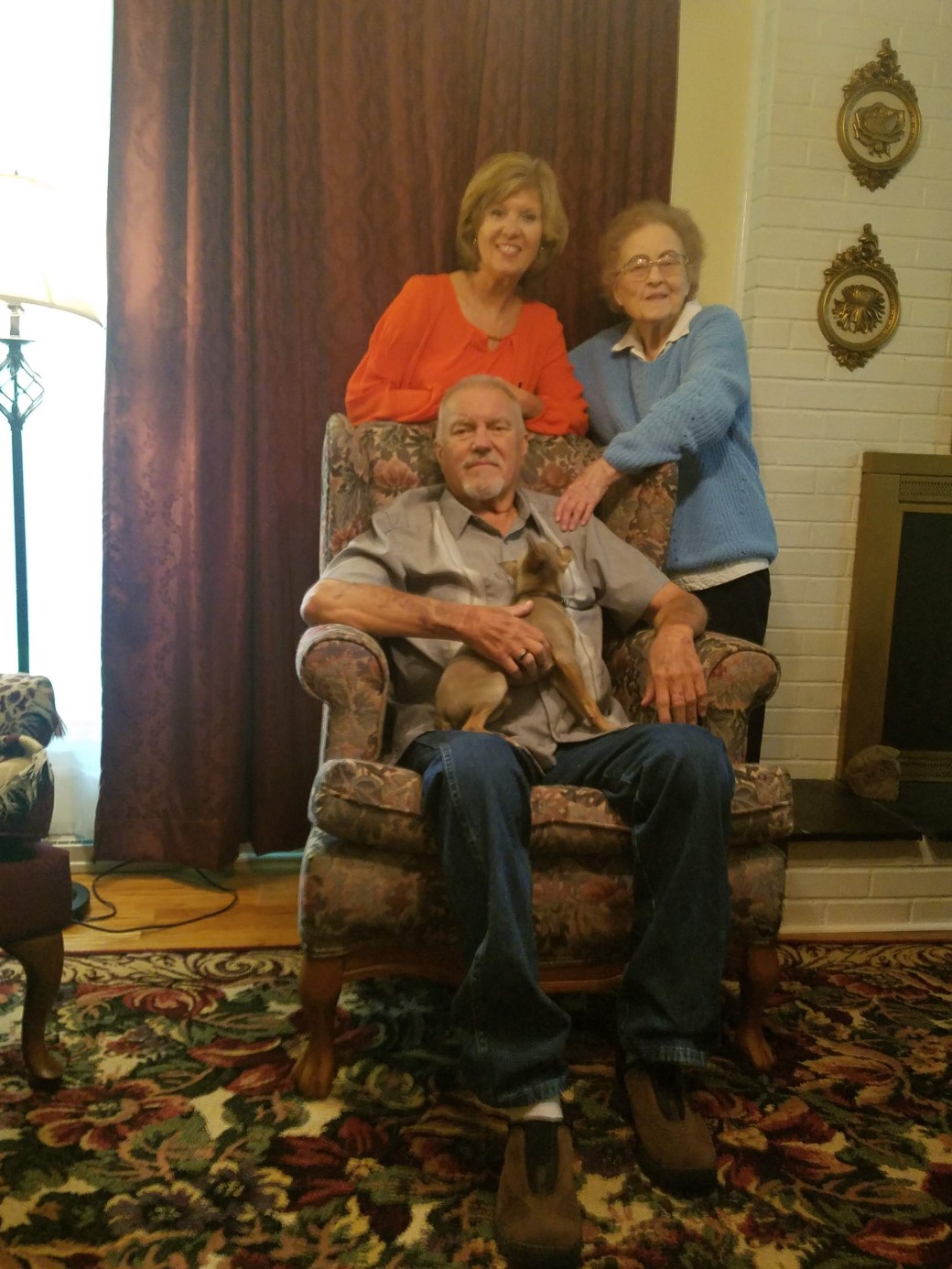
The picture above is of me, my brother, and my mother, taken last year on Mother’s Day. I’m 63, my brother is 73, and my mother is 92. Although I’m in the category of higher risk, I have no health conditions. No blood pressure issues, no diabetes, no asthma or COPD, none of that. My brother, however, has a defibrillator and pacemaker, high blood pressure, lung problems, and is on dialysis. My mom, well, she’s 92.

And because I have to care for her needs, I am practicing social distancing. I’m taking all the precautions recommended by the CDC and countless doctors.

Our politicians are concerned about the economic impact of all this, as many of us are. That has kept many governors from mandating business shut-downs, in spite of the strong warnings coming from all over the globe.

As a teacher, part of my job was to teach students social responsibility. That means how to be responsible as a member of a community. Things like not littering, obeying laws, helping others, and all of the things to make our communities stronger by personal actions.

Hospitals in hard-hit areas are desperate for resources to treat those infected. Medical personnel are stretched to the limit. This is not media hype. This is real.

As I stated in last week’s blog, there is no reason to panic. Don’t rush to Walmart to load up on toilet paper and canned goods. The supplies are still coming. Even Italy allows people to leave their homes for necessities like food and medicine. Don’t be in fear for your life. But take precautions. Stay at least six feet from others. Keep your hands away from your face. Wash your hands, with soap, for at least 20 seconds. Use hand sanitizer.

And avoid social gatherings. It’s what they’re asking us to do, and it’s what they don’t want to force us to do by making it a law. They’re wanting us to demonstrate social responsibility.

Listen to the experts, and heed their advice.

Please.

So what do you blog about when the whole world is focused on a pandemic and everything has been, and is being said, that possibly could be?


I could blog about my grand-dogs. Penny Lane, a beagle/blue-heeler mix. Mowgli, a…well, we’re not sure , but I think he might have greyhound somewhere! Marley, the eleven-year-old diabetic who is blind due to cataracts but till manages to get on our diving board and sit. All sweet, all fun, all loving.

I could blog about some of the amazing vacations I’ve experienced, like the OBX stay in 2018 that blew me away, the Washington, DC trip in 2014 (which I loved more than my husband because we walked A LOT), the times I’ve been to beautiful places like the Grand Canyon and Sedona.

I could write about the time we followed Jane Seymour around on Rodeo Drive in Beverly Hills (1982) or how I met Elvis Presley’s uncle in 1978 at Graceland and had a nice chat with him.

I could tell you about all the times I’ve stuck my foot in my mouth and said all the wrong things at the wrong time. Hopefully maturity is helping me with that.

I could recall funny stories from my teaching days, like when a sophomore asked me in my French class, when we were learning the names of animals in French, if the animals in France made the same sounds as animals in the United States or about the time a male student was a little fresh with me (I was young thenK) and when the principal called in the custodial grandfather and the boy to his office, along with me, and the grandfather at the end of the discussion told the boy to apologize and give me a kiss. True story. Don’t worry, I stopped it.

I could write about how I was convinced my youngest son had God’s ear when several of his prayers were answered in unbelievable fashion. One night in particular stands out. It was bedtime, and my seven-year-old told me he didn’t want to go to school the next day. I told him unless he were throwing up or running a fever, he was going. When he said his bedtime prayer, he asked God to make him sick so he wouldn’t have to go to school. About three a.m., he woke me up, and he had a fever of 102. He was sick several days,. I told him to be careful what he prayed for!

Right now, we’re facing an uncertain future. We don’t know what to expect because we’ve never had to deal with anything like this. It’s not my place to tell you how to behave during this time, but it is my sincere hope that we not panic, that we listen to the experts and follow their advice, and that we reach out to help others in whatever ways we can. It is my hope that the good in us will prevail, that we will stop making this a political issue and instead  treat it for what it is, a health crisis of proportions not seen in my lifetime. I would hope we, as a nation, will pull together as we did after 9/11, that will will be united in our efforts to reduce the number of those affected by the virus.

And while we are doing all of that, don’t forget to laugh, to be creative, to focus on what is good and right in our lives. Have faith that we will get through this and things will return to normal eventually.

The Greatest Generation knows this. They lived through the Depression and World War II. There aren’t many of them left, but they could all tell us some stories that would make this pale in comparison.

Hang in there, everyone. Don’t freak out. Be smart, and if necessary, err on the side of caution. Do what you can to stem the spread of the virus. Do what you can to help others.  Let’s do our part to make things better instead of worse.

Don’t get me wrong. I know this is serious. But trust. Pray. Have faith. Then relax.