My dad’s near-death experience

This is a sketch I did of my dad when I was probably in my teens, meaning he was in his forties. For those that remember him, they know the sketch is not perfect but recognizable. It was from a church directory photo with my mom. I sketched her picture also and gave the framed sketches to them as part of their Christmas presents that year.

Dad was a hard-working, dedicated Christian. He wasn’t perfect (none of us is perfect), but he was a good man. He was a faithful husband, a loving father, and a daily Bible reader.

He also had strong opinions. And one of those opinions was he thought people who reported near-death experiences were making it up. Or at least just reporting a dream.

He passed away on February 12, 2012, but the dying process began weeks before that. On Christmas 2011, he fell, slipped into unconsciousness, and ended up in the hospital, where he received a blood transfusion that brought him back to consciousness.

That’s when he told me his dream or vision or whatever you want to call it. I’m going to write this as though he’s telling it, although I know the words are not exact.

“Everything was quiet,” he said. “There was a man in front of me who looked like he didn’t have any clothes on but he did have clothes on.” I questioned him about this until I figured out the man was covered in something like a wet suit, everything fitting tightly but covering all skin. “He motioned to me and turned around and we started flying through a tunnel.” He held out his arms like Superman. “I wasn’t touching anything. We got to a room where there were people sitting in chairs. Nobody was talking. The man turned to me and told me it wasn’t time yet, that I had to go back.”

When Dad was telling this story, he had to pause several times because he was so weak, but you get the idea.

Then began episodes of him seeing people in his room who weren’t there. He talked to my mom’s brother, my uncle, who had passed away earlier. He laughed at things he was seeing that no one else could see. He was disoriented and would try to get out of his bed, saying he needed to go home, even though he was at home and in his own room. He was in a hospital bed since breaking his hip over a year earlier, so maybe that’s why he thought he was in a hospital.

A few weeks later, he lost consciousness again. Back to the hospital. Another blood transfusion.

The doctor talked to us about hospice care, and we agreed. When I read the literature they gave us, I read about the tunnel experiences, which I had never heard of. Dad had many of the episodes described.

I asked Dad one day how he felt during the tunnel experience. “I wasn’t touching anything,” he said. “No,” I said. “I mean, how did you feel emotionally?” His voice was raspy when he answered in a matter-of-fact tone. “I felt peace. Everything was peaceful.”

Since Dad’s death, we’ve been at the bedsides of my mother-in-law and father-in-law as they passed peacefully. My mom was the last one to pass away, and her experience was quite different. She fought death every step of the way, and it wasn’t until she went into an unconscious state that she stopped struggling.

I know this is a morbid topic to most, and I know other experiences with their loved ones are as varied as the people themselves. But I always think of this as the anniversary of Dad’s death approaches, and I remember his words. “I felt peace.”

Peace. I take comfort in that.
Why me? Well, why not me?

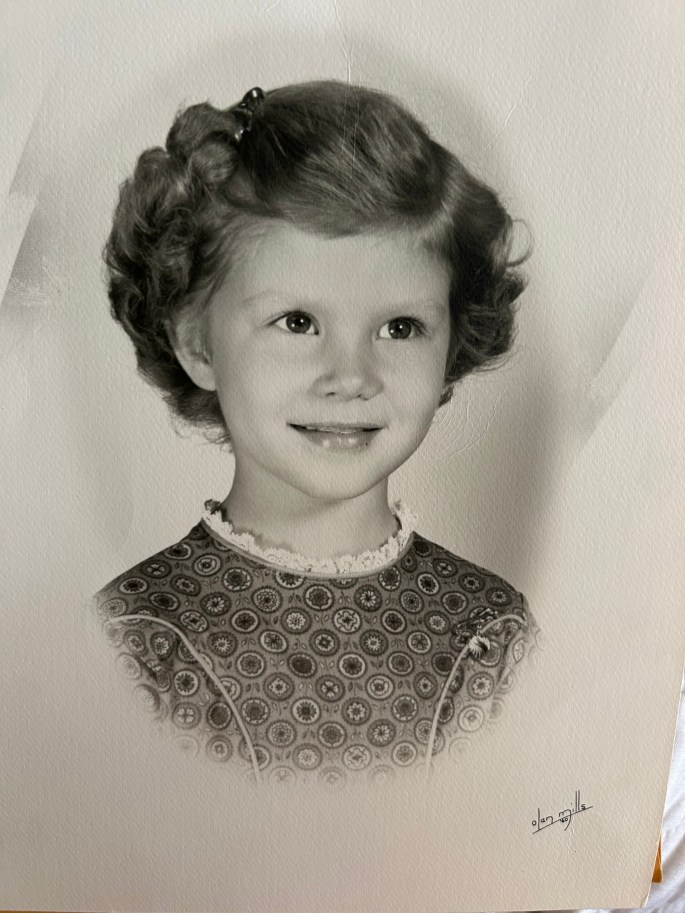
You may be wondering what this photo of a very young me has to do with the title of my blog, but read to the end, and you will find out.

I was talking with a fellow church member the other night, and during the course of the conversation, I learned about the many struggles and issues she has had for years because of her health. Diabetes has taken away her ability to drive due to neuropathy in her feet. That condition has caused her to fall, break bones that had permanent consequences, taken away her independence, and made even walking with her walker inside her own home a challenge. Because of the neuropathy in her hands, she has to support her hand holding a fork with the other hand to enable her to eat. Even at that, she drops food and makes a mess. And now the diabetes is attacking her vision. She has to get eye injections, something I know only too well, to keep the atrophy from spreading. So far, the shots are working and she can see well enough to read most things and watch television.

But diabetes didn’t cause the cancer she battled. It didn’t cause her husband’s cancer. Cancer is its own insidious disease. She is through with treatments and only has to go for annual check-ups, but friends and family who have had cancer tell me it’s always in the back of their minds, wondering if it will come back.

She’s just a few years older than I am, and when I did the math on when these problems began, I realized she was much younger than I am now.

So I asked her how she handled everything emotionally. She told me she just took one day at a time. “I never ask ‘why me?’,” she said. “My family won’t let me give myself a pity-party.”

Her attitude was upbeat, and I was impressed by the “one day at a time” philosophy. She was able to say this despite the fact she can’t dress herself very well due to the damage from one of her falls that broke shoulder bones and left her unable to raise her arms. You know what she does? She lays a front zip or front button garment, something we used to call a housecoat, on the bed, lies on it, slips her arms in it, and then fastens the front. If she needs to wear more appropriate clothing for being around others, her husband has to help her dress.

Yet no pity-party. No “why me?”

The truth is, some people have more struggles than others, and it doesn’t seem fair. Why should that cranky old man who growls at people in restaurants and drives his family crazy have such great health while this young mother or young child faces what seems to be insurmountable hurdles?

We all know people who have lived well into their nineties who never knew tragedies we all fear. They never lost a child, they never experiences severe health issues, they even never knew divorce or abuse or broken relationships. Maybe they outlived a spouse and suffered from the loneliness and loss of widowhood, but their losses were the normal ones, the expected ones if we live long enough.

Believe it or not, I’ve never asked “Why me?” with my vision loss. Don’t get me wrong, I hate it. I’ve cried plenty about it, but I’ve come out of the valley. Sure, I’d love to be able to see like most of you see, and there are still triggers that might bring tears to my eyes or cause me frustration.

But I know it could be so much worse. So I’ve learned to count my blessings and really mean it.

If we can find the blessings in our lives, despite the terrible tragedies we experience, we can get through them. If we focus on the simple blessings, we can realize that we can endure.

What does the picture of a very young me have to do with any of this? Well, It’s because that photo is a reminder of the innocence of youth. That little girl had no idea what lay ahead of her in life. I was cared for by her parents, and her biggest concerns were food to eat (well, I was a picky eater and not really into food…), a comfortable bed when tired, and playing with my cat and the few toys I possessed. I was too young to think of the future or worry about anything.

Some of you reading this have experienced more heartaches than I have. It could be your joy will never fully return because of the losses you’ve had or the struggles you continue to face. But maybe, if you’re asking “why me?,” it will help you to know there are others enduring the same or even worse situations.

Life can throw a lot at us. But it never helps us or anyone else to ask “Why me?” That doesn’t mean we can’t be sad or grieve or get frustrated. But accept that this world is full of heartaches and problems. And don’t feel as though you’ve been singled out for punishment.

No one ever said life was fair. But the strong know how to persevere.

I am a praying person and a Christian. My prayer for those of you who might be asking “Why me?” is for you to understand and accept life’s challenges and that you will take your negative and turn it into a positive to help others. Mentor someone going through the same struggles you’ve had. Visit or call the lonely. Participate in organizations who are connected to your cause. Don’t allow yourself to become isolated and bitter.

Sorry for the sermonette. No, I’m really not. I think it needed to be said. You can disagree with me, and that’s fine. But I can’t help but imagine what a wonderful world it would be if people were kinder, more understanding, more helpful, and less focused on self. I’m including myself in that admonition. I need to do more, to think less of me and more of others.

And I don’t ever need to ask “Why me?” There are 8 billion people on this planet. Why not me?

Elvis would have turned 90 today. Can you pass this quiz?

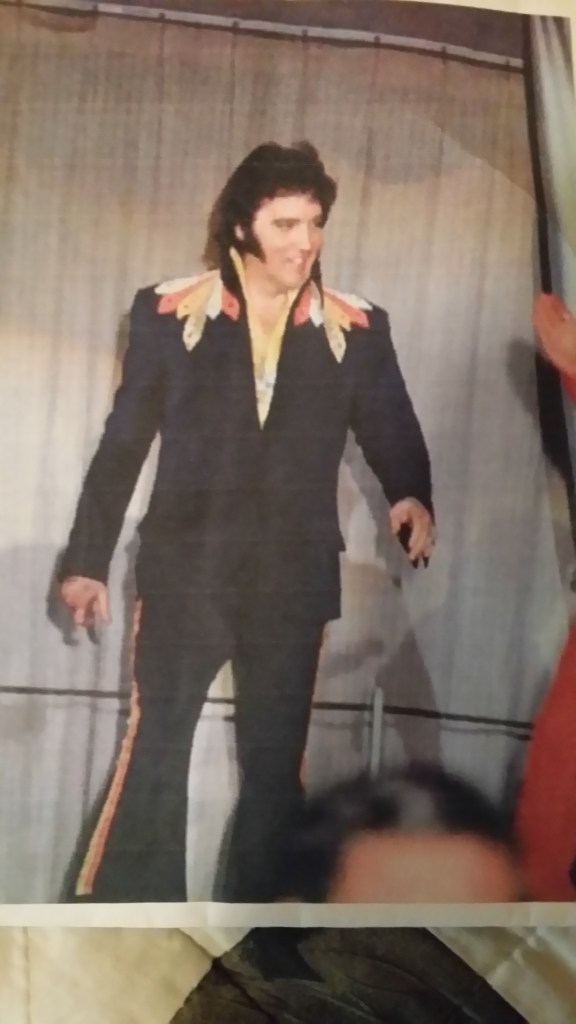
This is Elvis at a concert I attended in 1975. No, I wasn’t this close, but a friend was and sent this photo to me.

I’ve been an Elvis fan, but not an Elvis fanatic, since I was six or seven. My brother, nine years older than I was, had his records, and his girlfriend took me to see his movies. My family likes to razz me and say I had a crush on Elvis, but I really didn’t. I thought he was gorgeous in his younger years, but as a little girl, I was captured by his charisma and all I knew was I wanted to be his friend. The innocence of youth. My celebrity crushes were Kurt Russell, Lee Majors (think Heath Barkley in “The Big Valley”), and others. I did want to grow up and marry Heath Barkley, though. Not Lee Majors. And definitely not Elvis.

But I was fascinated with the Elvis rags-to-riches story. The poor Southern culture in which he was raised was all too familiar, and the fact that he lived in my home state just added fuel to the fire. He was a local guy. He was one of us.

Needless to say, I learned a lot about this man, both the bad and the good, and I thought you might have fun testing your own knowledge of the man known as the King of Rock and Roll.

  1. Where was Elvis born?
  2. What high school did Elvis attend? (side note: a local woman lived in Memphis at the Tim and had Elvis as a student in last period study hall. She told me he used to skip study hall every day, walking by her room and glancing her way and laughing. She thought he was a thug.)
  3. What record was Elvis’s first national hit?
  4. Put these movies in the order they were released: Loving You, King Creole, Love Me Tender, Jailhouse Rock
  5. In what year was he drafted into the Army, and where did he do basic training before being sent to Germany?
  6. Elvis bought Graceland in 1957. How much did he pay for it? (multiple choice) a.Was it? $245,300? $175, 300? $102,500? $210,500?
  7. What car did Elvis buy for his mother even thought she didn’t drive?
  8. What was Elvis’s favorite music?
  9. What percentage of Elvis’s earnings did Col. Parker draw as his agent? 10%, 15%, 25%, or 50%?
  10. Which of these members of the Memphis Mafia, Elvis’s group of bodyguards, is still alive? Joe Esposito, Jerry Schilling, Red West, or Sonny West?

Answers:

  1. Tupelo, Mississippi
  2. Humes High School in Memphis (the family moved to Memphis when Elvis was 13)
  3. “Heartbreak Hotel” on RCA. “That’s All Right, Mama” was on Sun and a regional hit.
  4. Love Me Tender, Loving you, Jailhouse Rock, King Creole
  5. 1958, Fort Hood, Texas. I lived in Killeen, a town near Fort Hood, part of 1967 and 1968. One day I was at my friend’s house and saw a framed picture of a pretty young woman with Elvis. Of course, I asked who and what? It was her older sister. Her dad was Army, and one day when they were eating on base, Elvis was seated alone at a table near them. Jeanie’s sister kept looking at him, and he finally winked at her while she was bringing a glass of tea to her lips. It flustered her so much, she spilled tea all over herself and on the table. He burst out laughing and came over to talk. They went on a few dates.
  6. $102,500
  7. a pink Cadillac (wonder if that’s where Mary Kay got the idea?)
  8. gospel. His true desire was to be a member of a gospel quartet.
  9. 50%–the man took advantage of simple country folks
  10. Jerry Schilling. He was several years younger. Elvis bought him and his wife a house in California, and that is where he lives to this day.

How did you do?

“Oh, why can’t every day be like Christmas?”

Well, let me qualify that title. I’m not talking about the presents or the rampant marketing strategies retailers do to generate the income that will get them through the rest of the year. I’m not talking about Elvis songs, although the title is one of the Christmas songs on an album he recorded in the ’60s.

I’m talking about the way our attitudes and feelings change for the better. Don’t get me wrong, I know we all have our Scrooge moments, and the gift-buying can cause stress for many reasons: financial (can’t afford the gifts for your loved ones you’d like to get), emotional (loved ones who are no longer with us or an empty home because of living alone), frustration (what do you buy for someone who has the money to buy whatever they want for themselves?), and busyness.

I’m talking about the overall feeling of good will. People are reaching out and helping others. They’re donating to charities. They’re remembering people with thoughtful, not expensive gifts, like their hair stylist, cleaning service, and so on. Even the drive-through workers at our local McDonald’s occasionally say”thank you” when my husband goes through the line to pick up my once or twice a week treat of a Diet Coke. Yes, I know it’s not good for me. That’s why it’s an occasional treat. Don’t judge me.

I used to love to make things for others at Christmas. It started with my niece when I was in college and on a very limited budget. She was seven, and I made a Raggedy Ann type of doll and a quilted robe for her Christmas present from me that year. Over the years, I sketched pictures of my parents, framed them, and gave to them as presents. I made lap quilts for family. I did cross-stitched pictures and had them framed. I made macramé towel hangers and purses, which I lined with a satin fabric. I painted country scenes like a barn or cabin or a country church for my parents because they longed for their younger days.

Looking back, I realize those presents may not have been that meaningful to the recipients, but making them brought me joy. I hoped they would appreciate the hours it took for me to make those projects, and I hoped they’d appreciate the fact that while I was making them, I was thinking of them. I wanted to give them something special that couldn’t be purchased in a store, something that was identical to countless other items. I wanted them to receive something special.

I can no longer do many of those things, but I try to put as much thought into my gift-buying as I did when thinking of a project to do for my loved ones. It’s challenging, I’ll admit. And my inability to get in the car and drive to all the cute shops in our area to look for “just the right” present makes it even harder. I know many of you love online shopping, but give me the good old days of catalogs and in-person shopping where you can see a wide variety of things and pick from them without having to search for something specific. Not to mention the fact that when the item arrives, it doesn’t look like it did on the computer. Those of you who follow my blog know I write these blogs the same way I shop online: my laptop is connected by an HDMI cord to a 47″ television, and then I enlarge the screen so the font is about 30 pt. so I can see what I’m typing.

Maybe, though, the best present we can give someone is our time. Watch that ballgame with the men even if you’d rather be doing something else. Visit shut-ins. They get so lonely. Invite your widowed mother out for a day of shopping or at least go to lunch. I know I would love to have a daughter or sister in town I could call upon anytime I felt like getting out of the house and doing something. My husband is great about taking me where I need to go, but he can’t replace the fun and companionship of female conversation. Not to mention I could have really used another female helping me select gifts since I’m out of the loop with what’s new and trendy or useful. Shopping this year has been tough, and I’m not happy with what I’ve ended up with, but I’ve tried. So if you’re reading this and you are a relative of mine or a close friend, reach out to me next year the next time you plan a shopping spree for Christmas. I’ll pay for the gas and even your lunch.

With all that said, why am I still thinking Christmas is a wonderful time of year? Because of the music, the decorations, the smiles and “Merry Christmas” being heard. It’s the thoughtful Christmas cards received and sent (sorry, I didn’t mail any this year, but I did sign and designate 30 Christmas cards for the shut-in bags at church).

However you spend your Christmas, I hope it brings you joy, and I hope that joy continues. There are so many in the world who would give anything to have a shelter to keep them warm in winter, cool in summer, and dry when it rains. They’d love to be able to choose what they want to eat instead of eating whatever they can afford. They’d love to have clean drinking water and electricity 24 hours a day. Maybe some would just love to have electricity.

Most of us in this country are blessed with these conveniences, and we’re all guilty of taking them for granted.

The photo is one of my Thomas Kinkade houses given to me by my sister-in-law when her mother passed away. When I set up the five houses and church each year, I think of Dorothy. My favorite part of decorating is setting up my Christmas village. To me, the village represents the beauty and simplicity of Christmas in the past.

The title song ends with these words: “For if every day could be just like Christmas, what a wonderful world it would be.”

For the hundred or so of you who follow and hopefully read my blog, I hope the good feelings of the season continue into the new year. Thank you for reading my blog. Your time dedicated to reading it is a gift you give me all year.

Thank you, and may God bless each of you in 2025.

Thanksgiving is over, but now is the time for giving.

No matter what your holiday tradition might be, there is one idea that all beliefs can embrace. Not only can we embrace it now, but we can embrace it all year.

Donate. Yes, donate to a food pantry, a homeless shelter, an angel tree, or a clothing drive. But be careful. Too many times I’ve seen people pull up in their Lexus or similar vehicle and drop off a sack of canned items they would never consider buying for themselves. Faded clothes, some with holes or frayed hems, scratched cookware, broken picture frames…it’s as though we are saying the less fortunate should be grateful for anything given to them, and to some extent I think they are. But what would be wrong with donating new clothes instead of used ones? They do’t have to be designer clothes, but brand new jeans and shirts from Old Navy are likely to be more appreciated than the designer jeans you no longer want because of the bleached out spot when you accidentally spilled some on the pair.

I know a man who requests that his family donate to a favorite charity instead of buying him Christmas presents. I think they might get him something anyway, but it’s usually something not too expensive, and the bulk of their present to him is the donation requested.

I have been thinking about this a lot lately. I’ve thought about the students I worked with and how sad the holidays were for too many of them. When I was principal at a middle school, a new girl in our school wore very old polo shirts (in compliance with the district’s dress code) and ill-fitting jeans every day. I called her to my office one day and told her an anonymous donor wanted me to select a deserving student to receive a special Christmas gift so I was going to submit her name and asked her what her clothing sizes were.

About a week before Christmas, she opened the bags in my office, and there was no mistaking her appreciation for the three new pairs of jeans, the three new polo shirts, the new jacket, and some other items. She shared her thanks, but I knew she appreciated them because after that, I never saw her wear any of the older clothes again. Every time I saw her, she was wearing the Old Navy jeans and J.C. Penney polo shirts.

Some of you may be like us and already donate monthly to places like St. Jude Children’s Research Hospital or another charity, but during the holidays is a great time to give a little extra.

Here are some organizations near and dear to my heart:

  1. St. Jude Children’s Research Hospital. This leader in research and treatment of childhood cancers shares their knowledge with other medical organizations, and all treatments are free. Some people have the misconception it is funded by the Catholic Church, but this is incorrect. It is funded by donations of multiple organizations and individuals. You can make a one-time donation or decide to become a Partner in Hope, in which your credit card or checking account is charged each month. I think you can donate as little as $20 a month.
  2. Hadley. This free online resource for the visually impaired, legally blind, and totally blind is extra special to me. I have been learning Braille for well over a year. They send the free books to me, and I access the lessons by phone or online. They have tutorial videos in using smart phones, how to navigate with a cane, how to cook safely, how to garden, and countless other topics. They sponsor podcasts, book clubs, writing groups, and more. It’s all free, and it’s all funded by donations.
  3. Your local library. You may not be aware of it, but library budgets often do not include extra services like children’s summer reading programs, guest speakers, and other activities. All too often, their budget for books, videos, and other resources are not adequate to meet the needs of the community.

If you don’t like the idea of giving to an organization, you might want to contact a local school and be the anonymous donor/gift buyer to brighten the holiday time for a particular student.

There are too many opportunities to list in this blog, but if I’ve encouraged at least one of you to be more giving this year, I have accomplished my goal. And, to be honest, writing this has inspired me to more giving as well. So, happy holidays and happy giving, everyone!

Public education–why I still believe in it despite some problems

Orphaned at the age of nine, he was never allowed to go to school, used instead as a farmhand on his half-sister’s husband’s farm. He never learned to read or write.

He grew up, married, and had nine children. He worked as a coal truck driver and as a sharecropper. The family lived in poverty, and his six daughters and three sons were expected to do their share of chores and hard work.

His youngest son, a sickly boy who was not allowed to go to school until he was nine, was expected to do his share as well, and it wasn’t unusual for him to feed livestock and collect eggs even though his body was ravaged with fever, his throat swollen, and his lungs full of infection. When he began school, a new life opened up to him. He excelled in learning to read and write as well as arithmetic. He loved being away from the hard work on the farm and being around other students.

When he was 15, at the end of sixth grade, his illiterate father who’d known nothing but hardship his entire life, forced him to quit school. The two older brothers had been drafted to fight in World War 2, and his help was needed for the small family that remained on the farm. Three years later, he was drafted into the Army.

He never went back to school. He married, tried to continue farming, worked at a flour mill, and finally found his gift in working in production at a local newspaper. His skill in setting type, burning plates, working in the darkroom, laying out pages, and running the massive press offered him opportunities to advance and earn a good living until he was injured on the job and forced to retire too early, much sooner than he’d planned.

The illiterate sharecropper–my grandfather. The sickly boy–my father, who lived to be almost 86. When he was dying, he had only one regret. “Why,” he asked me about a week before he passed, “do you think Pap wouldn’t let me go to school?”

“He needed you,” I told him. “He couldn’t see past his own hardships to think of what was best for your future.”

Both my parents valued education. As far as I know, I was the only one out of all my cousins on that side of my family to not only go to college but obtain a master’s degree. Public education offered me opportunities my dad didn’t have, and public education prepared me for what was needed to succeed as an adult. Just one generation separated me from a history of illiterate ancestors, and now my sons, both college graduates and one with a master’s, are successful in their chosen fields.

My dad would be bursting at the seams with pride of he could see them now.

I’m not saying everyone should go to college. But everyone deserves to learn and develop the skills needed to enjoy a good quality of life. Public schools give everyone that opportunity.I know public education has its flaws, and I will be blogging about those flaws in the future. IMany states are pushing for bills to send money to private schools so parents have more choices in their child’s education, and I can appreciate the parental concerns that drive that. But I have concerns for public education and what will happen to it if funds are diverted away from it? What will happen to those students whose parents can’t afford private school tuition even with public funds being sent to offset some of the cost? What will happen with students whose parents who, like my grandfather, do not appreciate the value of a good education? What will happen to the teaching population if the pay drops and the best teachers leave the profession, with mediocre teachers left to impart knowledge to an already-struggling group of children?

There are many things the general public do not understand about education. The federal Department of Education, for example, is what oversees laws for disabled students and students with learning disabilities. Does the department need to be revamped? I think so. But I don’t have all the information needed to determine how it should be changed.

Parents, the best thin you can do for your children is to be involved in their learning. Know what they’re studying. Know what’s being taught. Work with them on homework assignments or quiz them to prepare for tests. Most teachers give study sheets from which the test is created. Most of all, hold them accountable for their effort and work. Failing a class because of seven zeroes that grading period? It’s not the teacher’s fault. It’s your child’s fault. Help them be successful, and if you can’t do it, reach out to the school for someone who can.

We teachers are not perfect. We’re human, and we make mistakes. But most of us truly care. Yes, I’m retired, but I will always be a teacher at heart. Our kids deserve the best education possible whether they plan to attend college, go straight to work after high school, go to trade school, or complete a specific program of study and training not requiring a four-year degree. Maybe public education isn’t the answer for all. But I believe it should be the answer for most.

My next blog will be about what’s wrong with public education and how I believe it can be fixed. Just my opinions based upon research and experience, but, hey, isn’t that what blogging is all about?

Graceland and The Guesthouse–a girls’ weekend adventure

I have many friends, but perhaps the most special are the ones I’ve had since a young age. They know me better than anyone else. We shared confidences, cried with each other through the dramas of adolescence, even had an argument or two along the way. And even though we’ve been separated by time and distance, we’ve stayed connected, which has been much easier to do in this age of technology.

My younger years were mobile. Due to my dad’s health and his job, we left Tennessee and lived in two towns in Arizona, two in Texas, and finally landed back in Tennessee at the end of my sixth grade year.

That town was my home base until I was 23 when my parents returned to our hometown over 200 miles away. And that town is the place where I made friendships that endure to this day.

Two of my closest friends came to my part of the state last week for a girls’ trip (yes, we call ourselves girls) to Memphis. They wanted to see Sun Studio and Graceland, and I wanted them to see Mud Island and the Bass Pro Shop in the pyramid. I was tour guide, and they were willing followers.

The first stop was Sun Studio. I was amazed at the number of people there on a Friday, but we only had to wait about fifteen minutes for the guided tour which included an entertaining guide and the chance to post with and touch the same microphone used by Elvis, Johnny Cash, Carl Perkins, and countless others. If you think the reason Memphis is called the birthplace of rock and roll because of Elvis, you are mistaken. If you want to find out why I say this, well…take the tour, and you’ll learn.a lot.

A drive through the beautiful neighborhoods on Mud Island and a light lunch at Miss Cordelia’s, a grocery store/”restaurant” in the quaint commercial district of the island, me pointing out areas used by film producers for a This Is Us episode and a scene from the award-winning Wedding at Graceland (a Hallmark production, and yes, I’m being sarcastic), and a stop at the Bass Pro Shop on the river was next. The pyramid houses Big Cypress Lodge and a massive store with restaurants, a bowling alley, huge aquarium, and an observation deck accessed by an elevator (a charge for that) that allows sweeping views of the river and the Memphis skyline.

The next stop was the impressive, multi-story hotel next to the Graceland mansion called The Guesthouse at Graceland. Warning to those of you who have never been there: Graceland is located in a run-down area of Memphis. When Elvis bought the house and acreage, it was in a rural setting, but as the city grew so did the developed area around it. It was once a nice area but now is not the best. I would not recommend venturing out at night in that area. The daytime hours, though, are fine.

If you’re curious about what the hotel looks like, go on YouTube, and you can see plenty of videos. When we checked in, we were given an information sheet about activities and amenities of the hotel. There are two restaurants: EP’s Bar and Grill which has burgers, fish tacos, salads, and that sort of fare. Then there is Delta’s Kitchen which is elegant and more upscale. Dressed in our jeans or yoga pants, we opted for EP’s Bar and Grill. Our salads were delicious.

We then went to an in-hotel theater where a different Elvis movie is shown each night. Viva Las Vegas was showing that night, but movies on other nights include Jailhouse Rock, Love Me Tender, Elvis on Tour, Aloha from Hawaii, and some I can’t remember. Live music in the lobby followed, and the group performed everything from Elvis songs to Johnny Cash to instrumental pieces like those played by Roy Clark. If you’re of a certain age, you recognized that last name. The final activity was picking up a”free” peanut butter and jelly sandwich at 9:00 P.M. before heading to our room. I put “free” in quotes because at the price of the hotel rooms, I can’t say anything there is free.

There is no breakfast offered in the hotel, but there is an in-room refrigerator if you want to store chilled items, and there is a microwave down the hall in a vending/ice area. There is also a coffee shop with pastries called Shake, Rattle, and Go for to-go items, or you can splurge on a big breakfast at Delta’s Kitchen.

A shuttle takes you from the hotel across the boulevard to Elvis Presley’s Memphis where you purchase tickets for the tours. Here are the things included in the package: a seven-minute introductory film, board another shuttle to go to the “mansion” (by today’s standards, it’s hard to think of it as a mansion), tour the house and grounds, back to Elvis Presley’s Memphis to the museums housing numerous vehicles and other aspects of Elvis’s life as well as clothing and items used in the making of the 2022 movie Elvis, and Elvis’s planes. All museums contain videos on large screens that are playing constantly. And, of course, there are numerous gift shops and more restaurants.

If you’ve read my blog this far, you are likely interested in what these places have to offer, so that’s why I’ve gone into so much detail. But all of this detail pales in comparison to the true fun of the weekend.

For just a few days, I was fifteen or sixteen again. I can laugh with these friends in a way I can’t laugh with anyone else. We told stories on each other. “Do you remember when you’–?” Or “Remember when he–?” and that sort of thing. Sure, we talked about our current lives, and they caught me up on the lives of friends I left behind physically and emotionally, but it was gratifying to be with friends who ave been with me through good times and bad, friends who know me in a way my “friends made in adulthood” never can. With them, there is no pretense. They know the real me.Even though we have lived apart since 1979 and not always been in frequent contact (until cell phones became common), we’ve stayed connected.

I value all my friends and consider friendship one of life’s greatest blessings. I hope each person reading this can know the blessing of true friendships.

Widowed, divorced, single…lonely?

Is it better to have loved and lost than to have never loved at all?

Ask the recently divorced, the recently widowed, or the recently broken-up from a relationship, and I have a feeling the answers would be very different from those who have had time, maybe even years, to adjust to their loss.

In my family and friends circle, I know widows as young as in their forties and widows in their nineties. I have friends who divorced years ago who remained single. I know of people who never married. My observation? It takes time.

I know someone going through loss often feels as though they will never get over it. I’ve been there. I know someone desperate to find a special someone may feel as though it will never happen, and sometimes it doesn’t.

Yet being alone doesn’t always mean lonely.

I don’t know how I will handle widowhood if it happens to me. I don’t know if I’ll be strong more than I am weak, or if I will fall into a depression. I like to think I’ll be strong, but the truth is we don’t know how we will handle any situation until we are in it. Being strong doesn’t mean not being sad. Being strong means still going through each day, doing what you have to do, and as one of my friends puts it “take one day at a time.”

For those of us outside of this circle, though, we can help. We can invite people to do things with us and not exclude them just because they’re not a part of a couple. Grown children need to include Mom or Dad in meals at their home from time to time. I’ve heard more than one say eating alone makes them feel lonely. I get it–you’re working, keeping busy with your children’s activities, and you’re exhausted. But put yourself In Mom or Dad’s shoes. How would you feel spending most of your hours alone when you were accustomed to having someone to talk to, to dine with, to do nothing more than watch a television show together?

I know I’m being preachy. But I’m amazed by the neglect I witness in the older population. My Facebook friends have seen my post about an elderly shut-in who lives almost 200 miles from me whom I call at least a couple of times a month because she has vision loss and wants to talk to someone who understands. She is unable to drive, unable to walk very far, and a widow for five years. Two of her three children live in the same town, but she often goes two or three weeks at a time without seeing another human being. Her child who lives out of state is the one who keeps in contact with her on a regular basis.

“When I see my son,” she told me, “he always wants to take me out to eat and run errands while we’re out. I’m glad to spend time with him, but I don’t want to do all that. I just want him to come see me and sit and talk for a while.”

And what about the divorced, the ones who feel abandoned by the person they loved, the ones who question why the divorce happened? What about the ones who are single, but all their friends are married with children and leading busy lives of which they don’t feel a part?

I don’t know what the answers are. I do know these people seem to adjust over time and still manage to live fulfilling lives. Whether they accomplish that by clinging to their original core family and/or children or by pursuing a beloved hobby or career, I don’t know. But the strong ones manage. They don’t give in to their sadness or loneliness.

I know this post is random, but what I’ve noticed is the following:

People who go through loss seem to do better when they do things for others to take the focus off themselves. People who keep busy are less lonely. Some people prefer to be alone and can involve themselves in hobbies. The more sociable ones get involved in civic and/or church groups and make a point to reach out to their friends to do things.

I don’t know what it’s like to be a widow or divorcée, but I’ve had my lonely times. When I graduated from college and lived alone, there was no one to do anything with because most of my friends married or moved away. When I first became dependent on others to drive me places after becoming legally blind, I spent the eight or nine hours a day my husband was at work trying to find something to occupy my time. It was the most miserable time of my life, but it gave me a new appreciation for what shut-ins experience.

I believe that time truly does allow hurts to heal, but that doesn’t mean that people recover from grief in a few months or even a few years. Those of us not going through loss should be patient with them. People adjust to new situations at their own rate.

A final thought: it’s great to pray for someone, but doing something for or with someone is even better.

Sorry for the sermon in today’s blog. I just felt the need to talk about an often forgotten group of people. Thank you if you stuck with reading this blog to this point. Let’s all work to make the world a better place by taking care of those in our circle.

Losing Sight? Find hope.

I know what you’re thinking. “Here she goes again.” The thought is in your mind. “Blogging about vision loss. Doesn’t she have anything else going on in her life?”

As a matter of fact, I do. Lots of things–time with family and friends, trips, church activities, civic activities, and hobbies. But if not for assistive technologies, I could not do many of them.

This month is Blindness Awareness Month, and my goal is to share information so those who are going through vision loss can find hope in the knowledge that while their vision is likely to get worse instead of improve, they can still live a fulfilling, independent life. That’s not to say they won’t have their emotional ups and downs Psychiatrists say that losing vision is like losing a loved one as far as the stages of grief are concerned. Denial, anger and/or frustration, bargaining, depression, and acceptance. I understand that grief model is now being questioned and believed to be inaccurate, and I will say that for me, I never experienced denial. I accepted from the beginning. But I did experience all the other emotions.

My point? Someone losing vision can find hope, but it might take a while. They have to learn how to do old things in new ways. They have to adjust to a world that doesn’t look the way it once did, and that could take several years. In some cases, they have to adjust to a world of…nothingness.

What, then, can help these people adjust? Magnifiers from Walmart aren’t strong enough. Large-print books? Forget it.

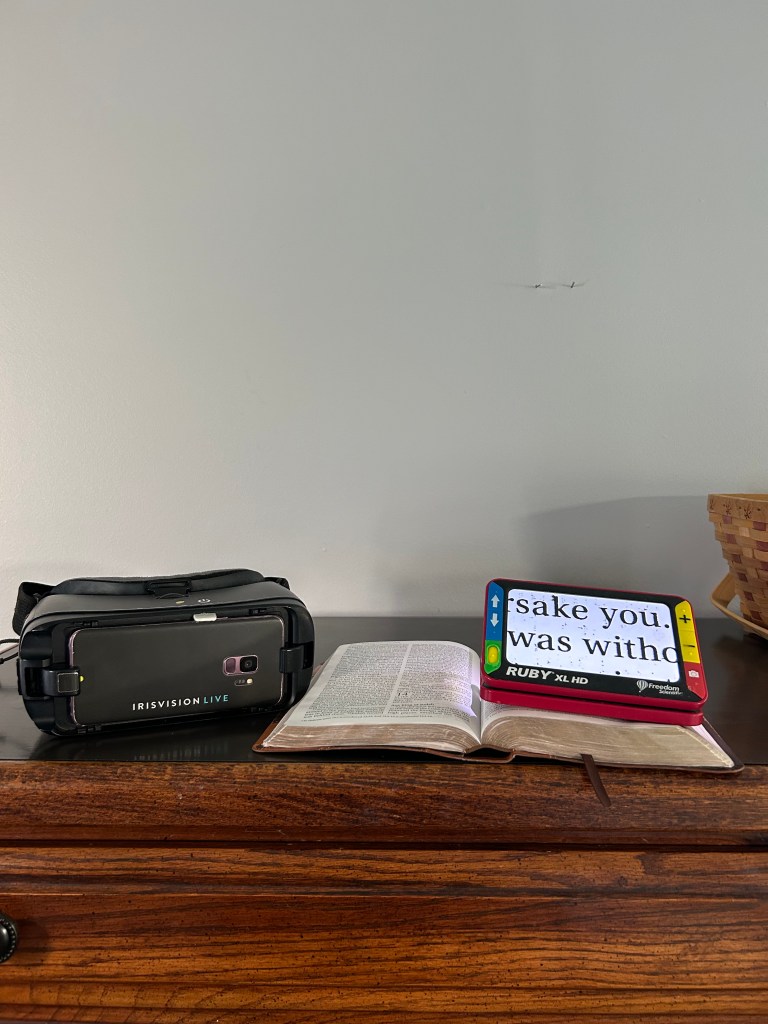
But you can still read books using audio books or even reading ebooks on Kindle by setting the background to black, setting the type to white, and setting the font as large as it will go. If you have Alexa, you can purchase an ebook on Kindle, and she will read it to you. You can go on Amazon to purchase tactile (bump) dots for appliances, remotes, computer keys, and more so you don’t have to use your sight to do those things. You can purchase a magnifier like Ruby that you can hold in your hand to read prescription bottles, recipes, cards from a friend, and check prices while shopping.

Large print cards to play solitaire, low vision cooking aids, talking scales, talking meat thermometers–they’re all available.

Free apps for your phone:

ReBokeh–a better magnifier than your phone’s magnifier and specially designed for the VIP (visually impaired persons) community

Seeing AI–hold the phone above what you want read to you, and it will read it It will describe scenes, objects, colors, and even people.

Be My Eyes–hit a large button, and it will call a volunteer who will access your phone to see what you can’t. The volunteer will help you do everything from finding a prescription bottle to describing a piece of clothing to identifying the can of soup you need from your pantry to reading the frozen food label. By the way, puff paints can work for identifying canned goods and spices.

There is hope. In our area, reach out to the STAR Center in Jackson. Each state has help for the blind, so contact them to get the services you need. I realize I’m writing this as though a person with vision loss can read it, but it is more likely a sighted person is reading it and thinking of someone they know who might benefit. Please help them find these resources. And for those of you who have been dealing with vision loss and adapting for a while–well, I know you’re listening to it as your phone or computer reads it aloud to you!

My book Learning to Live with Vision Loss has more detailed information including resources. Available on Amazon, it’s $2.99 as an ebook and $5.99 as a large-0print paperback. It’s free if you have Kindle Unlimited. It is my hope the book will help someone learn to adapt to a new normal.

“There she goes again,” you may be thinking. “Promoting her book.” In a way, yes. Not to make money. I’ve given away almost as many as I’ve sold.

For me, losing adequate vision to do many things I loved was devastating. It took a while to learn, adjust, and adapt. But I’ve done it, and I can now find joy and purpose in life. I know there are much worse things in life than losing vision, but honestly, when you’re the one going through it, it may be difficult to put things in the right perspective. The suicide rate among the blind/legally blind community is three times the national average.

So I hope this blog will help at least one person begin a journey of hope and accomplishment. For additional motivation, watch Losing Sight?, Finding Hope on YouTube. I think it will inspire you.

What does it really mean to be blind?

When people think of “blind,” they normally think of someone like Stevie Wonder, who is completely blind due to being born prematurely and lacking oxygen, which destroyed his eyesight.

But completely blind people, meaning people with no light perception at all, only make up 10 to 15 percent of the more than one million people in the United States considered to be blind. The other 85 to 90 percent have some light perception and even some functional vision. Another estimated four to six million people in the U.S. live with vision loss that cannot be corrected with glasses, contact lenses, or medical treatment.

October is Blindness Awareness Month, and since joining that one million in February 2020, I have made it my mission to learn how to live as normally and independently as possible utilizing techniques and assistive devices and apps to enable me to do most everyday activities. I will write about those things next week.

People in the VIP (visually impaired persons) community want those of you who are sighted to understand a few things. First, blindness is a spectrum. It is different for each individual. For me, I have no central vision in either eye and some peripheral loss, and the amount of vision I do have is 20/400 or sometimes 20/300 in the right kind of lighting. My friend Trent, however, has no vision at all in one eye and extremely cloudy vision in the other due to cornea issues. Diane has lost all vision in one eye due to glaucoma, and the other eye is declining rapidly.

I have more functional vision than either. I can see to walk just fine, although I have tripped over objects or dips in the sidewalk/road. I can cook using specialized tools, although I usually have some spills or make a mess. I clean my house, do laundry, do all the normal things a sighted person does.

But I can’t drive, I can’t read. I can’t see people’s faces. I can’t see the house next door if I look directly at it, but I can see it if I look up to the sky or down to the ground (peripheral vision). Like Trent, I have a constant fog, although it’s not as bad as his. I can see a car if it’s as close as 10 yards from me, but my blurry distance vision can only make out shapes if anything at all. Yet I have functional vision. And with the devices I use, I can function very well.

Confused? Of course you are. I would be, too, if I wasn’t on this journey. Sam Seavye of “The Blind Life” on YouTube has a great shirt available that says it all: I can see, but I can’t. It’s complicated.” Yes, it is.

I think I speak on behalf of the VIP community when I say that, as difficult as it is to understand, we have some days of better vision than others. We can do more than you might think possible, but at the same time don’t assume just because my peripheral vision picked up that dirty sock on the floor that I can see what you can. Understand that distance matters. Understand that lighting matters. Understand that contrast matters.

The term for people like me is “legally blind.” You might say you’re legally blind without your glasses, but you’re not. Legal blindness means you can’t see the big E on the chart even with glasses. Legal blindness might mean you only have a 20 degree field of vision when the sighted world has 90. Legal blindness might mean you see nothing more than light and dark.

For most of us, our vision continues to decline. We go along for several days and maybe even weeks and begin to think, “Well, I think it’s stable,” but then there’s a sudden drop. Most of us have had days of depression (or months or years), and we still experience frustration. But we accept. We have no choice.

My purpose in writing this? My mission is to educate the general public, inform the VIP community about ways to live an independent life, and offer support to those new to vision loss so they can have an empathetic ear. It always helps to talk to someone who understands what it is you’re experiencing.

I hope you’ll read my blog next week when I write about the devices I use and some of the apps. And if you’d like more detail, my book Learning to Live with Vision Loss is available for $2.99 as an ebook and $5.99 as a large-print paperback. Sorry, no audiobook, but if you have Alexa, you can purchase the ebook, and Alexa will read it to you.

Thanks for taking the time to read this lengthy blog. Please help spread the word: there IS hope after vision loss.