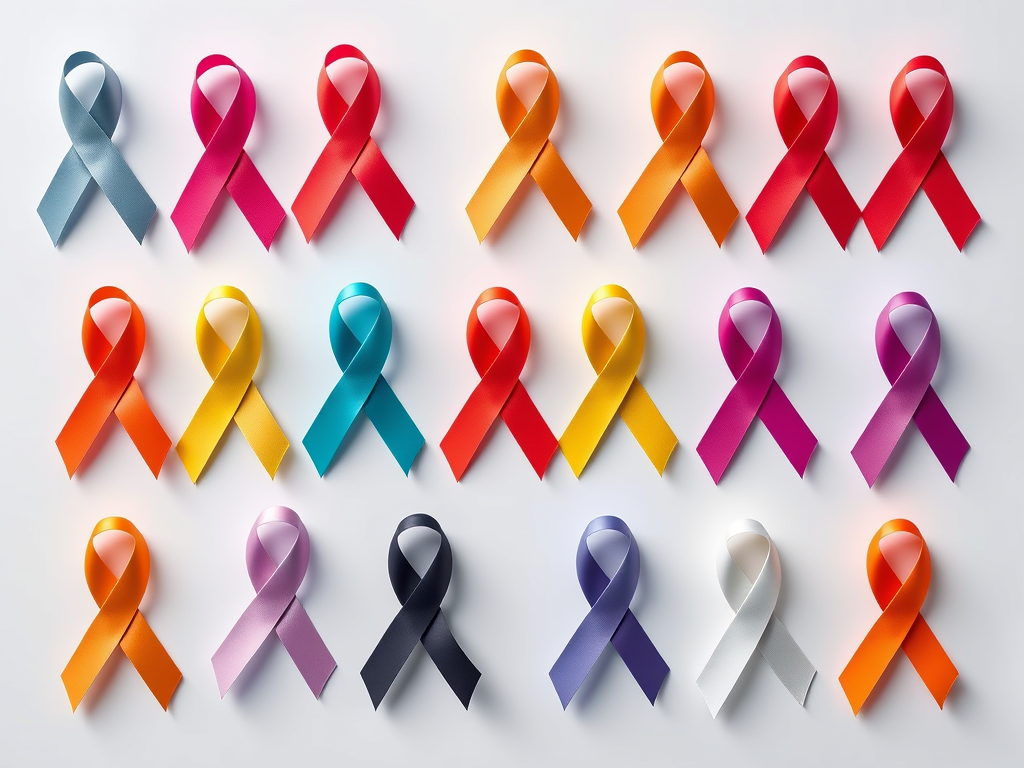
Cancer rears its ugly head–again.

As I write this, I have two cousins battling cancer. I have a good friend and neighbor in the hospital because of cancer. My daughter-in-law’s brother has been diagnosed with lymphoma. My niece has been battling cancer for over a year, and although she is cancer free, she has to continue her fight to keep it from coming back. A fellow church member was just diagnosed. All of these people, with the exception of my niece, are near my age. I guarantee we all know people much younger who have been diagnosed with this horrible disease.

So, with me being me, I did some research. According to the NIH records, I live in the heart of the area with the highest cancer mortality rates. Look it up. You’ll see most of the southern states plus Missouri, Indiana, Ohio, and Maine in the higher ranges. The highest? Oklahoma, Arkansas, Mississippi, Kentucky, and West Virginia. And maybe Maine if my color-distorted vision seeing a hugely magnified map is seeing correctly.

Why? Why these areas?

Is it genetics, with residents of these states going back for generations? Is it due to lifestyle? What we eat, whether we exercise or not, habits like tobacco use and drinking alcohol? Yes, sorry to disappoint, but research now shows that alcohol even consumed in moderation is a contributing factor to cancer. If you don’t believe me, look it up. Don’t take my word for it.

Is it because we did (and do) stupid things like sunbathe to get that golden tan without wearing sunscreen? I’m guilty. For years I spent time outdoors without sunscreen. Getting older and seeing the results of that bad choice plus having a precancerous squamous cell carcinoma removed from my nose was a wake-up call. A little late to gain some wisdom, but maybe not too late.

Let’s not forget about the warnings about eating processed foods, especially processed meat. Apparently, foods like bacon are a Group 1 carcinogen as well as deli meats and other foods we like.

I told my husband I didn’t think we Baby Boomers would live as long as our parents’ generation. He disagreed. He reminded me of how they ate foods fried in lard, ham, bacon, and other foods we are told are bad for us. True. But they didn’t grow up drinking soft drinks, eating bags and bags of potato chips, and as far as deli meat–well, bologna was a real treat, not a cheap food.

Their water was not as contaminated by chemicals. They grew their own food and got their water from wells that were not yet contaminated by ground water that contains harmful chemicals used in agriculture. Many ended up with heart disease in their older years, but medicines and surgeries prolonged their lives. My dad died three weeks before he would have turned 86. My mom died six weeks before she would have turned 94. Neither died because of cancer.

I honestly don’t know what the answers are. But if you’ve ever experienced chemo and other cancer treatments, you can tell the rest of us it is not a pleasant experience. You can tell us that cancer is always in the back of your mind.

But what is the purpose of this blog today? I don’t know. I guess it’s a way to express my dismay and my frustration. I wish I could fix it. I want to be more conscious of what I eat and lifestyle choices I make. I want to spread the word to others to make smarter choices. I want to encourage people, along with myself, to be smart.

I know President Trump addressing Congress last night is on a lot of people’s minds, and I get that. But you know what? However we feel about politics, there is little we can do. Yes, we can vote. Yes, we can share our views with our legislators. I have the privilege of living in a country in which I can express my viewpoints, and I feel I have an obligation to do so. But the truth is, my lone voice must be joined by many others to make any sort of a change. I can’t change anything on my own.

What, then, can I change? My lifestyle. My choices. True, genetics play a role. True, I can’t prevent everything. My vision loss has taught me that because there was nothing I could do to stop the condition other than see my doctor and have the eye injections and surgeries that served to delay the inevitable. But I’m trying to be smarter. Wear sunscreen. Swim only before 10:00 A.M. or after 2:00 P.M. Eat foods like blueberries, tomatoes, squash, and bell peppers which contain cancer-fighting nutrients. Watch my cholesterol. Eat heart-healthy foods to avoid heart disease.

Most people who see this blog won’t read it because…well, people just don’t have a lot of interest in blogs. Those who do read it will wonder why I wrote it and what business it is of mine. After all, can I really change anyone’s mindset about health issues? Probably not.

I can try, though. I can open the forum for discussion. I can donate to places like St. Jude and the American Cancer Society. I can try to educate others even though I’m not a health professional. What I am, by nature, is a teacher and a researcher. I want to share what I learn.

So I’ll raise a glass of FILTERED water and say “Cheers!” to those of you whose mindset is like mine. Let’s do what we can to end this horrible disease. And one more thing—

If you’re over 50, have you had a colonoscopy? This is Colorectal Cancer Awareness Month. If you have precancerous polyps, they are removed during the test. I have a friend who died because she never had a colonoscopy for screening purposes, and the cancer spread to her liver. She battled for about year and a half, if I remember correctly. She was only 62. As we know, that age doesn’t sound old anymore.

As always, if you took the time to read this entire blog, thank you. If it makes a difference in just one person’s life, my time is worth it.

Why me? Well, why not me?

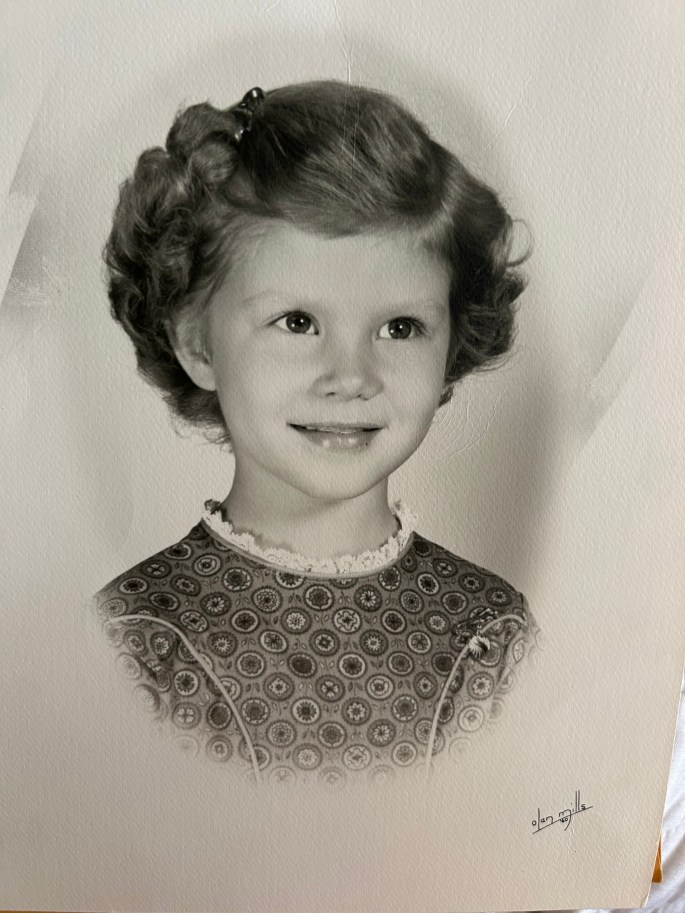
You may be wondering what this photo of a very young me has to do with the title of my blog, but read to the end, and you will find out.

I was talking with a fellow church member the other night, and during the course of the conversation, I learned about the many struggles and issues she has had for years because of her health. Diabetes has taken away her ability to drive due to neuropathy in her feet. That condition has caused her to fall, break bones that had permanent consequences, taken away her independence, and made even walking with her walker inside her own home a challenge. Because of the neuropathy in her hands, she has to support her hand holding a fork with the other hand to enable her to eat. Even at that, she drops food and makes a mess. And now the diabetes is attacking her vision. She has to get eye injections, something I know only too well, to keep the atrophy from spreading. So far, the shots are working and she can see well enough to read most things and watch television.

But diabetes didn’t cause the cancer she battled. It didn’t cause her husband’s cancer. Cancer is its own insidious disease. She is through with treatments and only has to go for annual check-ups, but friends and family who have had cancer tell me it’s always in the back of their minds, wondering if it will come back.

She’s just a few years older than I am, and when I did the math on when these problems began, I realized she was much younger than I am now.

So I asked her how she handled everything emotionally. She told me she just took one day at a time. “I never ask ‘why me?’,” she said. “My family won’t let me give myself a pity-party.”

Her attitude was upbeat, and I was impressed by the “one day at a time” philosophy. She was able to say this despite the fact she can’t dress herself very well due to the damage from one of her falls that broke shoulder bones and left her unable to raise her arms. You know what she does? She lays a front zip or front button garment, something we used to call a housecoat, on the bed, lies on it, slips her arms in it, and then fastens the front. If she needs to wear more appropriate clothing for being around others, her husband has to help her dress.

Yet no pity-party. No “why me?”

The truth is, some people have more struggles than others, and it doesn’t seem fair. Why should that cranky old man who growls at people in restaurants and drives his family crazy have such great health while this young mother or young child faces what seems to be insurmountable hurdles?

We all know people who have lived well into their nineties who never knew tragedies we all fear. They never lost a child, they never experiences severe health issues, they even never knew divorce or abuse or broken relationships. Maybe they outlived a spouse and suffered from the loneliness and loss of widowhood, but their losses were the normal ones, the expected ones if we live long enough.

Believe it or not, I’ve never asked “Why me?” with my vision loss. Don’t get me wrong, I hate it. I’ve cried plenty about it, but I’ve come out of the valley. Sure, I’d love to be able to see like most of you see, and there are still triggers that might bring tears to my eyes or cause me frustration.

But I know it could be so much worse. So I’ve learned to count my blessings and really mean it.

If we can find the blessings in our lives, despite the terrible tragedies we experience, we can get through them. If we focus on the simple blessings, we can realize that we can endure.

What does the picture of a very young me have to do with any of this? Well, It’s because that photo is a reminder of the innocence of youth. That little girl had no idea what lay ahead of her in life. I was cared for by her parents, and her biggest concerns were food to eat (well, I was a picky eater and not really into food…), a comfortable bed when tired, and playing with my cat and the few toys I possessed. I was too young to think of the future or worry about anything.

Some of you reading this have experienced more heartaches than I have. It could be your joy will never fully return because of the losses you’ve had or the struggles you continue to face. But maybe, if you’re asking “why me?,” it will help you to know there are others enduring the same or even worse situations.

Life can throw a lot at us. But it never helps us or anyone else to ask “Why me?” That doesn’t mean we can’t be sad or grieve or get frustrated. But accept that this world is full of heartaches and problems. And don’t feel as though you’ve been singled out for punishment.

No one ever said life was fair. But the strong know how to persevere.

I am a praying person and a Christian. My prayer for those of you who might be asking “Why me?” is for you to understand and accept life’s challenges and that you will take your negative and turn it into a positive to help others. Mentor someone going through the same struggles you’ve had. Visit or call the lonely. Participate in organizations who are connected to your cause. Don’t allow yourself to become isolated and bitter.

Sorry for the sermonette. No, I’m really not. I think it needed to be said. You can disagree with me, and that’s fine. But I can’t help but imagine what a wonderful world it would be if people were kinder, more understanding, more helpful, and less focused on self. I’m including myself in that admonition. I need to do more, to think less of me and more of others.

And I don’t ever need to ask “Why me?” There are 8 billion people on this planet. Why not me?

What does it really mean to be blind?

When people think of “blind,” they normally think of someone like Stevie Wonder, who is completely blind due to being born prematurely and lacking oxygen, which destroyed his eyesight.

But completely blind people, meaning people with no light perception at all, only make up 10 to 15 percent of the more than one million people in the United States considered to be blind. The other 85 to 90 percent have some light perception and even some functional vision. Another estimated four to six million people in the U.S. live with vision loss that cannot be corrected with glasses, contact lenses, or medical treatment.

October is Blindness Awareness Month, and since joining that one million in February 2020, I have made it my mission to learn how to live as normally and independently as possible utilizing techniques and assistive devices and apps to enable me to do most everyday activities. I will write about those things next week.

People in the VIP (visually impaired persons) community want those of you who are sighted to understand a few things. First, blindness is a spectrum. It is different for each individual. For me, I have no central vision in either eye and some peripheral loss, and the amount of vision I do have is 20/400 or sometimes 20/300 in the right kind of lighting. My friend Trent, however, has no vision at all in one eye and extremely cloudy vision in the other due to cornea issues. Diane has lost all vision in one eye due to glaucoma, and the other eye is declining rapidly.

I have more functional vision than either. I can see to walk just fine, although I have tripped over objects or dips in the sidewalk/road. I can cook using specialized tools, although I usually have some spills or make a mess. I clean my house, do laundry, do all the normal things a sighted person does.

But I can’t drive, I can’t read. I can’t see people’s faces. I can’t see the house next door if I look directly at it, but I can see it if I look up to the sky or down to the ground (peripheral vision). Like Trent, I have a constant fog, although it’s not as bad as his. I can see a car if it’s as close as 10 yards from me, but my blurry distance vision can only make out shapes if anything at all. Yet I have functional vision. And with the devices I use, I can function very well.

Confused? Of course you are. I would be, too, if I wasn’t on this journey. Sam Seavye of “The Blind Life” on YouTube has a great shirt available that says it all: I can see, but I can’t. It’s complicated.” Yes, it is.

I think I speak on behalf of the VIP community when I say that, as difficult as it is to understand, we have some days of better vision than others. We can do more than you might think possible, but at the same time don’t assume just because my peripheral vision picked up that dirty sock on the floor that I can see what you can. Understand that distance matters. Understand that lighting matters. Understand that contrast matters.

The term for people like me is “legally blind.” You might say you’re legally blind without your glasses, but you’re not. Legal blindness means you can’t see the big E on the chart even with glasses. Legal blindness might mean you only have a 20 degree field of vision when the sighted world has 90. Legal blindness might mean you see nothing more than light and dark.

For most of us, our vision continues to decline. We go along for several days and maybe even weeks and begin to think, “Well, I think it’s stable,” but then there’s a sudden drop. Most of us have had days of depression (or months or years), and we still experience frustration. But we accept. We have no choice.

My purpose in writing this? My mission is to educate the general public, inform the VIP community about ways to live an independent life, and offer support to those new to vision loss so they can have an empathetic ear. It always helps to talk to someone who understands what it is you’re experiencing.

I hope you’ll read my blog next week when I write about the devices I use and some of the apps. And if you’d like more detail, my book Learning to Live with Vision Loss is available for $2.99 as an ebook and $5.99 as a large-print paperback. Sorry, no audiobook, but if you have Alexa, you can purchase the ebook, and Alexa will read it to you.

Thanks for taking the time to read this lengthy blog. Please help spread the word: there IS hope after vision loss.