Blog

Y’all, you guys, or you’uns?

barrier-fence-gate-51002

I love languages. I think it began with my love of reading in elementary school, but it continues to this day. I loved English in school, easiest subject for me.  Two years of Latin in high school, which I loved. (I was in the minority. Someone wrote in my Latin 2 book: “Latin is a dead language. It killed the Romans, and now it’s killing me.”)  I majored in Spanish and minored in French in college.

You get the idea.

It is no surprise, then, that regional differences in English are interesting to me. Why do people from the North say “sneakers” and most people in the South say “tennis shoes?” Why do Southerners in rural areas say “supper” and city-dwellers say “dinner?” Or does it vary by family?

Writers need to understand these differences, which is why I always set books in regions with which I am most familiar. I would never set a book in New York, for instance, because I don’t know the area, don’t know the idioms and attitudes, don’t know the culture at all. I stick to books set in the South and West, the areas in which I’ve lived. Even doing that, I’ve made mistakes.

For years, well into adulthood and in spite of all my language studies, I called the stuff you see in the picture “rod iron.” It wasn’t until after my first book was published that ar reader pointed out to me that the correct term is “wrought iron.” She was right. “Rod iron” is a material used to cut nails (the kind used in construction, not the ones on your fingers). “Wrought iron” is the decorative stuff.

My husband makes fun of me for saying “loaf bread” in stead of “loaf of bread.” That’s the way my parents always said it, as in “I’ve got to buy some more loaf bread.”

In Arizona, where I spent my childhood years, my friends and I said “you guys” for the plural even when talking to a group of females. People out there drink soda. People in the South drink Cokes, even if you’re buying Dr. Pepper. It’s all Coke. in the North, I think it’s “pop.” Our daughter-in-law, who is from a few hours north of us, gets a kick out of us having our picture “made” instead of “taken.” And let’s not forget a phrase every Southerner understands only too well–fixing to. “Hey, Johnny, have you done your homework yet?” “No, Mom, but I’m fixing to.” Important side note: fixing is ALWAYS pronounced fixin’ in this situation.

I’m sure people who have studied language origins and trends could explain all of this and give us a very detailed explanation as to how various cultural influences  affect our words and accents. As much as language interests me, however, I’m not going to do extensive research on it.

But I notice. I noticed when our waitress in a Cracker Barrel in Ohio called us “you’uns.” I notice when my mother eats dinner instead of lunch. I think dinner is a big midday meal and lunch is a light meal for her. I notice when I’m reading a book set in the South and it is obvious to me from the dialogue that the author of the book is not from the our region and has no idea how we talk.

Maybe this has been food for thought for you writers and even for those who aren’t. The words we use and the way we say them identify our heritage and upbringing as much as or more than anything else.

I’d love to know some expressions that are common to your area, so please comment on my “Pam Harris, author” Facebook page. I’ll look forward to reading them. Let’s celebrate our differences!



Quick, flavorful, easy recipe ideas

gtillers crumbles

Okay, I confess. I left out a very important word in my blog title. The word is…healthy.

I left it out because most people automatically think “healthy” means “not good.”

I disagree. Over the years, I’ve experimented, adapted, succeeded at times, and failed at times to discover flavorful meals that are healthy, satisfying, quick, and cost-effective.

Take the crumbles in the picture, for example. I use them in spaghetti sauces, “beef” and bean burritos, homemade soup (taco soup and vegetable soup), stuffed peppers, and more. The texture is better, finer, than ground turkey, and if you don’t tell anyone the crumbles are vegetables instead of meat, they’ll likely never know. Well, maybe that’s an exaggeration, but it’s likely not enough of a difference to matter to them. The crumbles are already cooked, so all you have to do is add them to whatever you’re cooking, which is a huge time saver.

Another great time saver with some variety? Rotisserie chicken. I buy the ones at Walmart that have been chilled (well, go ahead and buy the fresh if you’re using it that day), and I use the meat in chicken tacos, chicken burritos, chicken chimichangas (will explain in a moment), homemade soup, barbecue chicken sandwiches, and in salads. You can have a meal ready in fifteen minutes with a rotisserie chicken.

Which brings me to a recipe I found years ago in Southern Living magazine. I no longer have that edition, and my memory may fail me on exact amounts, but here is their recipe and the way I now make it (keep in mind you must use a rotisserie chicken, not cook your own chicken. The flavor won’t be as good.)

Easy chicken chimichangas

6 large taco size flour tortillas or burrito size flour tortillas

1 rotisserie chicken, traditional or lemon pepper or farlic

1/4 onion, finely chopped (optional)

1/2 cup canned whole kernel corn, drained

1/2 cup black beans, rinsed and drained

1/4 cup salsa verde

1/2 cup shredded cheese (optional, but sharp cheddar or taco cheese works best)

Directions:

Remove skin from chicken and pull meat off, being careful to remove all bones.  Pull chicken pieces into shreds and chunks with your fingers. If using a chilled chicken, place in microwave and heat for one or two minutes, just enough to cut the chill from the chicken. Add other ingredients and stir well. Place mixture in each tortilla and fold burrito-style, securing with toothpicks. In a large skillet on medium high heat, pour 1/4 cup of canola oil. Place burritos in skillet, cook approximately three to four minutes per side, using tongs to turn over. Be careful to avoid burning, tortilla should be crisp and brown but not burned. Remove from skillet and serve immediately.

I always make homemade salsa and sometimes guacamole to go along with it.

Don’t want to fry them, want burritos instead? Place all six in a pan that has been coated with cooking spray. Top with cheese, place in a 350 degree oven, and bake until cheese is melted.

When I make these for my husband and me, I always have too much chicken mixture because I only need to make two chimichangas instead of six. I freeze the leftover mixture and use it later in taco soup.

Here’s my taco soup recipe:

1 large can tomato juice

1 pkg. ranch dressing dip mix (brand doesn’t matter)

1 pkg. taco seasoning (I usually use Taco Bell)

1 pound of browned, drained ground beef OR 1/2 bag of the crumbles pictured above

1/2 small onion, finely chopped (optional)

1 large can green chiles (NOT jalapeños unless you like that sort of thing)

1 can rinsed and drained black beans

1 can whole kernel corn

Place everything in a large pot, bring to a boil then reduce heat and cook on medium to medium low heat for fifteen minutes. Another option is to place all ingredients in a crockpot and cook on low for a couple of hours.

NOTE: My son likes it spicier, so he uses two packages of fiesta ranch dip mix and two packages of taco seasoning. A little too spicy and too much sodium for me!

If you’re using the leftover chicken mixture described above, just the juice, ranch and taco seasoning mix, and the chicken mixture is all you need.

For less sodium in these recipes, look for the no salt added corn and beans or use fresh or frozen instead of the canned.

Happy cooking!


Walk a Mile in (Someone Else’s) Shoes

20180723_191850

You probably don’t know who the little boy is in this sketch. I’ll reveal it at the end of this blog.

But you can tell he’s poor. The uncombed hair, the sad look, the shirt. He faced discrimination while growing up, was ridiculed, literally lived “on the wrong side of the tracks.”

As humans, we have a tendency to be judgmental. Whether we are rich, poor, or middle class, we judge others without knowing their stories, without acknowledging that they may be walking a different path.

I was raised in the middle class, so I have no idea what it’s like to go to bed hungry or not to have a place to live. As a white woman, I have no idea what it’s like to be a member of a minority. As a college graduate, I have no idea what it’s like to lack the education to find a better job. As an American, I have no idea what it’s like to live in a country that is so unsafe that I would walk miles and miles just to get me and my family to a safer place.

There is no doubt that people make their own choices in life. I can cite at least two instances I know personally of two men who overcame their backgrounds and achieved success, two within my own expanded family circle. They overcame with strong work ethics that exceeded their natural-born talents. They are success stories.

Whoa, let me back up. I just wrote that people make their own choices in life. True yet not true. Young children don’t make their choices. Illness, accidents, and other obstacles sometimes make choices for us. As a former teacher, I do know that intelligence levels cover the spectrum, and some people just don’t have the intelligence to earn a decent living in our non-manufacturing society, as harsh as that sounds. Additionally, some people find it more difficult than others to resist the temptations of alcohol and drugs.

Don’t misunderstand me. Right is right, and wrong is wrong. We don’t need to make excuses for our behavior or the behavior of others. Just because you are poor doesn’t give you the right to steal. Just because you are rich doesn’t give you the right to defraud others for even greater financial gain. No circumstance can justify illegal activities.

Yet if anyone as described above repents, tries to make things right, and changes his or her ways, I think we should accept it and let the past be the past.

What a better place this world would be if we’d help instead of condemn, be patient instead of becoming angry, and treat others the way we’d like to be treated. Try to be more understanding while still not accepting wrong. Show compassion but don’t condone.

I sketched the above picture several years ago from a photograph in a book. That poor little boy grew up to be rich, but he never forgot what it was like to be poor. He made numerous mistakes in his adult life, and I would never condone some of his behaviors. But this poem and song as performed by him express the essence of my blog today.


Doing what you can instead of bemoaning what you can’t

On Dec. 1, 2018, I jogged/walked 13.1 miles at the St. Jude Marathon fund-raising event in Memphis. I recorded this on Riverside Drive as I was approaching mile marker 4. I had never done a half-marathon, not even a 5K, but I’d always been a fitness walker, and completing the half-marathon had been on my bucket list since I was in my forties.

I finally did it at 62. I finished the 13.1 miles in three hours and 17 minutes.

26,000 people participated in this one event, people of all ages. And most of them were not marathon runners. Most were like me, jogging a bit then walking a bit. Some walked the entire half-marathon. I passed a man wearing a neon yellow shirt reading “Blind Runner.” He was tethered to another man, also in a neon shirt, and he was walking instead of running, but he was doing it.

Everyone that knows me knows that the event was the highlight of my 2018, even though I also retired that year. There are many reasons for my feelings, but that is not the purpose of today’s blog.

The point today is to look for what you can do instead of dwelling on what you can’t, then do it.

We are often told we can do anything we set our minds to do, but that’s not entirely accurate. That blind man couldn’t run/walk the race without help, and I doubt he was able to actually run as there were occasional obstacles on the street that could have tripped him. But he was able to walk. He was doing what he could.

I know nothing about the gentleman, but I do know there are countless things he can’t do. He can’t read a normal book or watch TV. He can’t drive a car and likely can’t cook his own meals. But he can listen to audio books, listen to television programs, ride in a car driven by someone else, and maybe use a microwave.

And, with help, he was able to raise money for kids fighting cancer. He was a part of something that was bigger than himself. I imagine he felt even better than I did when he crossed that finish line.

That man has no idea what an inspiration he was to me. I have no idea what caused his blindness. Maybe he had cancer himself that caused him to lose his sight, and he wanted to do something to help others. Maybe he’s been blind from birth or had a congenital defect that took his sight. Whatever the cause, he wasn’t allowing it to stop him from doing what he could do.

A lesson for all of us, I think. Life is going to throw us some curve balls, and adversity will strike at some point. Illness and death are a part of life, but until we are faced with the inevitable, we can make the most of our lives with the abilities we have now.

Like the blind runner, I had help achieving my goal. My family, especially my daughter-in-law, were of great help and support. Generous contributors gave money to my fund-raising campaign. At every mile marker, employees of Memphis businesses were holding cups of water and Gatorade to keep us hydrated as we plugged along. There were residents cheering us along, musicians playing as we ran/walked by, and perhaps the most touching, St. Jude employees and patients thanking us as we ran across a small part of the St. Jude campus

So the next time you’re feeling discouraged about what you can’t do, think of the blind runner. He did what he could. You can too.


Caring for an elderly parent

man person people men
Photo by Pixabay on Pexels.com

No, this isn’t a relative of mine. It is a stock photo online.

I normally post recipes on Tuesdays. But I thought maybe this topic needs to be written about and shared. Why? Because no one wants to talk about it. If they do, they feel disloyal. They feel like unloving children. They feel like people will judge them for feeling this way.

There is no doubt in my mind that we should respect the elderly. Other cultures revere the elderly for their wisdom and life experiences. Our culture, not so much. We tend to revere youth and fight aging with all our might. That focus on youth may make us intolerant of the elderly. Impatient with them. Even avoid them.

Before I begin what this blog is really about, let me say to you: If you placed your mom or dad in a nursing home and seldom see them or call them, shame on you. Well, shame on you if they were decent parents. If they were abusive or neglectful parents, well…that is your call. Maybe they are getting what they deserve. I don’t know, not my call to make. I know I live by the motto of doing right by others even if they don’t do right by me, but that’s my personal philosophy, the attitude that helps me look at myself in the mirror every morning. That’s just who I am. Yet I had good parents, so I don’t know how I would react to parents who were bad ones.

However, that is not what I’m talking about today. I’m talking about the children who had decent parents, who are now caring for them, and who often feel burdened, in spite of their love for their parents, because of the parents being the way they are.

I firmly believe that our negative traits are worse in old age, so look at your negatives right now and realize those traits are going to drive your kids crazy someday. If you strongly voice your opinions now, you’ll voice them in old age. If you are a hypochondriac now, that will worsen in old age. If you are fearful now, you will be fearful then. If you’re bossy now, you will be even worse. It goes on and on. Maybe you need to ask your family what your negative traits are so you can start working on them now.

The complexity of dealing with aging parents is that you want to respect and honor them but at the same time not be used by them. Sometimes they can be pretty selfish. Ever notice how an older person will fixate on something that needs to be done around the house that they can’t do and will go on and on about it without considering you’re working full-time and are very busy? Something that is not an emergency at all? Like that hole in the back yard that a neighbor’s dog dug and your parent wants it filled. Today. Now.

Or going to the doctor over every little thing. Your parent can’t drive anymore and want you to drop everything and take them at 12:30 on your lunch hour because he’s had a dry cough for three days. The one who wants you to take her to the emergency room over things like a nose bleed. The one who calls you at 2:00 a.m. and wants you to come over because his heart feels weird. The one who calls 911 for too many things.

You have to help calm their fears. You have to know what the real emergencies are. You have to be the parent of your parent.

What about the parent who complains about the food you bring or doesn’t show appreciation for the things you do? Not my personal case, but I’ve talked to people whose parents who can no longer cook complain about the food their children fix for them. Or the parent who refuses to give up driving, even though it is unsafe for the parent and the rest of society.

You love your parents. You want to do right by them. It often seems they are inconsiderate and selfish, and the truth is, many are. Some of you are lucky to have healthy aging parents, independent parents. But most elderly people are not that way.

Every parent, just like  every child, is unique. Caring for an aging parent can be challenging, even frustrating, exhausting (emotionally and physically), and even funny at times. Some parents are fiercely independent when they shouldn’t be, and some are totally dependent even though they could be more independent. Some are grouchy, some are kind. Most of them live in the past, and you listen to the same stories over and over. Be patient. Let them tell them. It’s what makes them happy.

Honor your parents. Do right by them, but sometimes, just like with a child, you have to discipline them, Kindly but firmly. No, Mom, we’re not going to the emergency room for a nose bleed. We’re going to stop it. No, Dad, I’m not filling that hole today. Wait until Saturday when I’m off. Dad, do you know how it makes me feel when you complain about the food I cook for you? I’m doing the best I can.

If you are dealing with an aging parent, know that you are not alone. Hang in there, and try not to let the emotional burden wear you down. Talk with a friend who is doing the same or even seek a support group. Sometimes just talking about the issues helps to relieve the stress.

Our society has trained us to be selfish. We have to work to overcome it, whether we are the elderly parent or the caregiving child or grandchild. It’s not easy.

But worthwhile things seldom are.

No cook, easy freezer lemon ice box pie, low calorie and delicious!

bubbles citrus citrus fruit close up
Photo by Pixabay on Pexels.com


This is super easy and not as heavy as the traditional lemon ice box pie.

Ingredients:

1 large can Carnation milk

3 eggs, yolks separated from whites

1 cup granulated sugar

Juice from 3 large lemons

One packet of graham crackers, crushed

Instructions:

In a bowl, beat with a mixer the milk until frothy, add sugar and egg yolks, and beat mixture until well blended. In a separate bowl, beat egg whites until stiff. Add beaten egg whites to the milk and sugar mixture and blend. Add lemon juice and blend.

Spread crushed graham crackers on the bottom of a glass 11 x 9 dish (could be 13 x 9, but 11 x 9 is better), all except 3 tablespoons of crushed graham crackers. Pour beaten mixture on top. Sprinkle remaining crushed graham crackers (the 3 tablespoons) on top of the beaten mixture and place in freezer, covered, until frozen. Serve frozen.

Tuesday recipe––easy chocolate oatmeal cookies

baked cookies
Photo by khats cassim on Pexels.com

This easy cookie recipe came to me from my mother-in-law, and it is so easy, my husband even makes them., He claims he does a better job than I do…and he’s probably right!

Quick Oatmeal Cookies

Ingredients:

2 cups granulated sugar

1/2 cup Hershey’s cocoa

1/2 cup milk (I use 2%)

1/2 stick butter

3 cups of quick oats

In a saucepan, place sugar, cocoa, and milk. Bring to a rolling boil on high heat, stirring once or twice (I use a wooden spoon). Remove from heat and drop in 1/2 stick butter, stirring until butter melts in the mixture. Stir in oats, one cup at a time. Drop by spoonfuls on waxed paper and allow to harden. If the cookies are not hardened within a couple of hours, you’ve likely undercooked the mixture, but hey, that’s okay! Just eat them with a spoon!

Teacher Appreciation Week––everyone, please read this.

teacher humor

Okay, look out. I am about to go on a rant, so be prepared. And it’s not just about testing in schools. It’s more, much more.

First, it is Teacher Appreciation Week. A huge shout-out to all teachers everywhere  or at least to the teachers who are doing their jobs. A huge thank you to my former teachers (the few that are still alive), my children’s former teachers, and my former co-workers.

Now for my rant. It’s directed to parents, teachers, principals, school boards, and educational leaders. I’m retired now, so I can rant without fear of being fired or of making a parent mad.

Teaching, if done correctly, is one of the hardest jobs you can do.

Don’t believe me? Try it. I switched from a banking career, in which I was a loan officer and bank vice president, to teaching when I was thirty. I had never done student teaching or taken an education class. And I learned very quickly that even though I knew my subject matter, I was clueless about how to teach effectively. To my first-year students, I apologize. I didn’t know what I was doing. But I learned.

Of the thirty-two years I worked in education, twenty-five were spent in the classroom. I averaged fifty-hour work weeks. Some weeks more like sixty, especially when you consider all the extra-curricular responsibilities on top of preparing lessons, grading papers, and other things that cannot be explained to non-teachers.

It was hard work. As a principal, the stress was greater, but I enjoyed the work more. That’s just me.

But I chose it, and it worked out. I loved working with students (most of them) and miss seeing them as well as my co-workers now that I’m retired.  So what am I ranting about today? Here goes:

To parents: My two sons were not perfect, and guess what, yours aren’t either. One of my children was a talker and got in trouble for it frequently. I told his teachers, “Give him a detention, he deserves it!” If my child misbehaved, I expected him to be disciplined. However, parents, if your child gets in trouble at school, some of you want to blame the school. Seriously? Do you really think teachers have it in for your child? No. But if your child is misbehaving and disrupting the learning activities in class, your child is making an already difficult job more difficult. Your child is preventing other students from learning. There might be a teacher who seems to be “picking on” your child, in which case you need to schedule a conference. But it your child is getting into trouble with several, guess who’s at fault?

To teachers: Most of you are doing the best jobs you can do. You each have different abilities, and the truth is, some of you do a better job of teaching than others, whether due to personality or ability or knowledge. My complaint is with those of you not giving your best. Some of you make other teachers’ jobs more difficult. You’re the teachers not doing your jobs. You let the kids violate school rules in your classroom. You don’t actually teach. You manage to keep your job somehow. Oh, the kids love your class. After all, you make them do very little. You teach maybe twenty minutes and allow them to talk the remaining thirty. You give open-book or open-note tests, not expecting them to really learn anything. By the way, I’m referring to high school teachers here. I never hear about this scenario at the middle school or elementary levels. And before anyone gets worked up about this, I’m not referring to a specific high school. I’ve worked in three and talked to teachers in many others, so take it how it’s meant to be. This is a generalized problem in high schools everywhere, even in other states. And, teachers, please read what I have to say to principals as I address you once more.

To principals: You have a difficult job, more stressful than a teacher’s. You have to deal with students, teachers, parents, supervisors, the community at large, the school board, and the director of schools. Not an easy task. You are expected to hire and retain the best teachers, although that is not always easy. You make mistakes. I surely did. You’re human. We all make mistakes. But what do teachers need from you? Consistency in school discipline and your support. They need you to back them up when they’re just doing their jobs. If little Johnny is failing their class because he has five zeroes and Mama is angry at the teacher, they need you to be o their side. For everything from the dress code to school policies to detentions for misbehavior, they need you to be their champion. If they’re in the wrong, please address it with them privately. And a personal “thank you” from you to them, collectively and individually, can go a long way in motivating them to work twice as hard. A side note to teachers: if you are not enforcing the school rules, you are making the principal’s job even more difficult as well as your fellow teachers. The most efficient schools are the ones in which everyone is on the same page. I always appreciated the teachers I had at the middle school because, for the most part, they were on the same page when it came to school policies.

To school boards: First, thank you for doing a thankless job. You have to hear complaints from parents and teachers. But teachers know education. Talk to them. Find out what their concerns are. I know, you represent the community, but teachers, as a whole, know what will work best in education. Hear them out.

To school district leaders: You have to do what the state powers-that-be tell you to do. Teachers don’t always get that. You have to make hard decisions. You have a high-pressure job. Teachers don’t usually show their appreciation to you, only their dissatisfaction. So communicate with them. Explain to them why things are the way they are. Trust them to understand. Explain to them why you can’t share everything for confidentiality reasons. A lot of teachers may not understand the legal implications of school cameras, police presence, and more. If you explain it to them, they will be more understanding and less likely to complain or criticize. Communication is the key.

I realize everyone has different opinions about public education, and in light of the recent legislation passed in our state, my heart is saddened to think of the future ramifications. If this legislation results in larger class sizes for public school teachers and fewer resources, we will lose our best teachers. The job is already challenging.

This is Teacher Appreciation Week. Most teachers are in the profession because they love working with kids and they love sharing knowledge. I hope you show appreciation to your local teachers, especially those of you whose children are in school. No gifts necessary. A simple email or thank-you note will end up in a teacher’s collection of the few kindnesses shown to them in their career.

Appreciation goes a long way with anyone.


Discovering the world of audio books

I don’t remember my mother reading aloud to me when I was a child, although I know she did. When I was old enough to read on my own, I much preferred curling up with a book somewhere and escaping to worlds unknown. I never enjoyed following along as someone else read aloud in school because I could read so much faster silently than they could (or I could) out loud, and I especially didn’t like it when teachers read aloud to us. Well, the exception to that is Mrs. Haney in fourth grade. She read Heidi to us, and I was captivated. I wanted to live in Switzerland on a mountain after that.

You can see why  audio books never interested me.

Until life threw me a curve ball.

If you follow my blog or know me personally, you know I have vision issues that prevent from doing the one activity I love more than any other. Holding a book in my hands and reading. Thanks to the world of technology, I can do limited reading on tablets or the computer, but even that is a struggle.

When my son and daughter-in-law gave e a six-month subscription to Audible for my birthday last year, though, my life was forever changed.

I LOVE audio books, and I regret not discovering them sooner. I listen while cleaning house, while eating my lunch alone at home (I’m retired), while walking (I am a fitness walker), even while working in the yard. You can listen to them while traveling, at the gym, waiting at the doctor’s office, etc.

All you need is your cell phone (well, I guess a tablet too) and occasionally ear buds.

You can check out audio books (the kind you put in a CD player or the kind you download to your smart phone) through your library. Our local one uses an app called Libby. My understanding is there are other free sources out there as well. The Audible subscription I have (my kids gave me a renewal for Christmas) allows me to download one book per month. With most books being anywhere from ten to fifteen hours of read-aloud time, that works out fine for me.

However, there is one problem.

Some readers are, well, not so good. I’ve tried a James Patterson book that I couldn’t finish. I think I have six hours left on it, so maybe I’ll get back to it someday. A Colleen Coble book that I have no doubt would be a great book to read, but the narrator/reader…well, it was a struggle.

Suggestion: try the sample audio before purchasing or borrowing.

Here are some I’v listened to over the past year that are terrific books with very enjoyable narrators/readers who do the book justice, in my opinion.

  1.  The Reckoning by John Grisham. This book reminded me why I began reading his books years ago. This is one of his best. I also enjoyed Camino Island, but that may be because I’m a writer, and the book’s main characters are writers and/or book lovers.
  2. Before We Were Yours, Tending Roses, Good Hope Road by Lisa Wingate. I am a huge Lisa Wingate fan. I think I’ll start a fan club.
  3. The Nightingale by Kristin Hannah. A fantastic book, and I was impressed that the reader actually pronounced the French words correctly! (I’m a retired Spanish and French teacher.)
  4. The Whole Town’s Talking by Fannie Flagg. What an enjoyable book! The last chapter or epilogue is a little weird, but I’ll let you figure that one out.
  5. The Cinderella Murder by Mary Higgins Clark. If you like her mysteries, you’ll like this audio book.

These are a few of the wonderful books I feel comfortable recommending. If you’ve never tried an audio book, try one. My world, turned upside down by that curve ball I mentioned, is a much happier place.

Oh, I forgot another great way to use audio books. By the pool or on the beach! Put on those sunglasses, put in the ear buds, lean back, and relax. The only problem? You might fall asleep, but you can always rewind.

Happy listening!

Pineapple Pie, oh, my!

20190430_074931

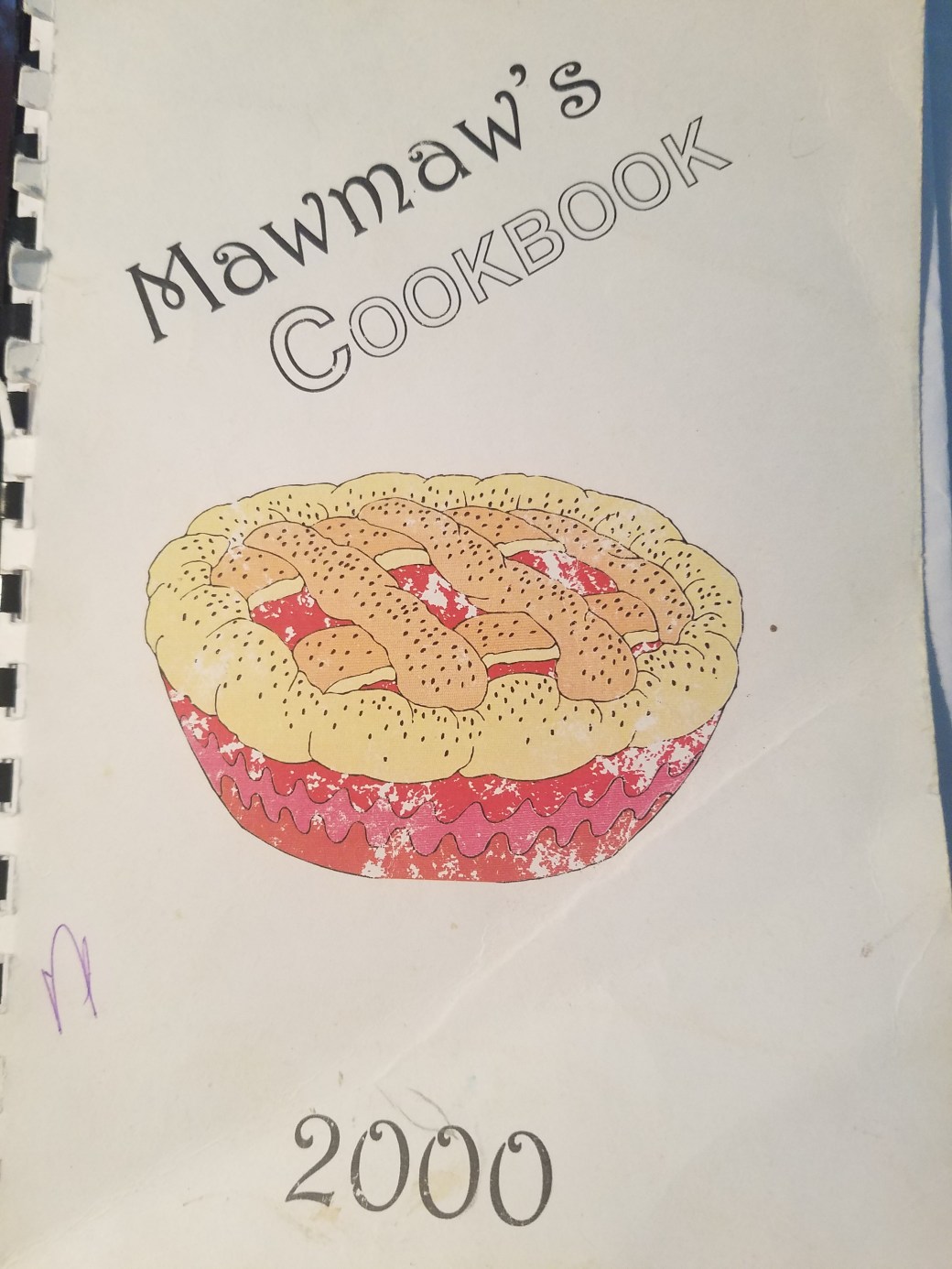
My husband’s grandmother, known as Mawmaw to all the grandchildren and in-laws, lived ro be over 100. Until she became too feeble and weak to do things for others, she always insisted on getting something for everybody at Christmas, even though her family had grown considerably. In 2000, her daughter and I helped her put together this cook book, a keepsake for the descendants. It contains her favorite recipes as well as cooking tips, recipes for life, and some family photos.

One of my favorites is her sister Vada’s pineapple pie recipe. I love pineapple, whether fresh, frozen, or canned, so this delicious pie suit me like no other!

Pineapple Pie

Ingredients:

1 frozen pie crust, thawed for 15 minutes then baked at 350 for 10 minutes. Remove and cool while mixing the ingredients following.

1 1/2 cups of sugar

1 stick butter or margarine, melted

3 eggs

1 teaspoon vanilla

1 tablespoon corn meal

1 tablespoon white vinegar

1 small can crashed pineapple, drained

Mix sugar, butter, and eggs. Add vanilla, corn meal, and vinegar. Beat until foamy. Stir in pineapple. Pour into prefaced pie crust and bake at 350 degrees for 45 minutes.

Serve warm or room temperature.