
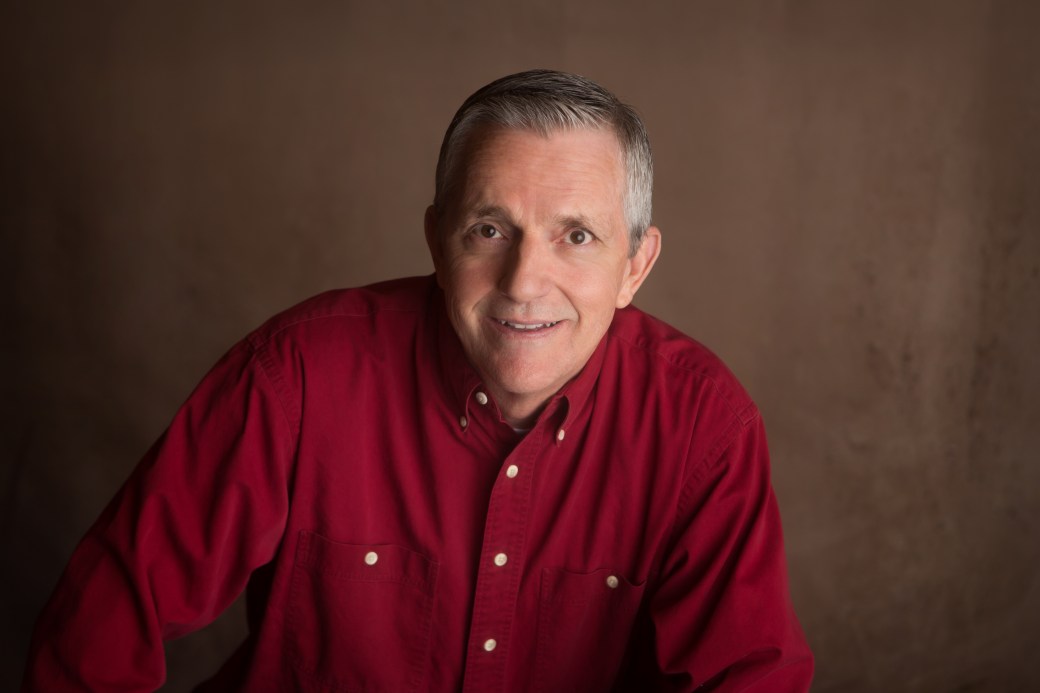
Today I am happy to welcome best-selling author, David Johnson, to my blog. David, please tell us a little about yourself.
I began my career as a high school teacher (music and English), but after nine years I decided to become a full time Youth and Family Minister. Now, for the last 25+ years I have been a Licensed Marriage and Family Therapist. I have also directed a community chorus for the past twenty years.
I’ve been married 46 years, have two daughters, six grandchildren, and one great-grandchild.
I mentioned above that you are a best-selling author. I was referring to your status with Amazon. Can you elaborate about what that means?
Amazon gives constant updates to the author rankings and book rankings. I’ve had several books that have reached #1.
It’s interesting to look more closely at how all the different groups that rank books and authors (c.f. New York Times) calculate their listings.
I know some of your books are self-published. How does the self-publishing experience differ from traditional publishing?
The advantage of self-publishing is that you have complete control over every aspect of the process. That is also the disadvantage because you have to pay for all the services you use (developmental edit, line edit, book cover production, and advertising).
Traditional publishing can be frustrating because they dictate how often they will publish one of your books, and the length of time appears to be increasing. Several authors I know are now only allowed to publish a book every eighteen months.
I started out self-publishing, then had some titles published by Amazon, and now am doing self-publishing again.
What was your first book, and what inspired you to write it?
My first book was Tucker’s Way and was inspired by a character I created when I took an online writing course. I began asking myself what kind of life experiences would create such a person.
As I began writing the book, I saw that it could really help people see the value of not judging someone until you know their story.
I seem to recall that you once said that before you publish your first book, you should already have a second completed. Am I remembering correctly? If so, why do you believe that is important?
That is correct. If you publish your first book and people really like it, they are going to want to immediately read another of your books. So, what if you don’t have another one? People will forget you—that’s the cold hard truth.
Your books are full of characters dealing with the darker side of life, people with very difficult circumstances. What draws you to write those stories?
One reason is because I am inspired by them. Someone who was raised as I was with loving parents and no significant trauma have no excuse for not turning out to be a decent human being. But people who had every disadvantage imaginable while growing up and yet find a way to “rise above their raising” are just like looking at a miracle.
Another reason I write about these kinds of characters is because there is a part in all of us that can relate to them. We might not have the same struggles as they, but we’ve had struggles and we want to cheer for the underdog to make it (because we hope we make it, too).
How many books have you written so far?
9
Which book do you want us to know about today?
My latest book is Ransom’s Law and takes place in The Great Depression.
Roscoe Ransom returned home from World War I, broken both in body and spirit, drowning his pain daily in a bottle of whiskey. But even alcohol can’t numb the agony of losing his wife or the fear of trying to raise his son, Junior, alone. However, the mind-numbing predictability of Roscoe’s life as a sharecropper and his role of town sheriff—a job given to him out of pity when he returned from the war—is suddenly upended when a black man in their tiny community is murdered and castrated.
At eleven years old, Junior longs for his father’s love and attention to fill the void left by the death of his mother, but the person who has grown to fill that role is Willow Muscadine, a Cherokee Indian woman, who lives next door. When she sees him trying to locate the killer that his drunken father can’t—or won’t—find, she decides to become Junior’s self-assigned protector. Junior overhears enough in town to realize this was no random murder of a black man. But the more questions he asks, the more dangerous the situation becomes for him, Roscoe, and Willow.
When the threats turn deadly, will it be enough to shake Roscoe from his misery in time to save them and find redemption? Or will his personal demons once again win until he’s lost everything and everyone who cares about him?
It is a tale that will have you rooting for the underdogs and hoping that good will triumph over evil.
You began writing while still working full-time. How did you manage your time? Do you have a set routine?
Quite unexpectedly I discovered that I could write in spurts—15 minutes here, an hour there, 20 minutes over there. I could stop in the middle of a sentence and come back to it later (even a day later) and pick up right where I left off. So, I might write on my lunch break, or before going to work, or when I got home at the end of the day. But I did try to write something every day.
When I read your first book, the first thing that struck me was that it was written in the present tense. Was that intentional, or was it just the way you naturally wrote?
My instructor in the writing course I took was Sylvie Kurtz, herself a bestselling author. She showed me how present tense makes everything seem more immediate and fast moving. It was quite a struggle to do it at first, but I finally got the hang of it. What’s hard now, though, is that I’ve written a couple of historical novels that needed to be written in past tense. You can’t imagine how many times I kept switching back and forth between present and past!
Some writers are very deliberate with the words they use and spend a great deal of time using a thesaurus and analyzing sentence structure. How important are those things to you in your writing?
Not very important at all. Sure, I use a thesaurus and I’m aware of sentence structure (because if it’s not structured correctly, you won’t say what you’re meaning to say), but my main focus is on the characters and having them doing and saying things that are true to their personality. That’s why I say that my books are character-driven, not plot-driven.
What are your thoughts about marketing?
That would take a whole blog post to answer that one. The most important thing for aspiring writers to know is that writing a good book is just small piece of the puzzle. You have to be a self-promoter and advertiser, even if a major publisher is releasing your book.
I advertise on Facebook and BookBub. BookBub especially has some great blog posts to explain to you how to go about advertising with them, and I actually think advertising with them is more effective than with Facebook because only readers see BookBub. Whereas, Facebook is casting a much wider net. I think Facebook is good for building name recognition.
Do you have a favorite author that influenced you in your writing?
I love Charles Dickens (talk about complicated, misfit characters!), but I don’t come close to comparison to his literary style. I guess maybe every book we read influences our writing in some way, at least subconsciously.
Do you read book about the craft of writing? Books by James Scott Bell and others?
I’ve never read any books or gone to any workshops on how to write or the craft of writing, that is, other than that online course I took a number of years ago.
I think I’m a good story teller and I trust my instincts.
Of all the books you’ve written, do you have a favorite?
Surprisingly, I don’t.
Any books in the works right now?
Oh, I’m always writing a book. Before I finish a book I’ve already got an idea sketched out for another one. At one time I was actually writing two books at the same time. Currently I’m writing a sequel to Ransom’s Law called Ransom Lost.
Please list below how we can connect with you and purchase your books. (e.g.
My blog: https://thefrontwindow.blog
My Amazon author page: amazon.com/author/david_johnson
My Facebook author page: https://www.facebook.com/DavidJohnsonbookpage/
Twitter: https://twitter.com/DavidJohnson_
You can also follow me on BookBub.
Contact me via email: davidjohnsonbooks@gmail.com
Is there anything you’d like to add?
If you aspire to write, then write! Don’t think about being a writer or dream about being a writer; be a writer.
Thanks, David, for taking the time to answer my questions. Best wishes for continued success!
 Life As I know it